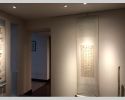
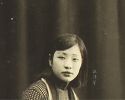
伍仟年 Chinese-Heritage Virtual Museum is dedicated to the elucidation and promotion of Chinese Classical Culture. We offer both Chinese and English language elucidations.
Classical Chinese Culture is a shared heritage not just to the Chinese, but to the world. 伍仟年 Chinese-Heritage Virtual Museum offers Classical Chinese Culture to all.
伍仟年 Chinese-Heritage Virtual Museum connects the past and the present, the curated contents on view are diverse and extensive. There are literary works, calligraphy, paintings, letters, manuscripts, books, writing accoutrements and artefacts of interests. They tell stories about history and people, the arts and artists, and the idyllic pleasures of the past.
The contents of 伍仟年 Chinese-Heritage Virtual Museum are organized and displayed in twelve designated rooms:
A. Chamber Lu-pi
B. Boat Pavilion T’ien-chi
C. Grotta Lang-huan
D. Feretory Tao-tzu
E. Perusals in the Studio of Prunus Ode:
1. Eminent Chinese and Artefacts of the Ch’ing Period
2. Eminent Chinese and Artefacts of the Republic of China
3. The Cultural World of a Tz’u Poet
4. The Scholarly World of a Literatus
5. The Political World of a Statesman
6. Tea, Wine and Poetry: Drinking Vessels of the Literati
7. Intimate Stories of Calligraphic and Painterly Engravings
8. Voyage of Sinology from East to West
We thank you for your interest and support. Your recommendation of 伍仟年 Chinese-Heritage Virtual Museum to your friends will be highly appreciated.
Team: Mr. Soong Shu-kong, Mr. Mao Zuo-i, Ms. Huang Ts’ui-hua, Mr. P’eng K’ei-ying, Ms. Soong Dennie, Ms. Chou Hsin-hui, Ms. Chiang Hui-huang
Advisory: Mr. Wu Shih-wen, Mr. Wang Hsi-ling, Mr. Liu Pen-shan, Mr. Ch’en Yung-feng, Ms. Liao Ch’ien-hui
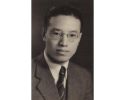
Soong Hsün-leng, tzu Hsin-leng, also Yü-li; hao Hsing-an (literally Fragrance Hermitage). He came from a Wu-hsing family, in Chekiang Province. He was born in the second year of the Hsüan-t’ung reign (1910) in Foochow, and grew up in Shanghai. He graduated in 1932 from National Central University.
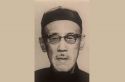
T’ang En-p’u (1881-1961), his original name was Chao-p’u, later name was En-p’u, tzu Ch’i-chan, T’ien-ju, hao Yu-pai, the Red Swastika Society granted him the religious name Hao-han, his studio name was T’eng-hsiang Shih, he was a native of Hsinhui, Kwangtung province. He attained his chü-jen degree in the twenty ninth year of the Kuang-hsü reign (1903), and at the age of twenty seven he taught Chinese at the Liang-kwang kung-yeh hsüeh-t’ang. He held successive positions as compiler of the Bureau of Historia Ch’ing, and deputy secretary general of the army under Wu P’ei-fu (吳佩孚 1874-1939). He later retired to Hong Kong, and was recognized for his classical writings and rectitude. He was socially active amongst the prominent personages, his friendships included Liang Chi-chao (梁啓超 1873-1929), Huang Chieh (黃節 1873-1935), Lo Tun-jung (羅惇曧 1872-1924), Tseng Hsi-ching (曾習經 1867-1926), Chu Ju-chen (朱汝珍 1870-1942), Chiang K’ung-yin (江孔殷 1864-1952), Huang Pin-hung (黃賓虹 1865-1955), T’ang Ti (湯滌 1878-1948), Chiang Fang-chen (蔣方震 1882-1938), Ch’en Ching-ti (陳敬第 1876-1966), Chang Ch’i-huang (張其鍠 1877-1927), Hsiung Shih-li (熊十力 1885-1968) and many others. He considered himself a classical essayist, and was also acclaimed in Chinese medicine. His only published work is Wen-chang hsüeh (文章學 1961).