It has now been a full sexagenary cycle since the outbreak of the Cultural Revolution. The savagery of its purges and killings, the sweeping destruction of historic sites and cultural artefacts, render the Cultural Revolution the perpetual wound of the Chinese people. On 16 May 1966, the Cultural Revolution was launched by the Chinese Communist Party after issuing the May 16 Notification. It lasted ten years, ending on 6 October 1976, one month after Mao Zedong’s death on 9 September 1976.
In 1967, during the second year of the Cultural Revolution, communist factions in Hong Kong were inspired to act, carrying out bomb attacks and executions. Thus my late father, Mr. Soong Hsün-leng (宋訓倫 1910-2010), relocated our whole family from Hong Kong to Taipei. I was then five years old.
Uncle Chao Ts’ung-yen (趙從衍 1912-1999), my father’s close friend, hurried to the airport in Hong Kong to bid farewell and presented a parting gift for my father. It was a hanging scroll in running script by the Ch’ing dynasty calligrapher Liu Yung (劉墉 1720-1805). It became a rare memorabilia of a deep friendship as the world fell into mayhem.
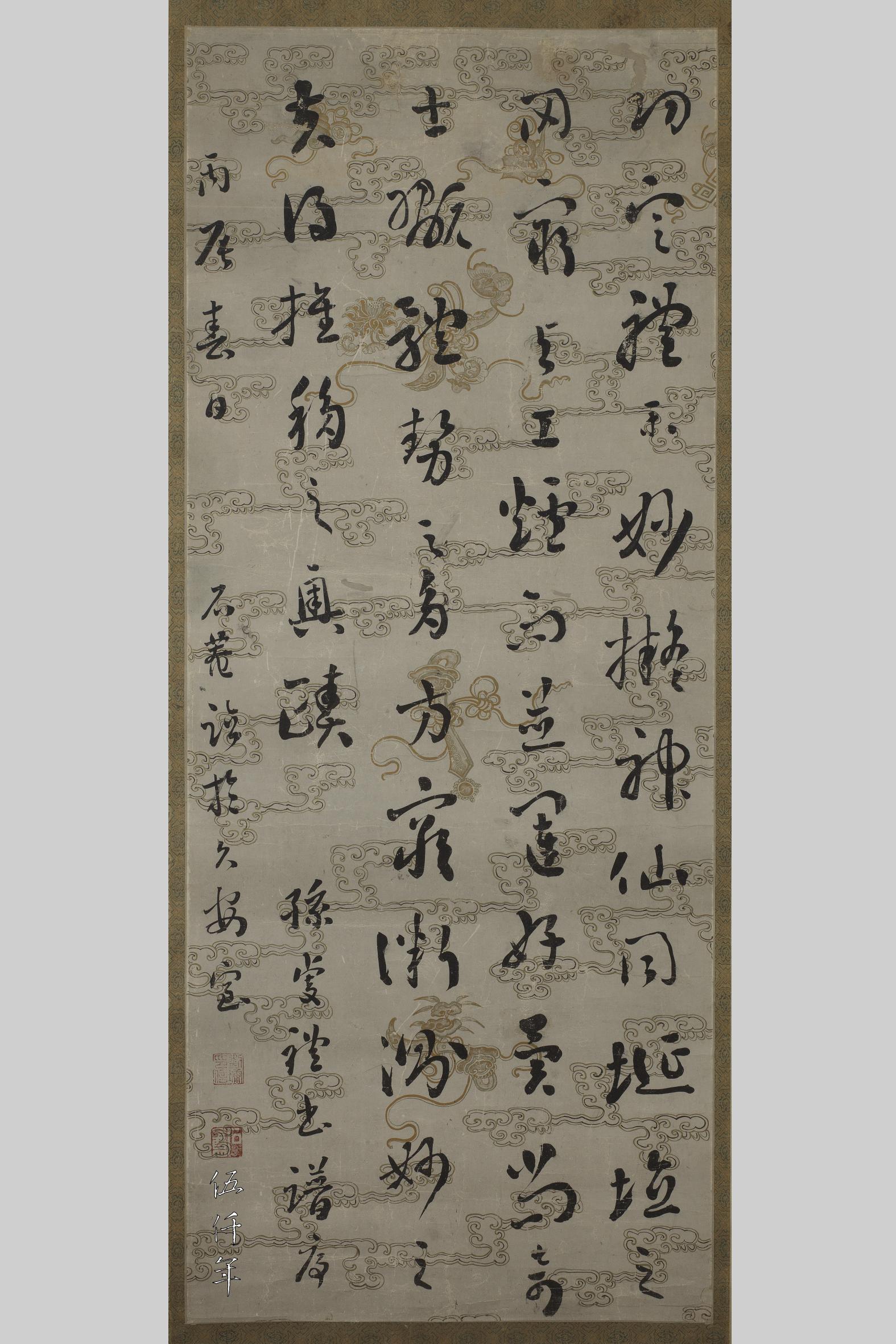
Calligraphy by Liu Yung
The text of the hanging scroll in running script by Liu Yung reads:
“The benefits to self-cultivation that emanate from calligraphy are as magnificent as the Confucian implementations of Propriety and Music. Calligraphy can be as wonderful as being in heavenly realm. The expression of calligraphy is as sagacious and infinite as the artworks of potters, its metamorphosis is as extraordinary as the molten metal of metalsmiths. Those who crave for the remarkable indulge in the articulations of form. Those who search for minuscule subtleties and finesse will attain the profound principle of calligraphy.
From the Preface to A Treatise on Calligraphy (書譜) by Sun Ch’ien-li (孫虔禮), copied by Shih-an (石菴) in the Studio of Lasting Contentment (永安室), in the spring of ping-ch’en (丙辰) year.”
Seal impressions: “Seal of Liu Yung”, “Shih-an”.
The calligraphy was written in ping-ch’en year, corresponding to the 1st year of the Chia-ch’ing reign, or 1796.
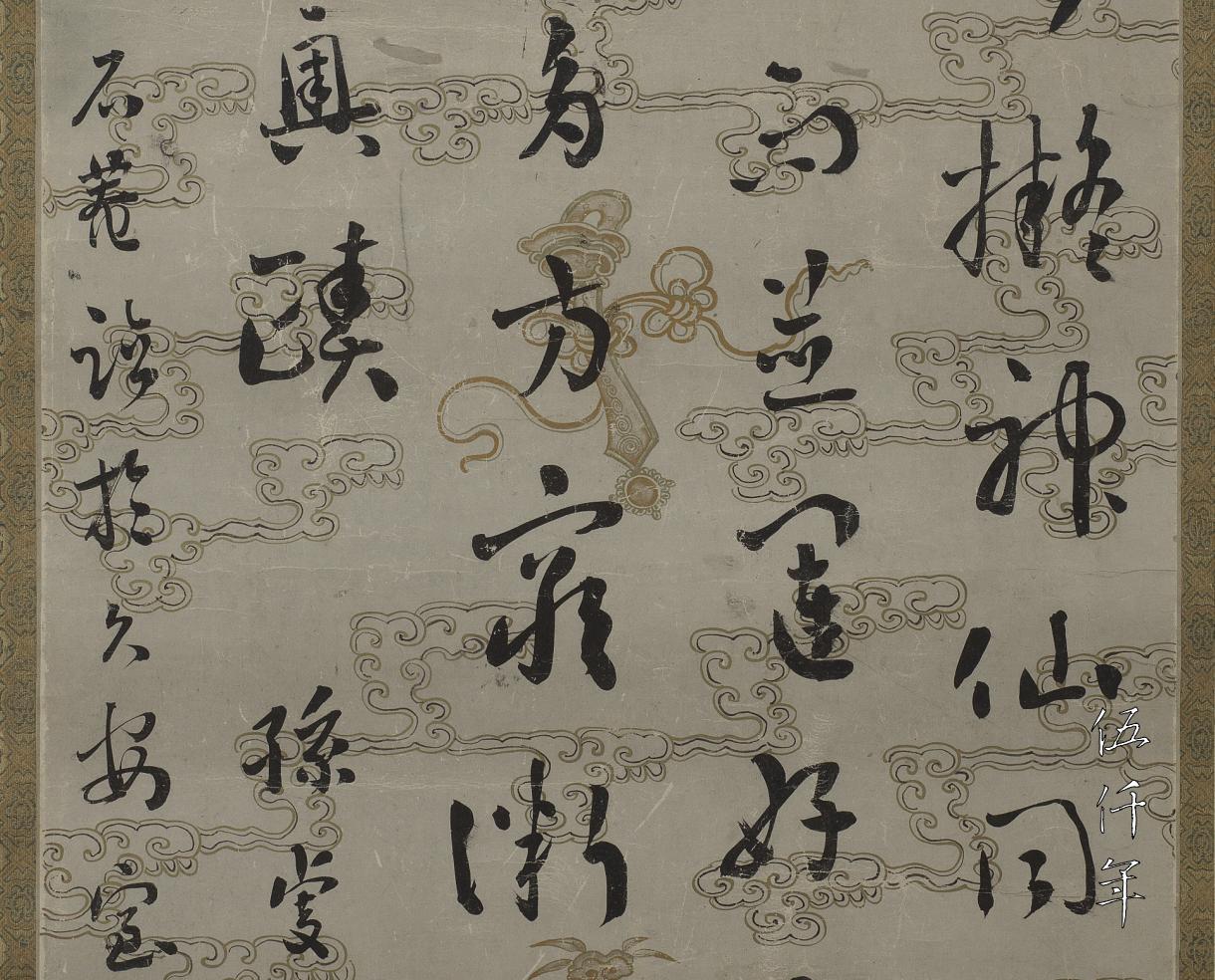
First detail of calligraphy by Liu Yung
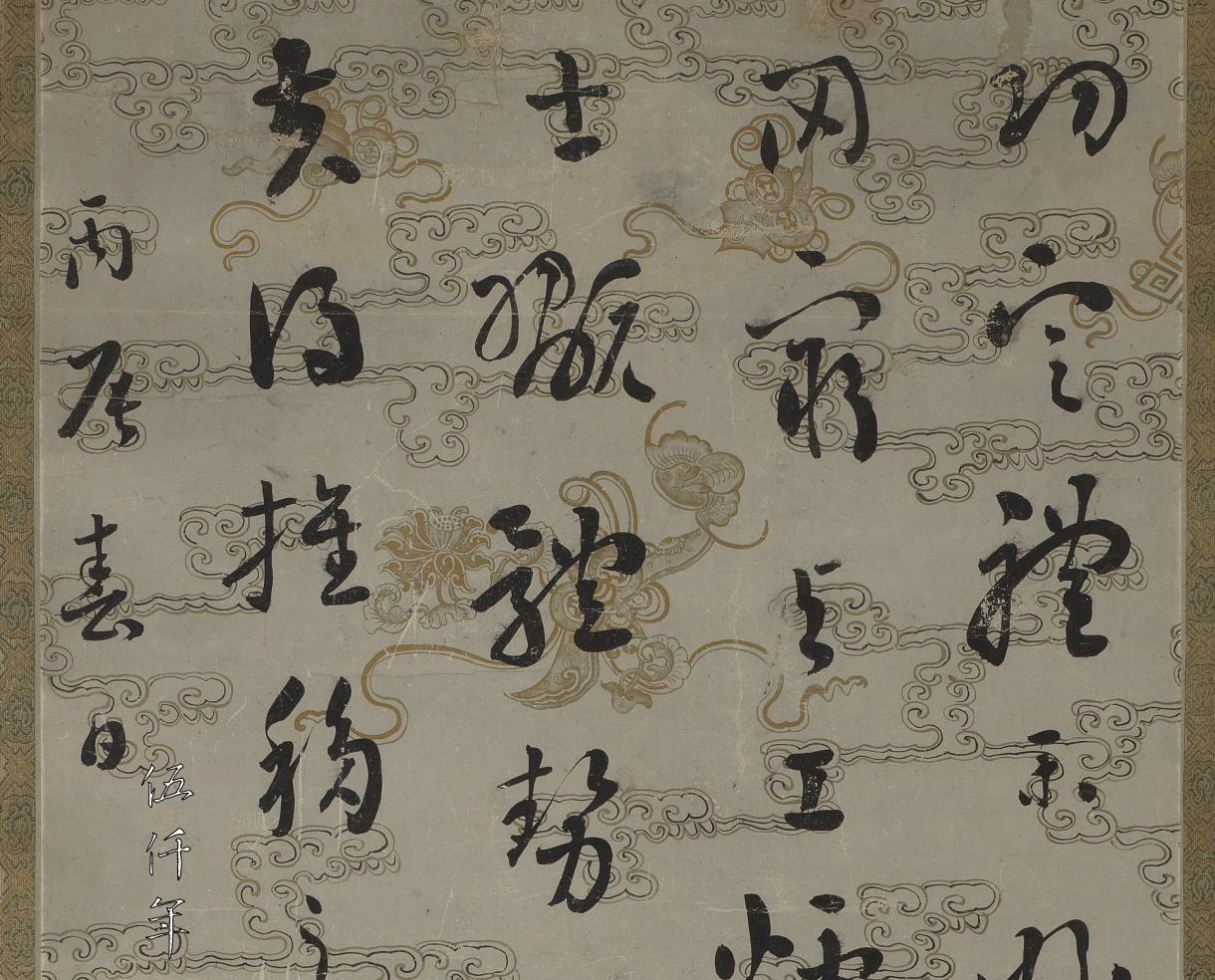
Second detail of calligraphy by Liu Yung
The text of this piece of calligraphy by Shih-an was extracted from the Preface to A Treatise on Calligraphy (Shu P’u 書譜) by Sun Ch’ien-li (孫虔禮). Ch’ien-li was the tzu (字) of Sun Kuo-t’ing (孫過庭) of the T’ang dynasty. He was a native of Fuyang in Chekiang province. Sun Kuo-t’ing was born around 646 and died around 690. He served as guard command administrative supervisor and was an expert in calligraphy. A Treatise on Calligraphy was composed and written by him and has been treasured by Chinese ever since.
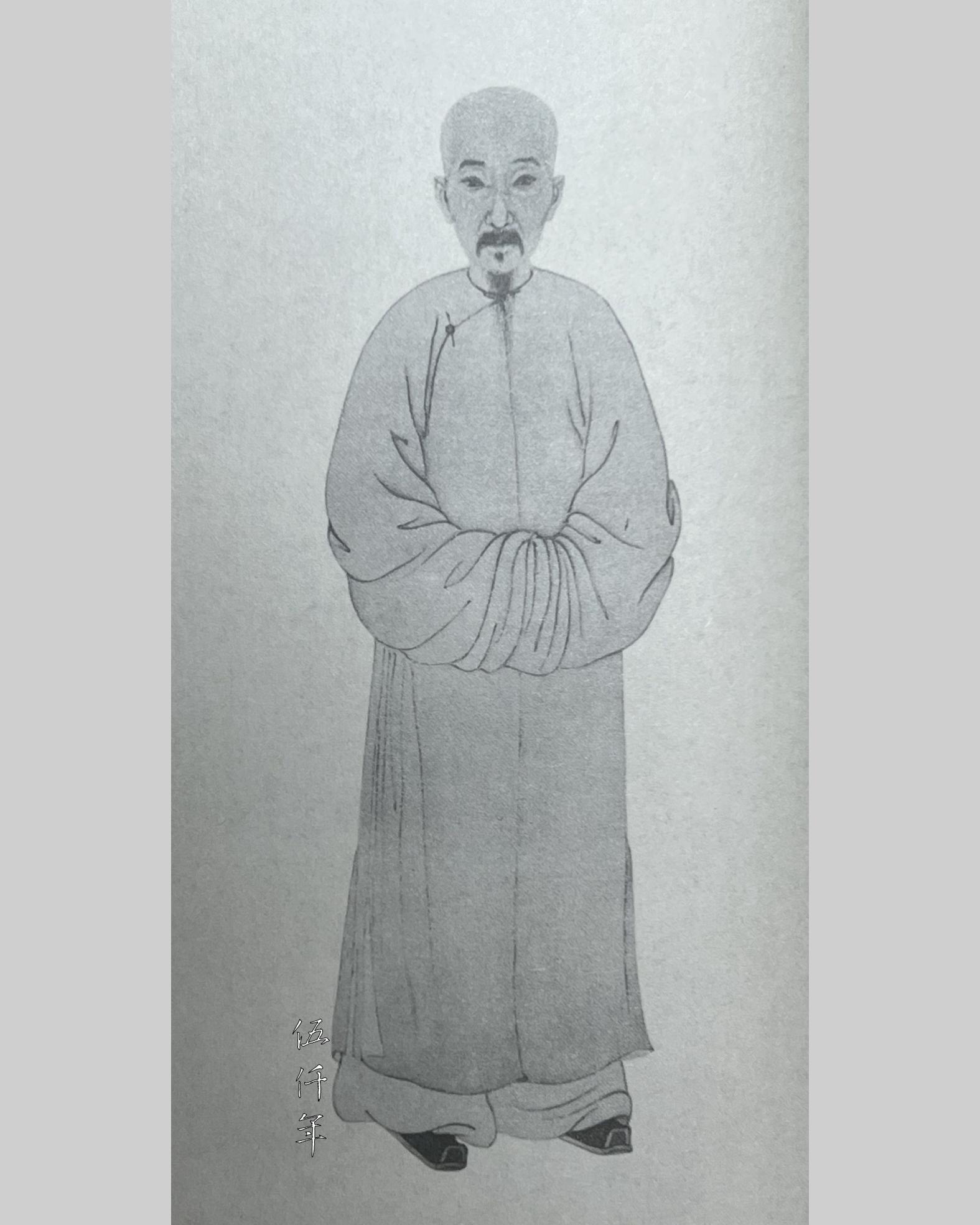
Portrait of Liu Yung
Shih-an was the hao (號) of Liu Yung (劉墉), whose tzu was Chung-ju (崇如). He was born in the 59th year of the K’ang-hsi reign 1720, and died in the 10th year of the Chia-ch’ing reign 1805. He was a native of Ch’ing-chou in Shantung province, but his ancestral town was Hsü-chou in Kiangsu province. He obtained the qualification of metropolitan graduate or chin-shih (進士) in the 16th year of the Ch’ien-lung reign 1751, and subsequently held various official posts, including bachelor of the Hanlin Academy, prefect of T’ai-yüan prefecture, prefect of Chiang-ning prefecture, academician of the Grand Secretariat, governor-general of Chihli, minister of the Ministry of Personnel and grand secretary of the T’i-jen Library. He was posthumously honoured as Grand Guardian of the Heir Apparent. He excelled in calligraphy, and is considered to be one of the master calligraphers of the Ch’ing dynasty. For his calligraphic accomplishment, he is known as the “Grand Secretary of Dense Ink.”
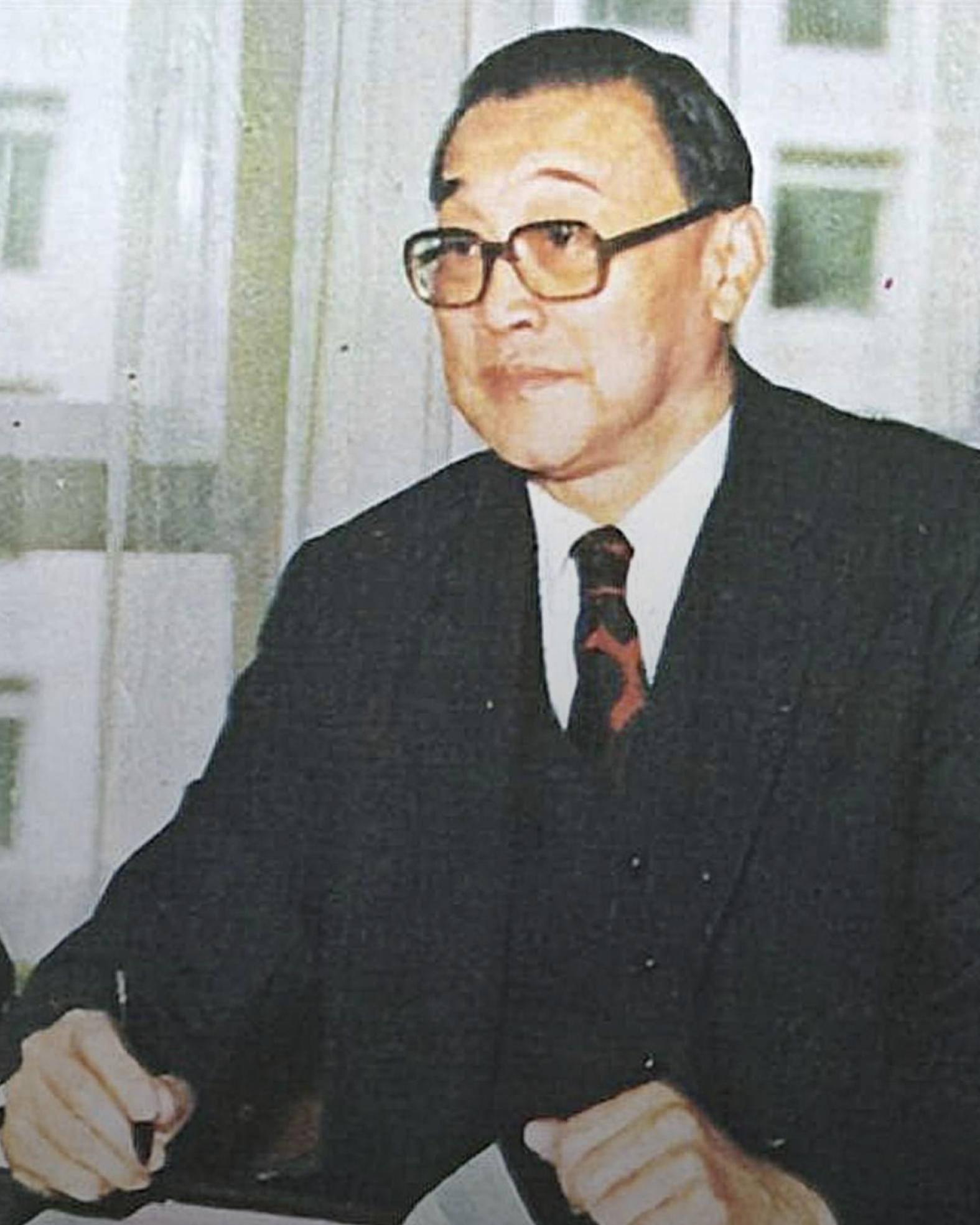
Portrait of Mr. Chao Ts’ung-yen
My late father’s close friend, Uncle Chao Ts’ung-yen, was born in 1912 and died in 1999. He was a native of Wu-hsi in Kiangsu province. He graduated from Soochow University in Shanghai and founded the Wah Kwong Shipping Company in Hong Kong. He was a connoisseur of Chinese antiquities with an extensive collection, the porcelain and jade pieces he assembled in his Wah Kwong Ts’ao-t’ang (華光草堂) Collection were unrivalled in his time.
Perusing this scroll again today, it brings to mind the close affinity that once bonded two friends. In the latter part of 1967, the Hong Kong Government, having learned that the Chinese communists had no intention of reclaiming Hong Kong, moved to suppress communist activities in the territory. My late father thereupon returned with his family to Hong Kong.
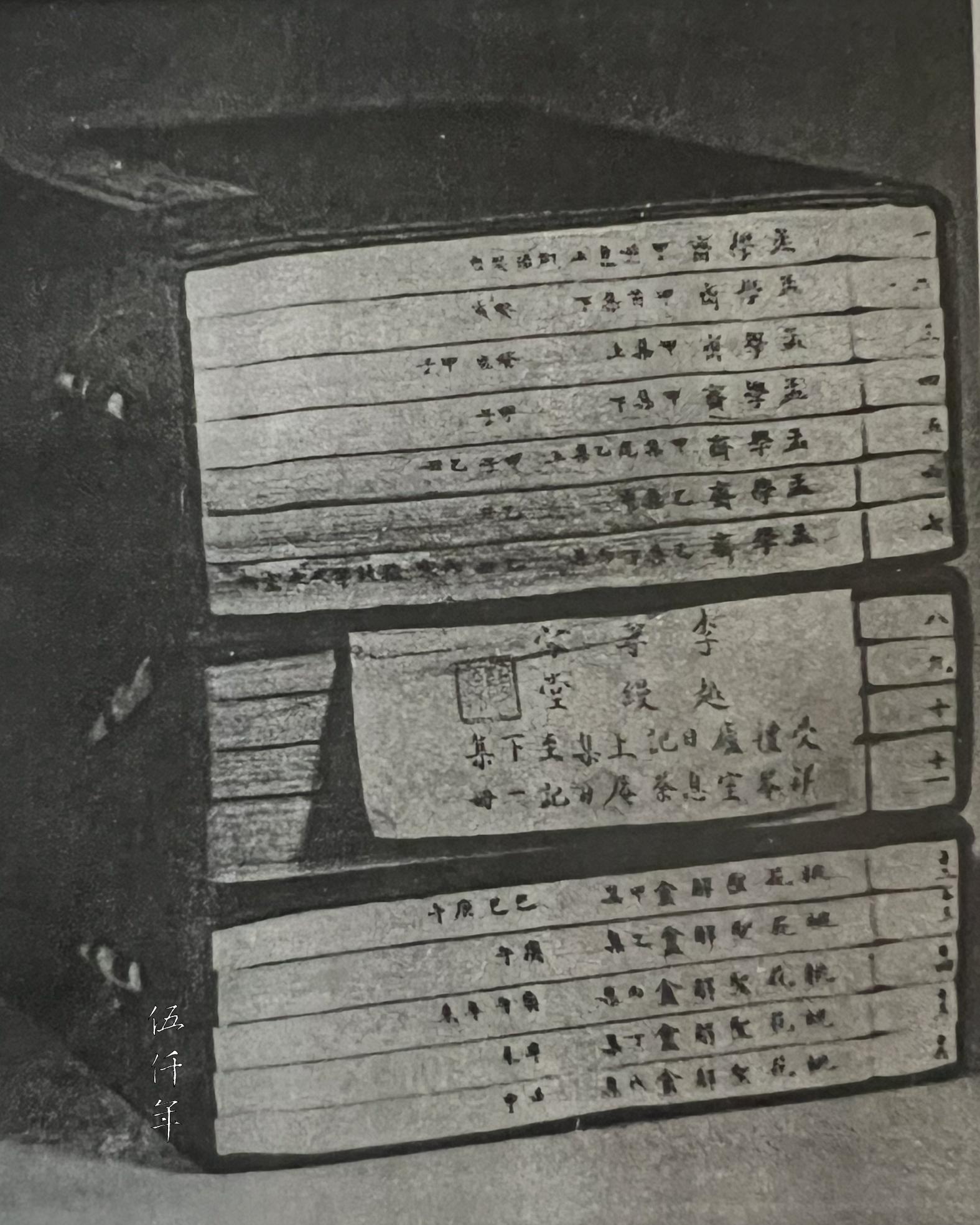
A set of Yüeh-man T’ang Diary by Li Tz’u-ming with label by Mr. Soong Hsün-leng written in his youth
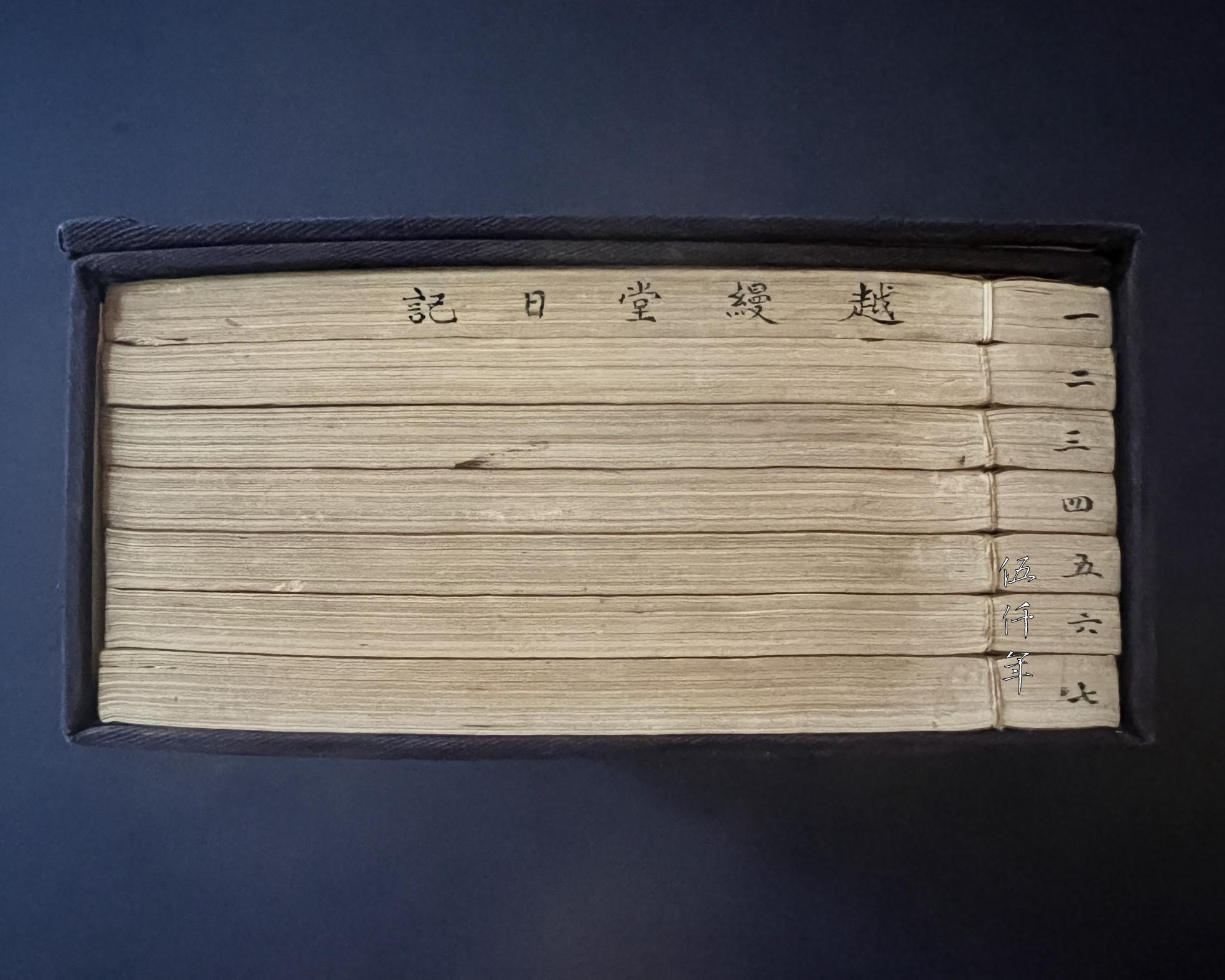
Calligraphy by Mr. Soong Hsün-leng on the fore edges
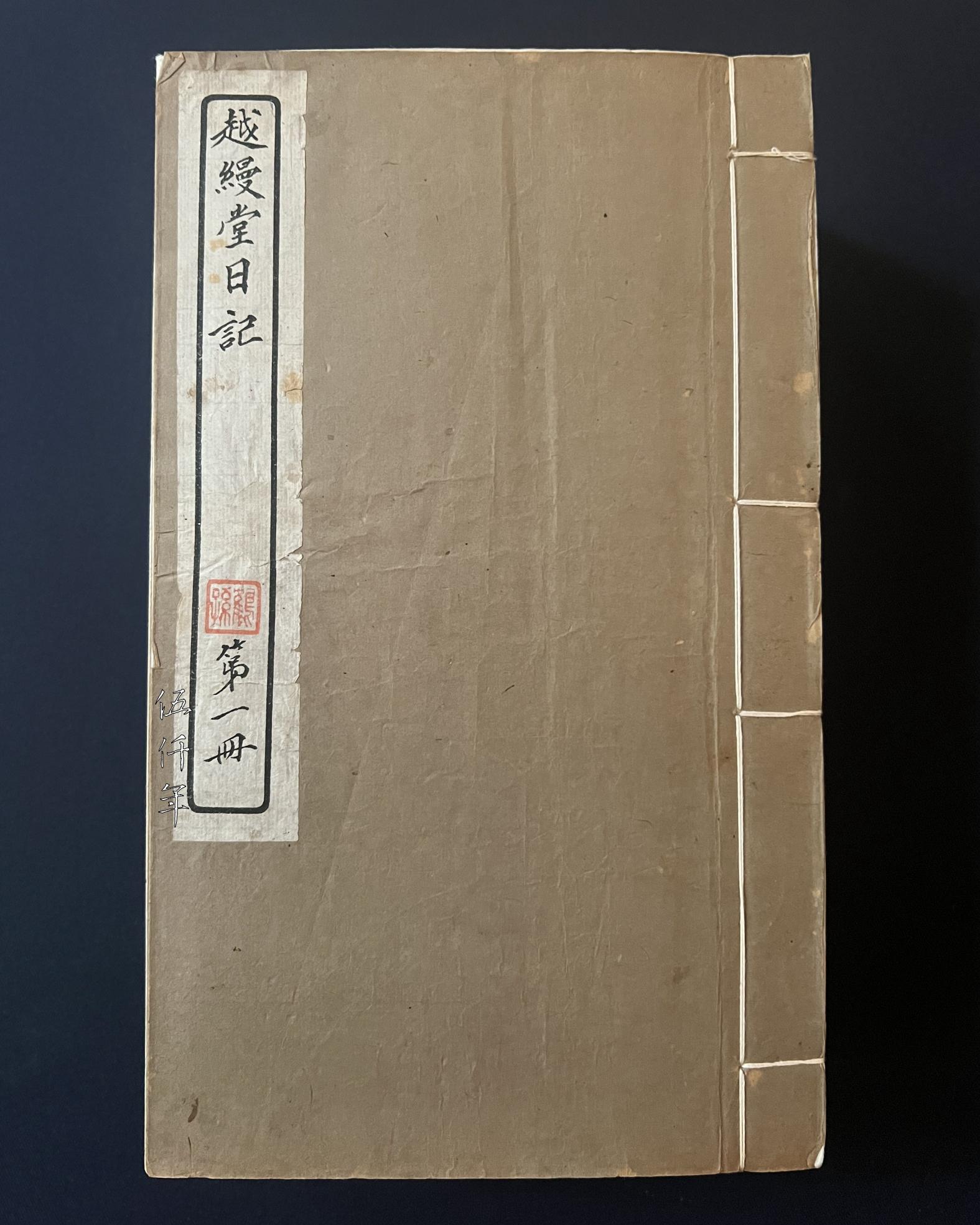
Front cover of First Volume of Yüeh-man T’ang Diary
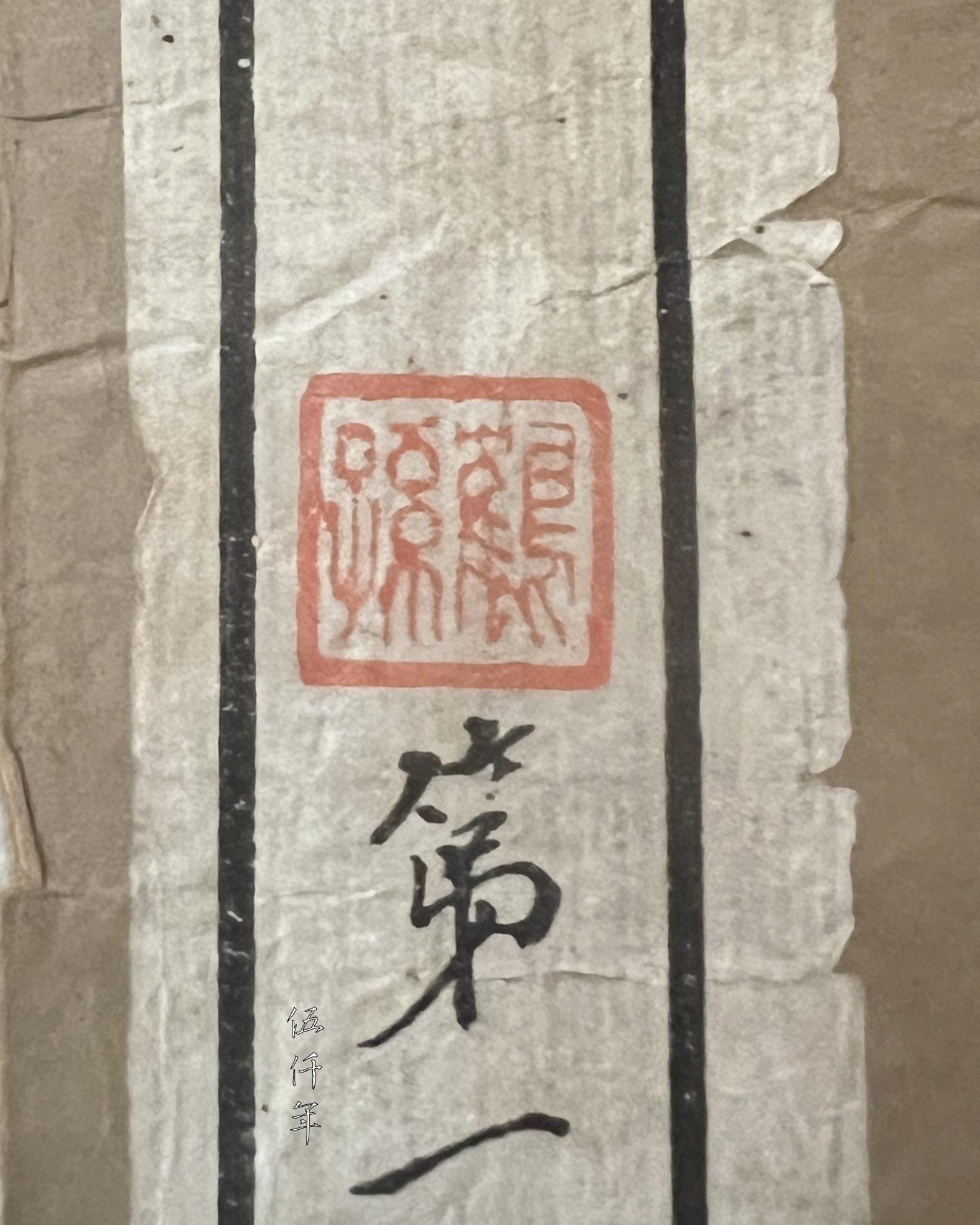
Title slips impressed with the seal of Soong He-sun on the front covers of Yüeh-man T’ang Diary
In October 1972, the seventh year of the Cultural Revolution, my father encountered a complete set of Yüeh-man T’ang Diary (Yüeh-man T’ang Jih-chi 越縵堂日記) by Li Tz’u-ming (李慈銘 1830-1894) in a Hong Kong antiquarian bookshop. This particularly set once belonged to his family’s library. Still attached to some of the wrappers were labels written in his own youthful hand, while some of the title slips on the book covers were impressed with the seal of his father Soong He-sun (宋鶴孫). He realized then that the ancestral house of the Soong family on South Street in Hu-chou of Chekiang province had been raided by the Red Guards, and its entire collection of books, calligraphy, paintings, and antiques had been thoroughly looted.
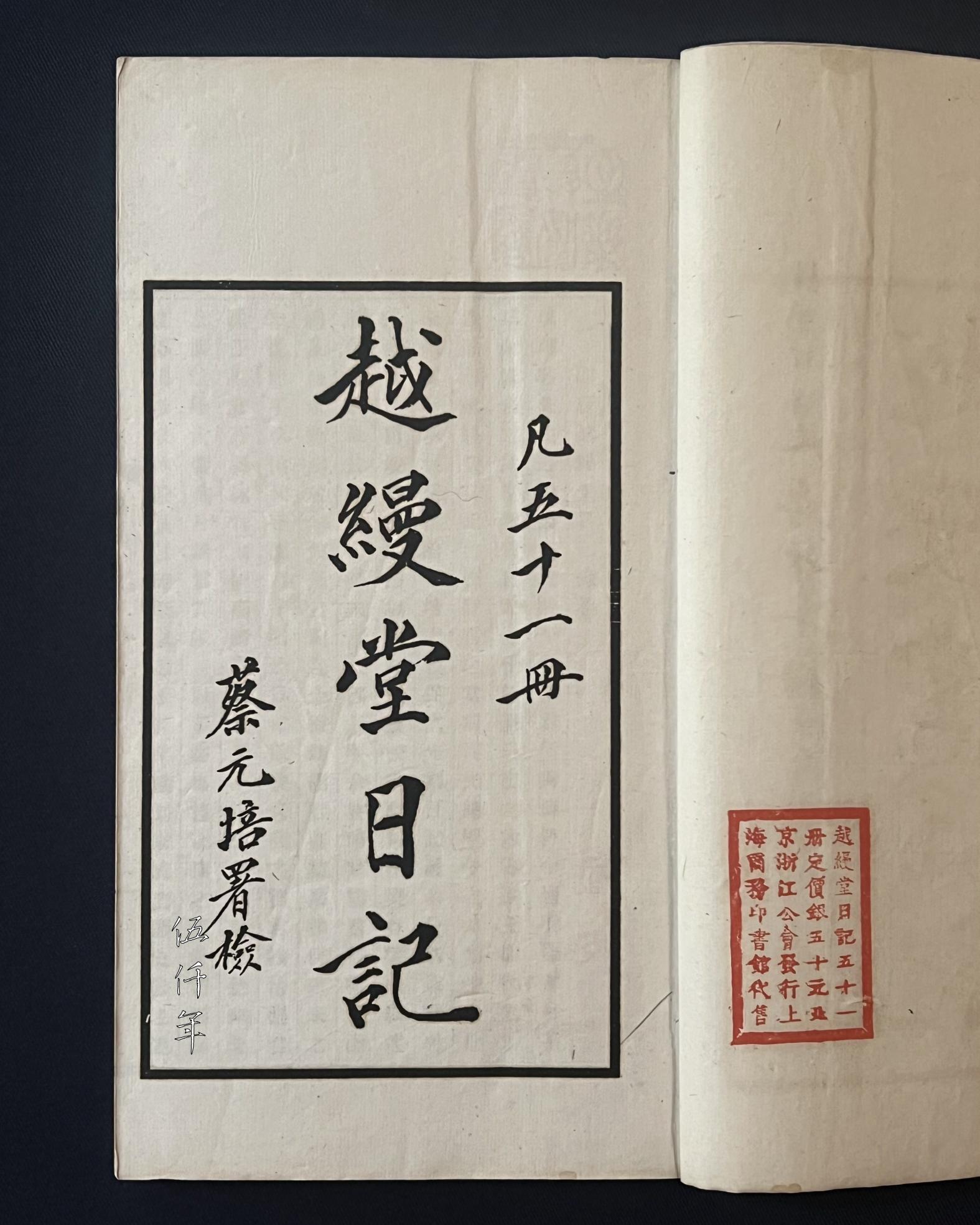
Title page of First Volume of Yüeh-man T’ang Diary
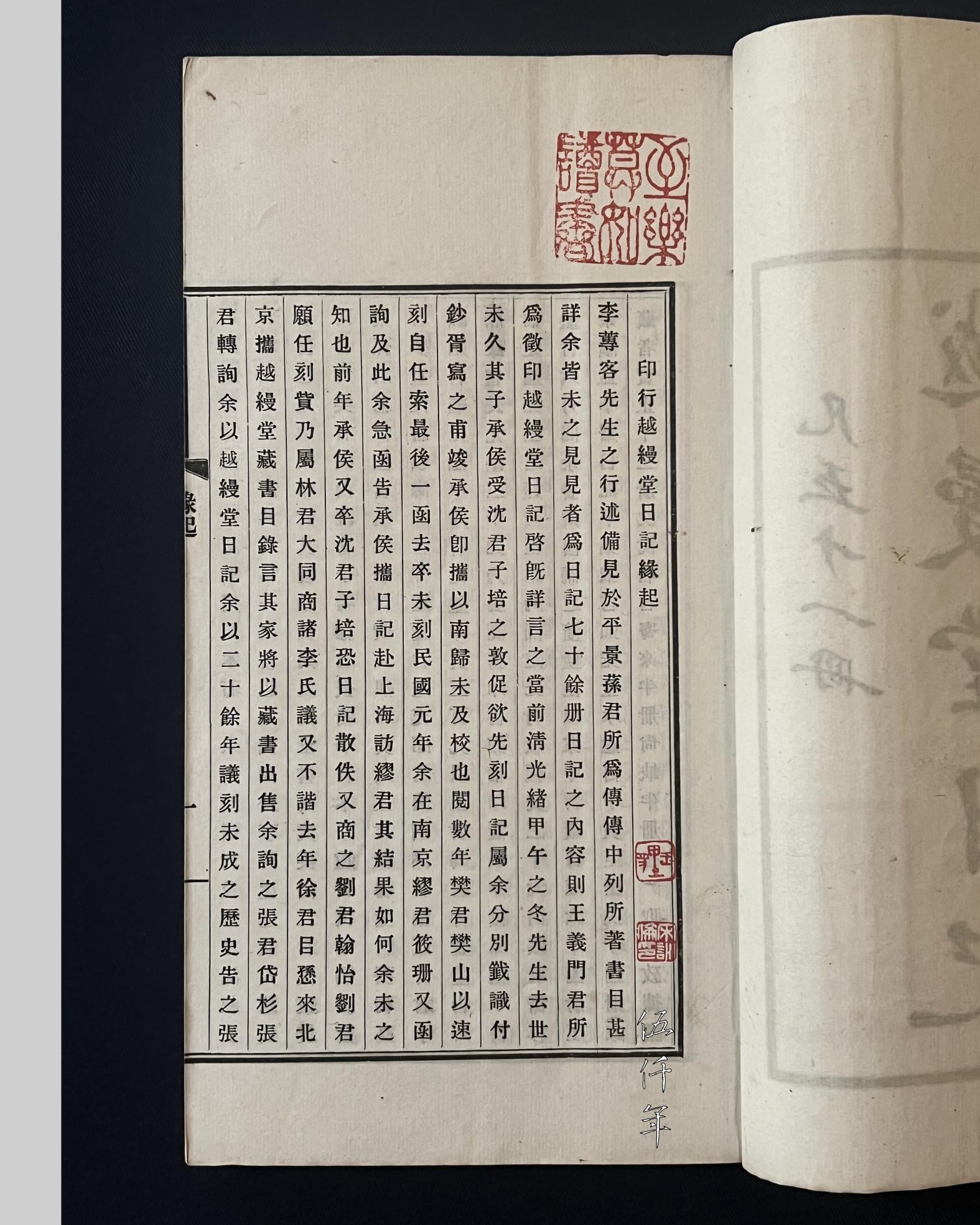
Inside page of First Volume impressed with the seals of different generations of the Soong family
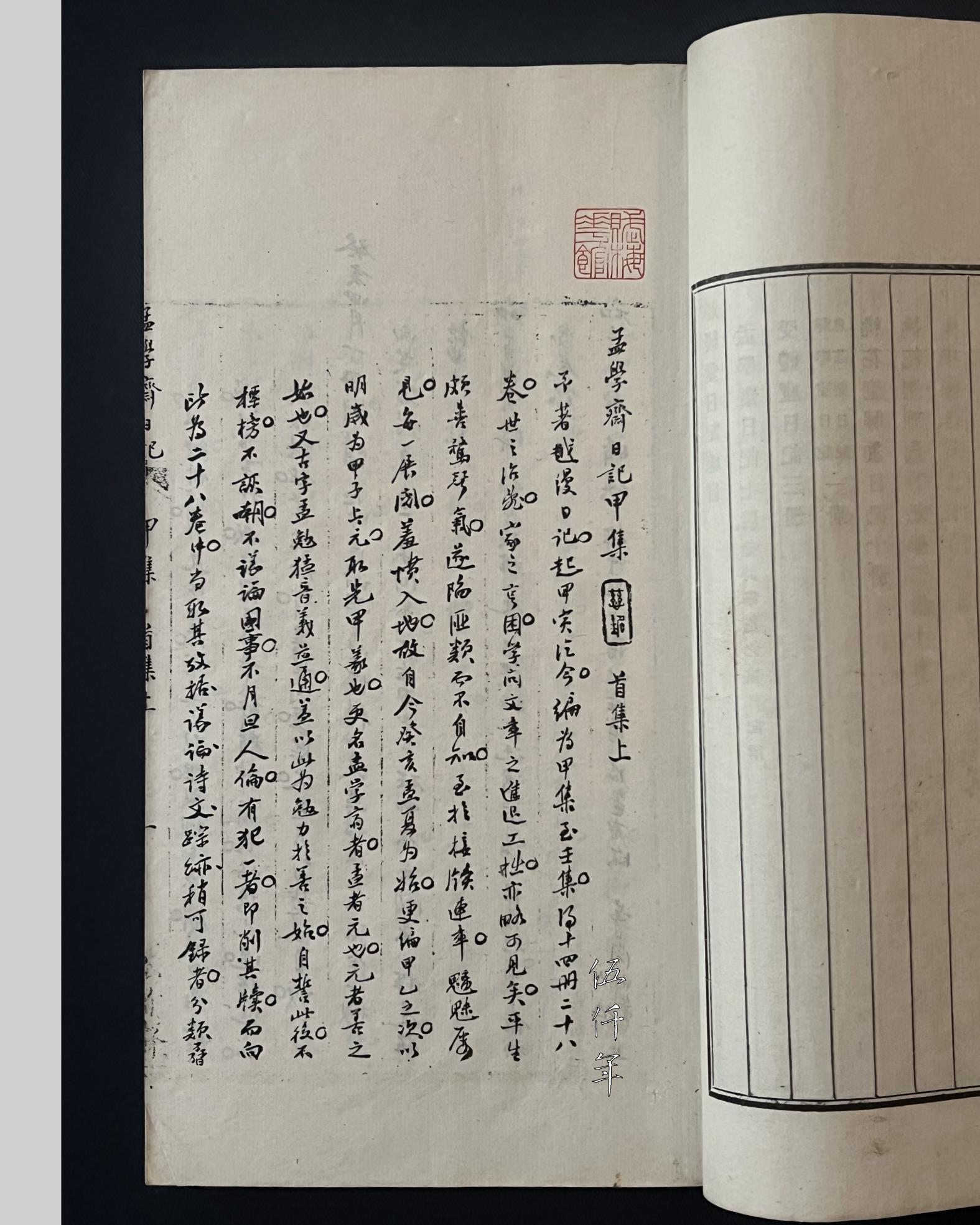
Inside page of First Volume impressed with the seal of Studio of Prunus Ode
Regarding books, calligraphy, paintings and antiques during the Cultural Revolution, some owners were forced to destroy them by their own hands, some were obliterated or looted by the Red Guards, some of particular value were appropriated by museums, some were embezzled by the powerful and privileged, and some others were sold off abroad for foreign currency. The fates of cultural artefacts, to survive or to perish, are mercurial. The only certainty was none remained in the hands of their original owners.
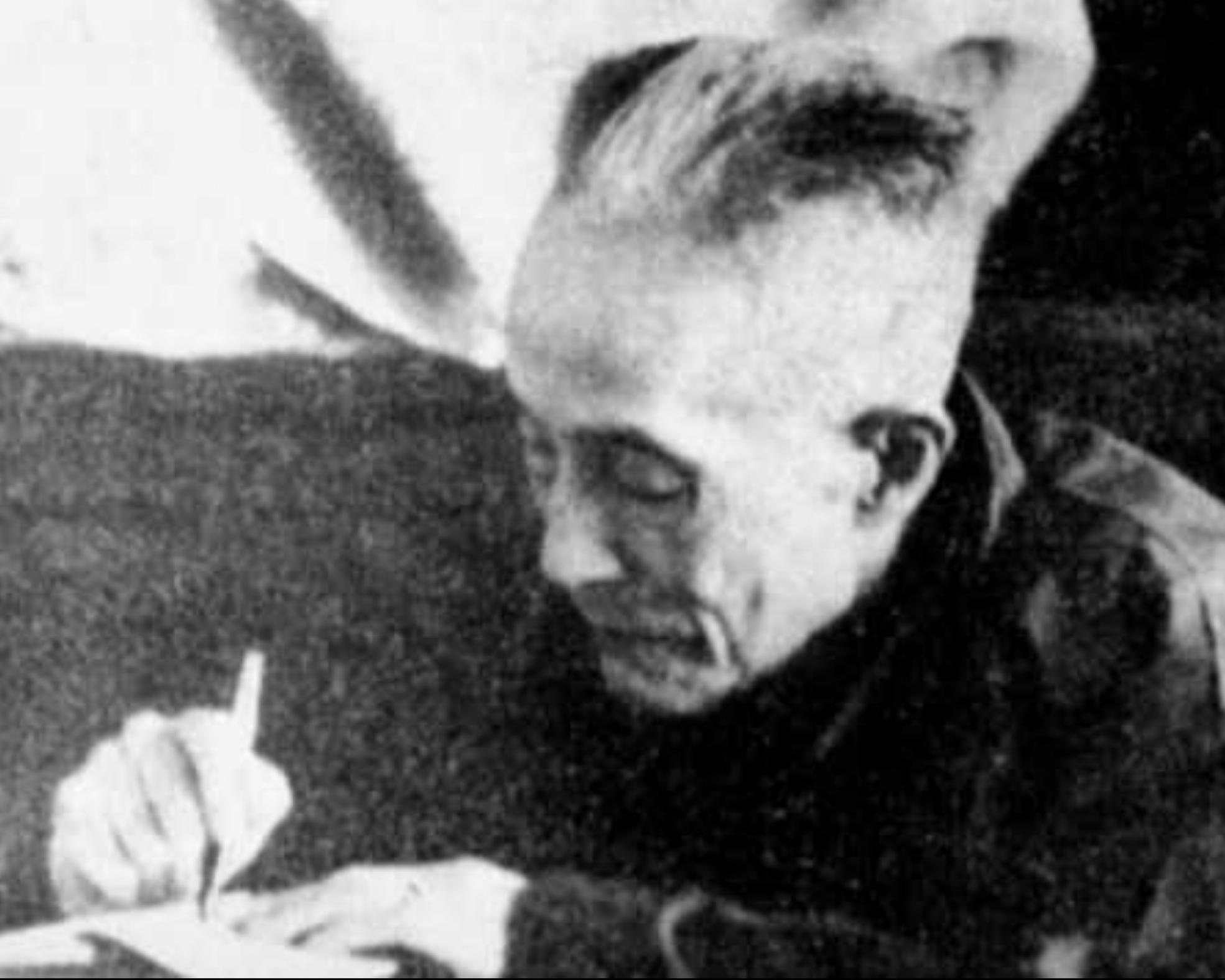
Portrait of Hsü Chi-ch’uan
The Peking Opera historian Hsu Chi-ch’uan (許姬傳 1900-1990) wrote in Observation Notes of the Cultural Revolution (文革見聞雜談) :
“Those who launched the Cultural Revolution, though denounced by the Chinese people, nonetheless accomplished their objective, to cast Chinese culture into the rubbish heap. Here are two examples:
A certain Mr. Li from an antique shop once told me: ‘One time, the Red Guards took me to a square in the suburbs which was enclosed on all sides by barbed wire. We entered through a gate and saw several piles of crates, each about six meters high. Two young men used a ladder to bring down a crate and opened it - it was filled entirely with traditional thread-bound books. I said: I deal in paintings and calligraphy, I do not understand book editions. I heard them say: We might as well just send them all to the paper mill.’
A relative from Ch’i-nan came and he talked about a book burning scene:
‘One day, there was a great commotion. Through the window, I saw paper flying everywhere like crows in the sky. When I went outside, I saw books were being burned. This went on for seven to eight hours. He then said angrily: Since the time of book burning by Ch’in Shih-huang (秦始皇 259 BC- 210 BC), whenever there was war there was fire, but only in localized instances. This is the first time books are burned nationwide. I want to see how these lowlife son of bitches meet their end!”
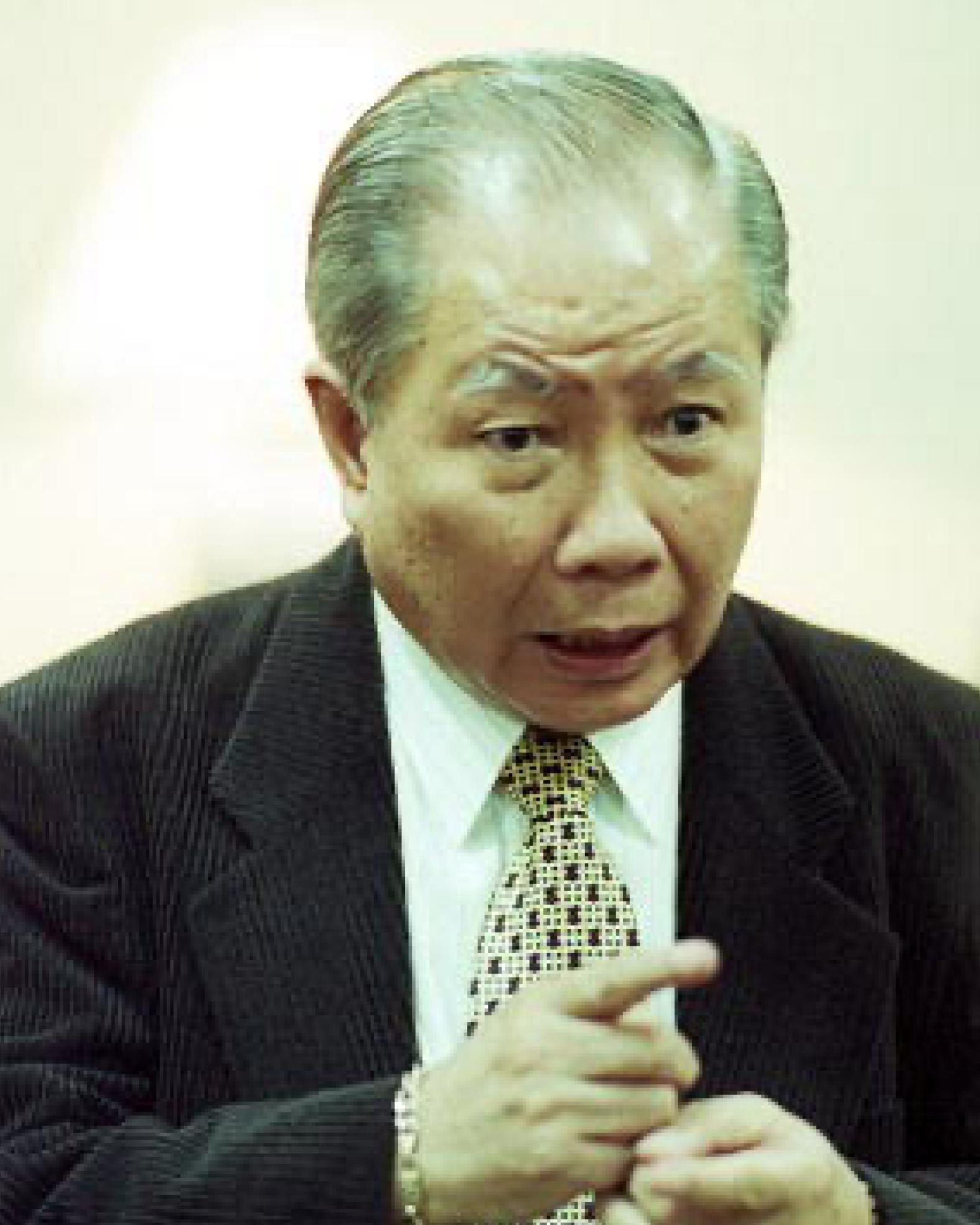
Portrait of Mr. Huang T’ien-ts’ai
My late friend Mr. Huang T’ien-ts’ai (黃天才 1924-2022) recalled in his essay The Pleasure of Fan Collecting:
“About thirty years ago, during the tumultuous period of the Cultural Revolution in mainland China in the late 1960s to early 1970s, I happened to be stationed in Japan as a special correspondent for the Central Daily News (中央日報) in Taipei. In that period, I had the opportunity to come across a huge number of Chinese calligraphy and paintings sold in Japan by the Chinese communists. Among them, the folding fans left a particularly deep impression on me, as the sheer quantity was truly beyond imagination. I remember in the spring of 1968, I accompanied Mr. Chang Dai-chien (張大千 1899-1983) to Fukuoka, Kyushu, to visit the president of a Japanese calligraphy association. The president led us to a large warehouse filled with Chinese calligraphy, where there were two large bamboo baskets each as tall as a person filled chaotically with old folding fans. Apparently there were more than 2,000 fans. On another occasion, a Tokyo gallery specializing in Chinese calligraphy and paintings informed me that they had received a shipping container full of old Chinese folding fans. Several boxes were in the warehouse of their retail store. I hurried over to take a look. Indeed, I saw a number of large wooden crates, each as tall as a person, and each containing at least 500 to 600 fans.”
Hong Kong has always been a key hub for the trading of calligraphy, paintings and antiquities. Cultural relics seized in house raids could be transported there and immediately sold for foreign currency.
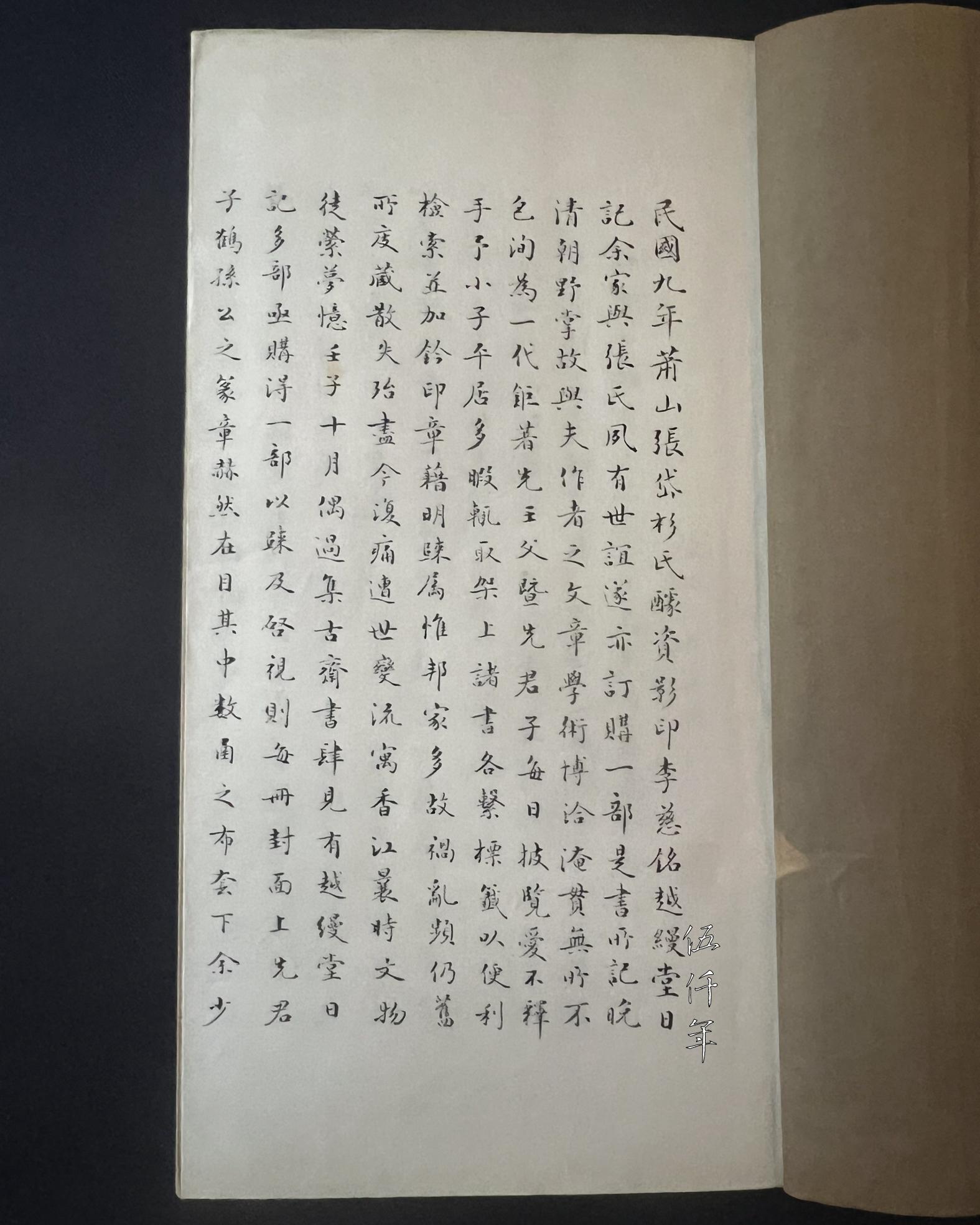
First page of handwritten Preface by Mr. Soong Hsün-leng in the First Volume of Yüeh-man T’ang Diary
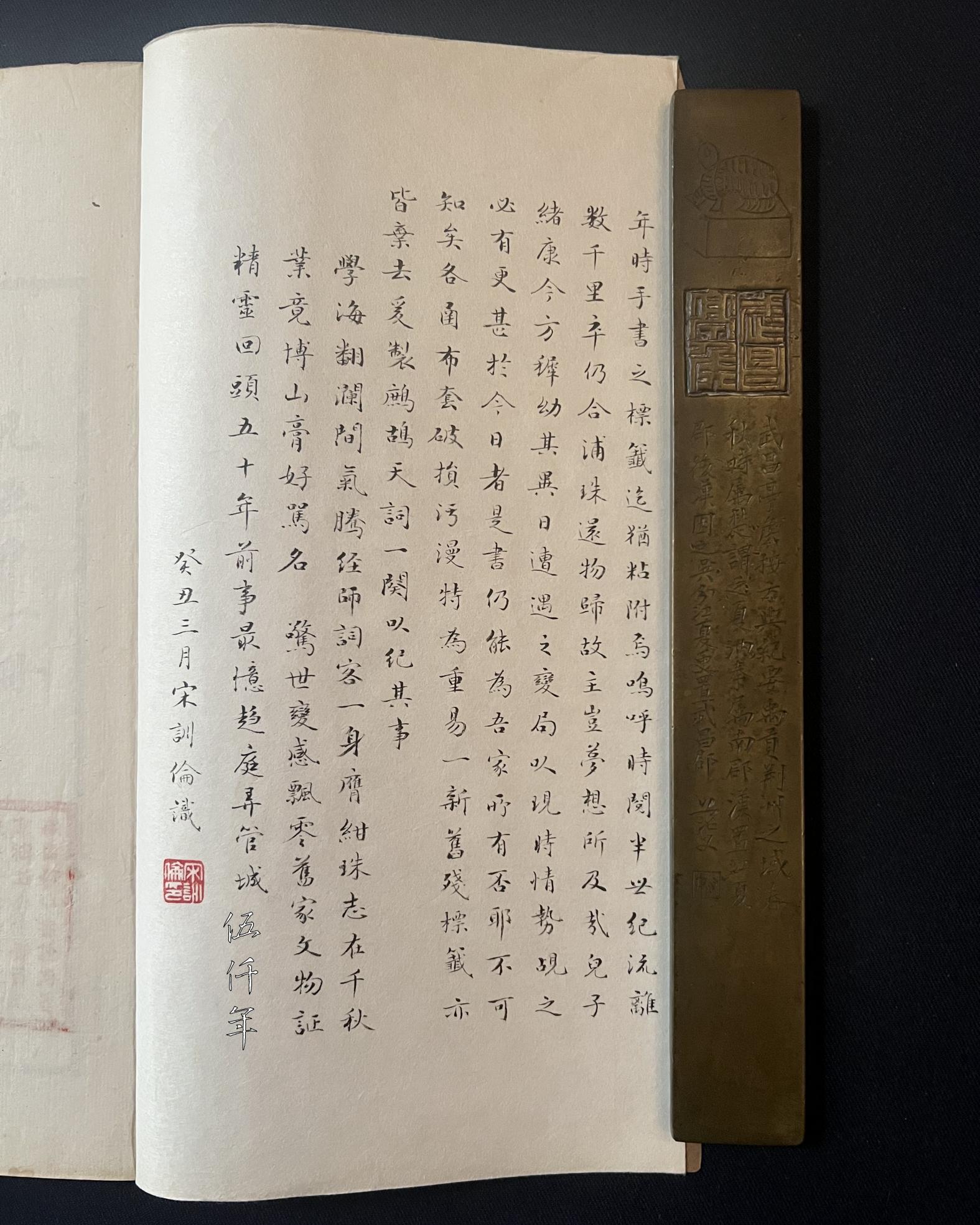
Second page of handwritten Preface by Mr. Soong Hsün-leng in the First Volume of Yüeh-man T’ang Diary
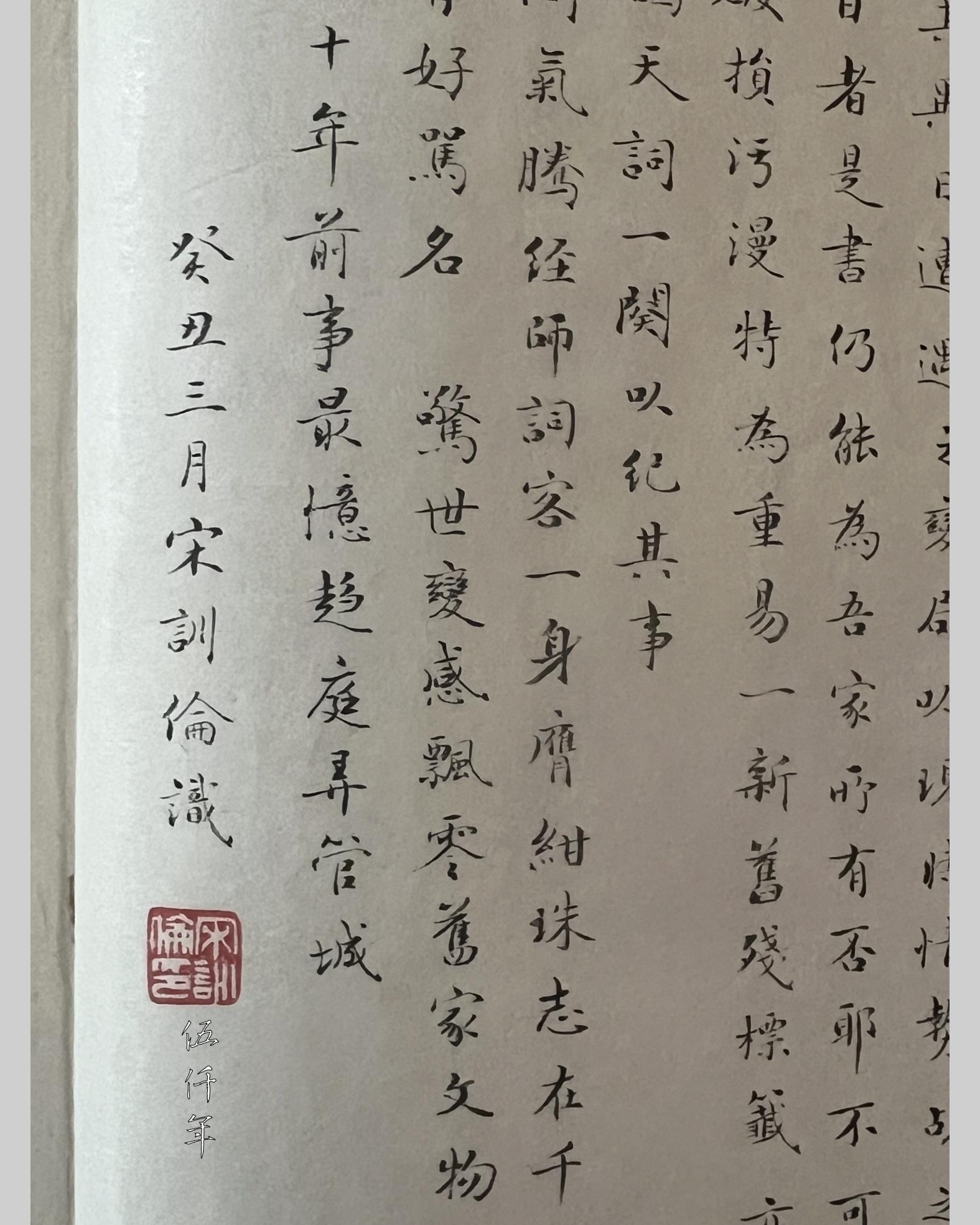
Detail of handwritten Preface by Mr. Soong Hsün-leng in the First Volume of Yüeh-man T’ang Diary
My father put into words the sorrow of seeing one’s ancestral home plundered and the sudden joy of recovering an item from his old collection. He composed a tz’u lyric To the tune Che-ku t’ien (Partridge Sky鷓鴣天), accompanied by an extended preface, and inscribed them in his neat, fine small regular script on the interleaved pages of Volume One of Yüeh-man T’ang Diary. The text reads:
“In the ninth year of the Republic of China (1920), Chang Tai-shan (張岱杉) of Hsiao-shan raised funds to publish Yüeh-man T’ang Diary by Li Tz’u-ming, to be printed using photo reproduction method. My family had been friends with the Chang family for more than one generation, and thus we subscribed to purchase a set. This work is full of anecdotes relating to court happenings and public life in late Ch’ing period. At the same time, it is a chronicle of the author’s own writings and scholarship. His learning was expansive and profound, his writing was all embracing. It is truly a monumental work of an era. My late grandfather and father read it daily and were so enchanted they could scarcely put it down. As a youngster idling at home with time on my hands, I often took books off the shelves and attached them with labels for easy identification and retrieval. Moreover, I stamped them with seals to indicate ownership. But then our country has encountered so many setbacks, disasters and upheavals follow each other, everything in my old collection is lost without exception. Now, amid the painful ordeal of a national catastrophe, I have become a wanderer from home in Hong Kong, and the cultural artefacts of former times linger only in dreams.
In the tenth month of jen-tsu (壬子) year, I visited Chi-ku Chai (集古齋) bookshop by chance, and came across a few sets of Yüeh-man T’ang Diary. I promptly acquired one set and went home. I unfolded the wrappers and was astonished to see that on the title slip of each volume bore the seal impression of my late father, He-sun (鶴孫). The labels inscribed by me at a young age were still attached to some of the cloth wrappers.
Alas! After the passage of fifty years, having meandered thousands of miles away from home, this set of books is now, beyond the wildest dream, returned to their rightful owner, like a pearl restored to an oyster. My son Shu-kong is still very young, judging by the current situation, the upheavals he faces in the future will surely surpass those of today. Whether these books will remain in our family in the years to come is hard to tell. I have replaced the damaged and soiled fabric wrappers with new ones. The old and blemished labels have also been discarded. I then composed a tz’u lyric To the tune Che-ku t’ien to register this incident. It reads:
An Ocean of Learning,
Rolling and tumbling,
Boiling with energy;
Great scholarship
And poetry
United in one person.
His journal
A record
For posterity;
And yet he obtained a reputation
For reviling others,
Like that fabled creature
‘Mountain Grease’.
The world has changed
In startling ways;
The desolation of it
Is palpable.
This document
From my old family home
Testifies to the old spirit.
I look back
To events of fifty years earlier—
What I remember most is
Wielding the writing-brush
Before my father.
In the third month of kuei-ch’ou (癸丑) year, recorded by Soong Hsün-leng.”
Seal impression: “Seal of Soong Hsün-leng.
The tz’u lyric To the tune Che-ku t’ien was translated by Prof. John Minford, first published in The Fragrant Hermitage in 2005.
Jen-tsu year corresponds to 1972, and kuei-ch’ou year corresponds to 1973.
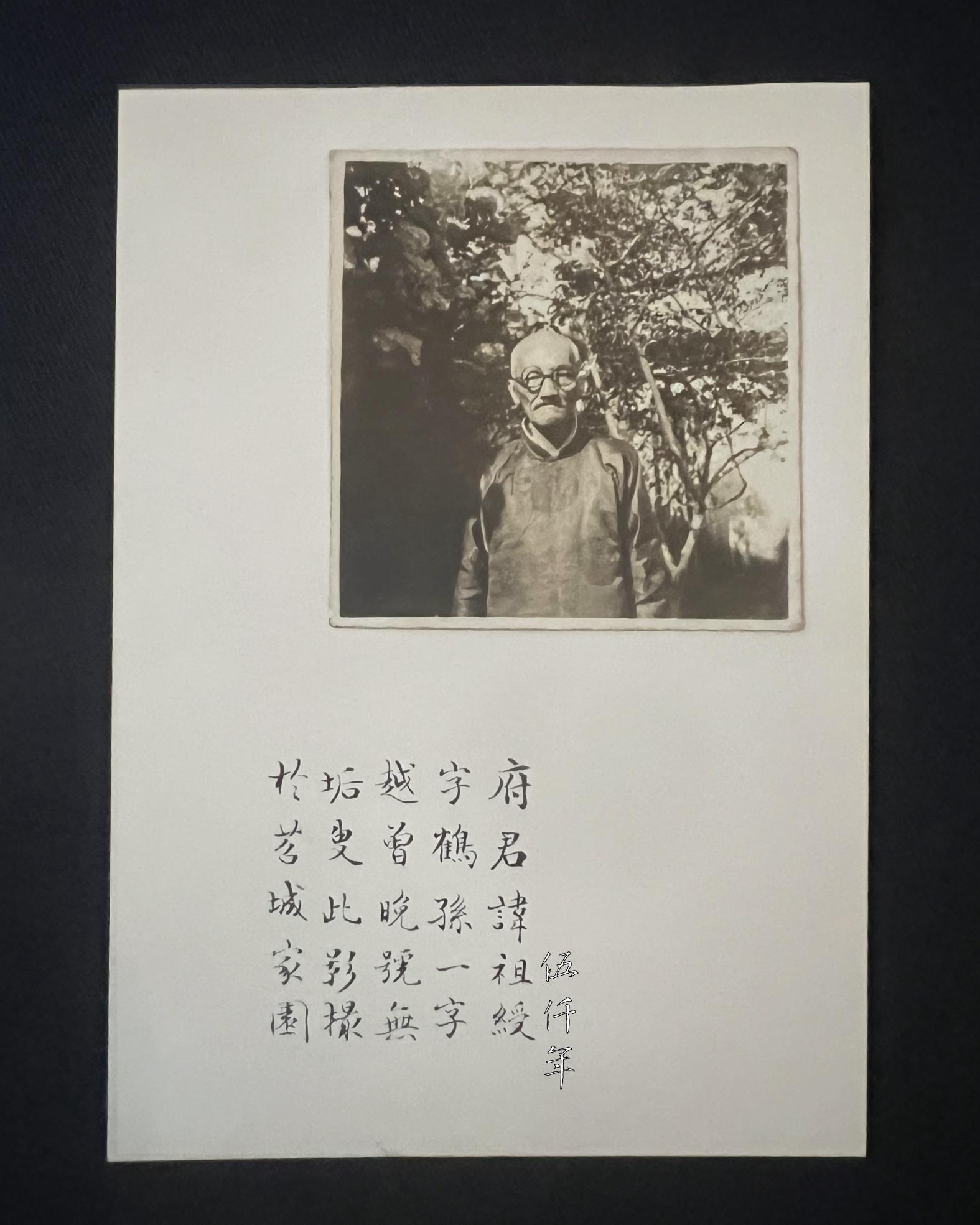
Portrait of Mr. Soong Tsu-shou, calligraphy by Mr. Soong Hsün-leng
In the preface, the words “my late father, He-sun (鶴孫)” refer to the hao of my grandfather, his original name was Tsu-shou (祖綬), his tzu was Yüeh-tseng (越曾), his studio name was Studio of Prunus Ode (Fu-mei-hua Kuan賦梅花館). He studied under Fang Ti-shan (方地山 1876-1936), whose original name was Fang Erh-ch’ien (方爾謙), and later served as administrative clerk in the Saltern Office of eastern and western Chekiang regions.
When the Japanese army occupied Wu-hsing, he refused to assume leadership of the Japanese-sponsored “Maintenance Association” and adopted the hao of Unblemished Old Man (Wu-kou Sou無垢叟). He passed away before victory took place in the War of Resistance. He excelled in calligraphy and collaborated with his younger brother Tsu-hung (祖宏) in editing the anthology of his grandfather Soong He-fang (宋鶴訪), titled Poems from the Studio of Wen-miao-hsiang (Wen-miao-hsiang Chai Shih-ts’ao 聞妙香齋詩草).
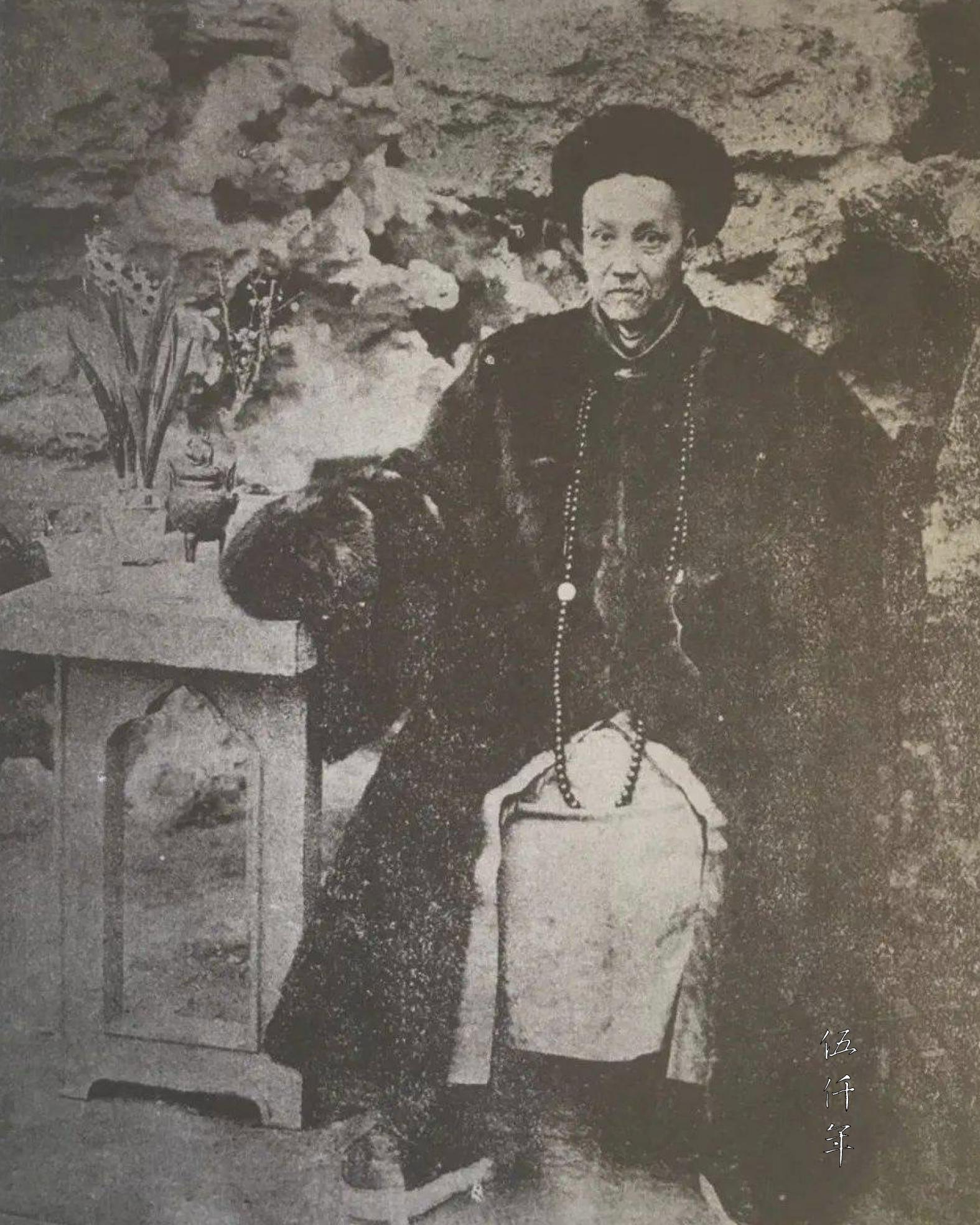
Portrait of Li Tz’u-ming
Li Tz’u-ming was born in the 9th year of the Tao-kuang (道光) reign 1829, and died in the 12th year of the Kuang-hsü (光緒) reign 1894. His original name was Mo (模), his tzu were Shih-hou (式侯), Ai-po (愛伯), his hao was Ch’un-k’o (蓴客). In later years he was also known as Yüeh-man Lao-jen (越縵老人). He was a native of Hui-chi in Chekiang province. He attained the qualification of metropolitan graduate or chin-shih in the 6th year of the Kuang-hsü reign 1880. He was granted the post of investigating censor of Shansi Circuit.
His works include Yüeh-man T’ang Diary (越縵堂日記), Compilation of Ancient and Modern Interpretations of the Thirteen Classics (Shih-san Ching Ku-chin Wên-i Hui-cheng 十三經古今文義彙正), Highlights of the Study of Characters (Shuo-wên Chü-yao 說文舉要), Essentials of Ancient and Modern Pronunciations (Yin-tzu Ku-chin Yao-lüeh音字古今要略), Yüeh-man’s Account of the Classics (Yüeh-man Ching-shuo 越縵經說), Works by Scholars of the Classics in the Present Dynasty (Kuo-ch’ao Ching-ju Ching-chi K’ao 國朝經儒經籍考), Yüeh-man’s Notebook (Yüeh-man Pi-chi 越縵筆記), An Early Collection of Poems from the Pai-hua-chiang-fu Pavilion (Pai-hua-chiang-fu Ko Shih Ch’u-chi白華絳附閣詩初集), Poems from the Studio of Apricot Blossom and Spring Snow (Hsing-hua Ch’un-hsüeh-chai Shih 杏花春雪齋詩), and Tz’u Lyrics from Dusk River and Shrouded Flower (Hsia-ch’uan-hua-yin Tz’u 霞川花隱詞), among others.
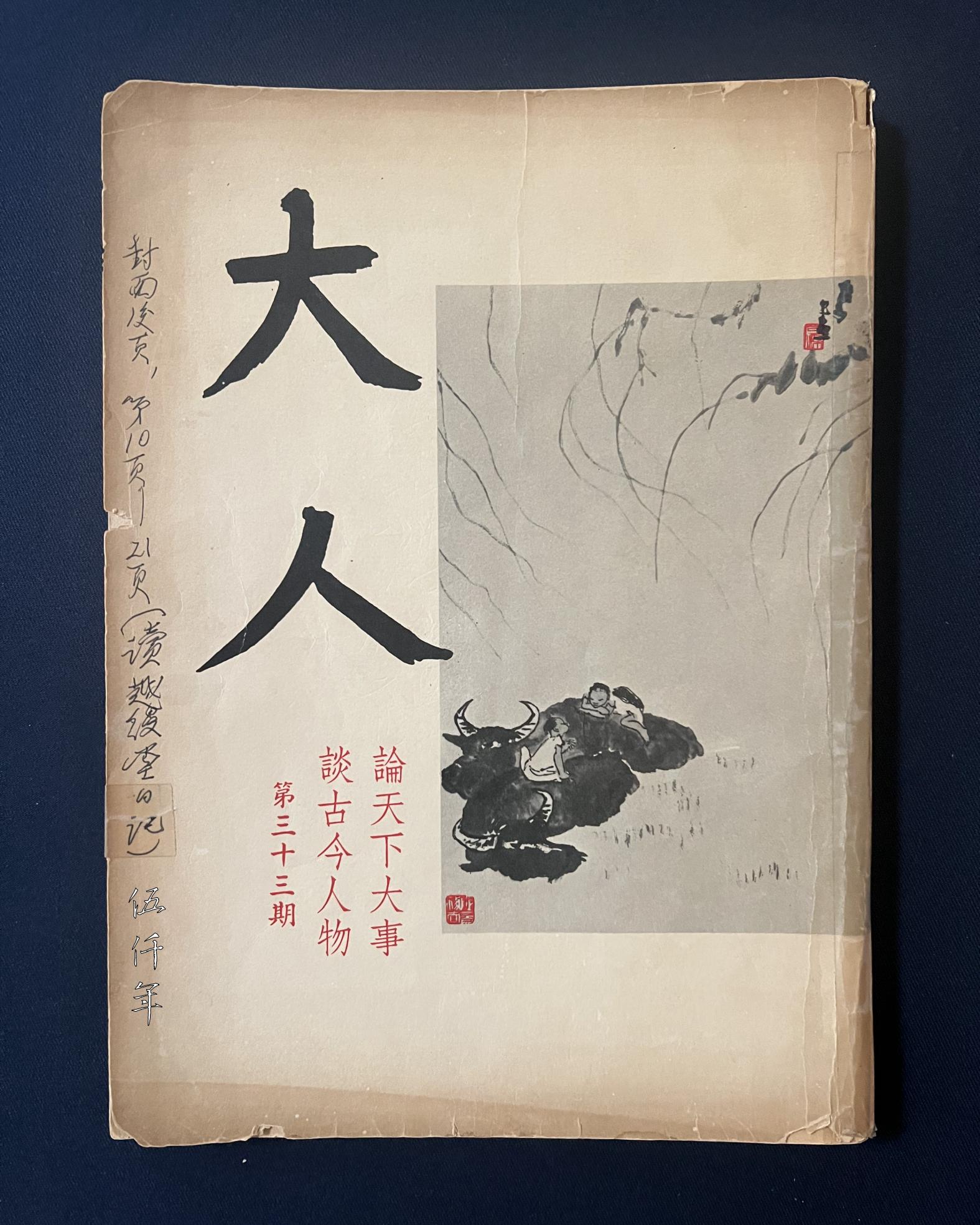
Front cover of Issue No. 33 of Ta-jen Magazine
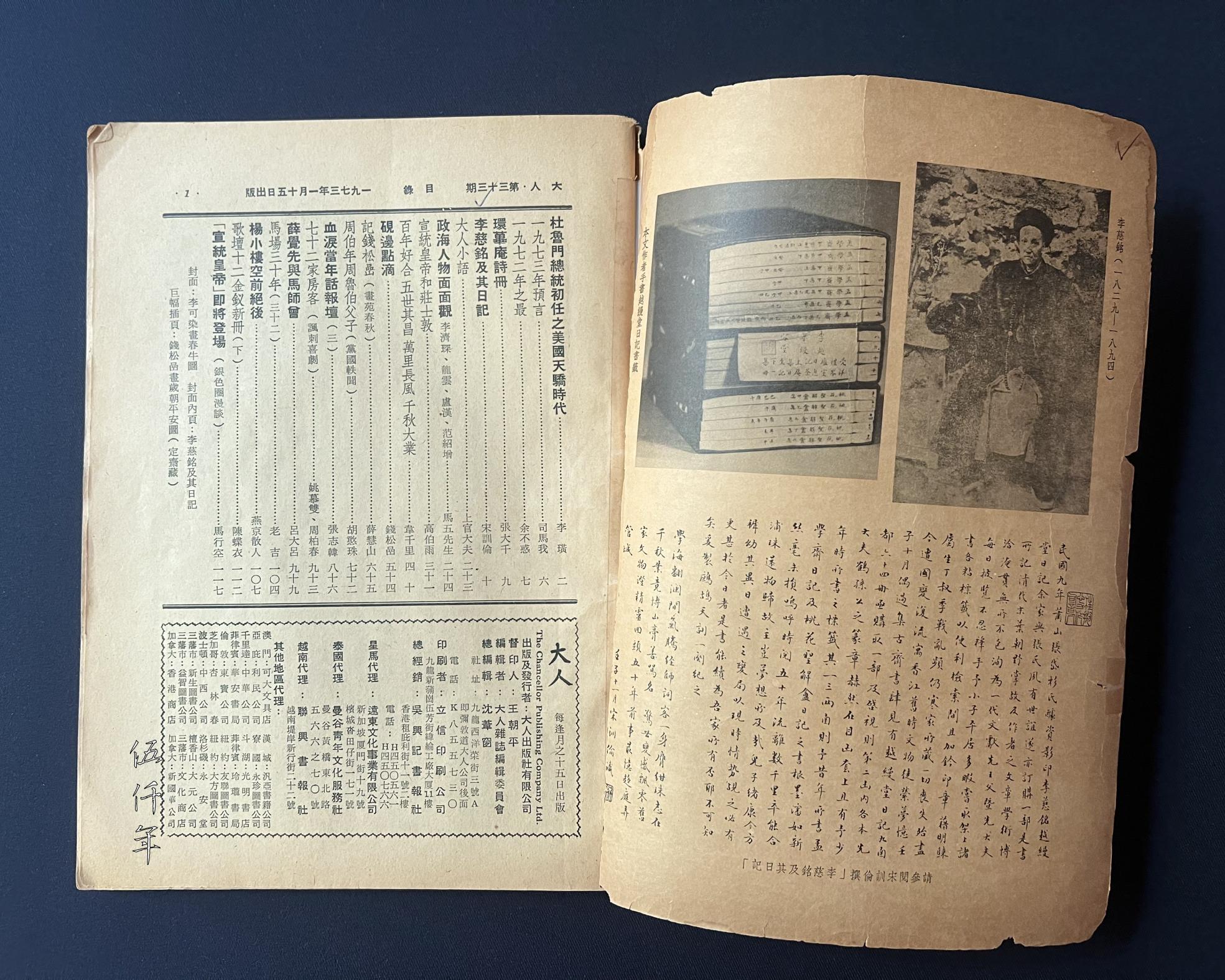
Back of front cover of Issue No. 33 of Ta-jen Magazine
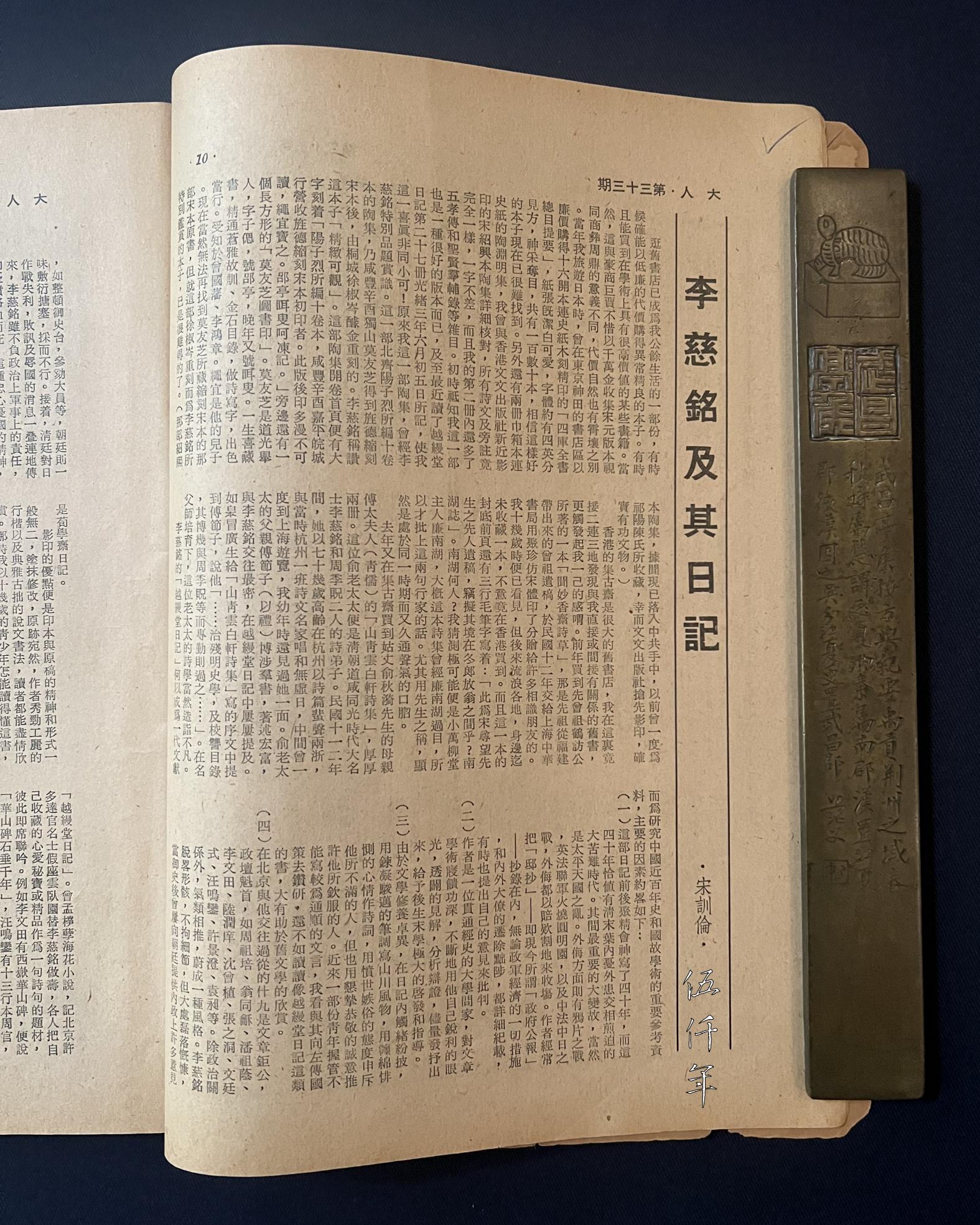
Article titled Li Tz’u-ming and His Diary by Mr. Soong Hsün-leng published in Issue No. 33 of Ta-jen Magazine
After reading Yüeh-man T’ang Diary, my father wrote an article titled Li Tz’u-ming and His Diary. It appeared in Issue No. 33 of Ta-jen Magazine (大人雜誌), published on 15 January 1973.
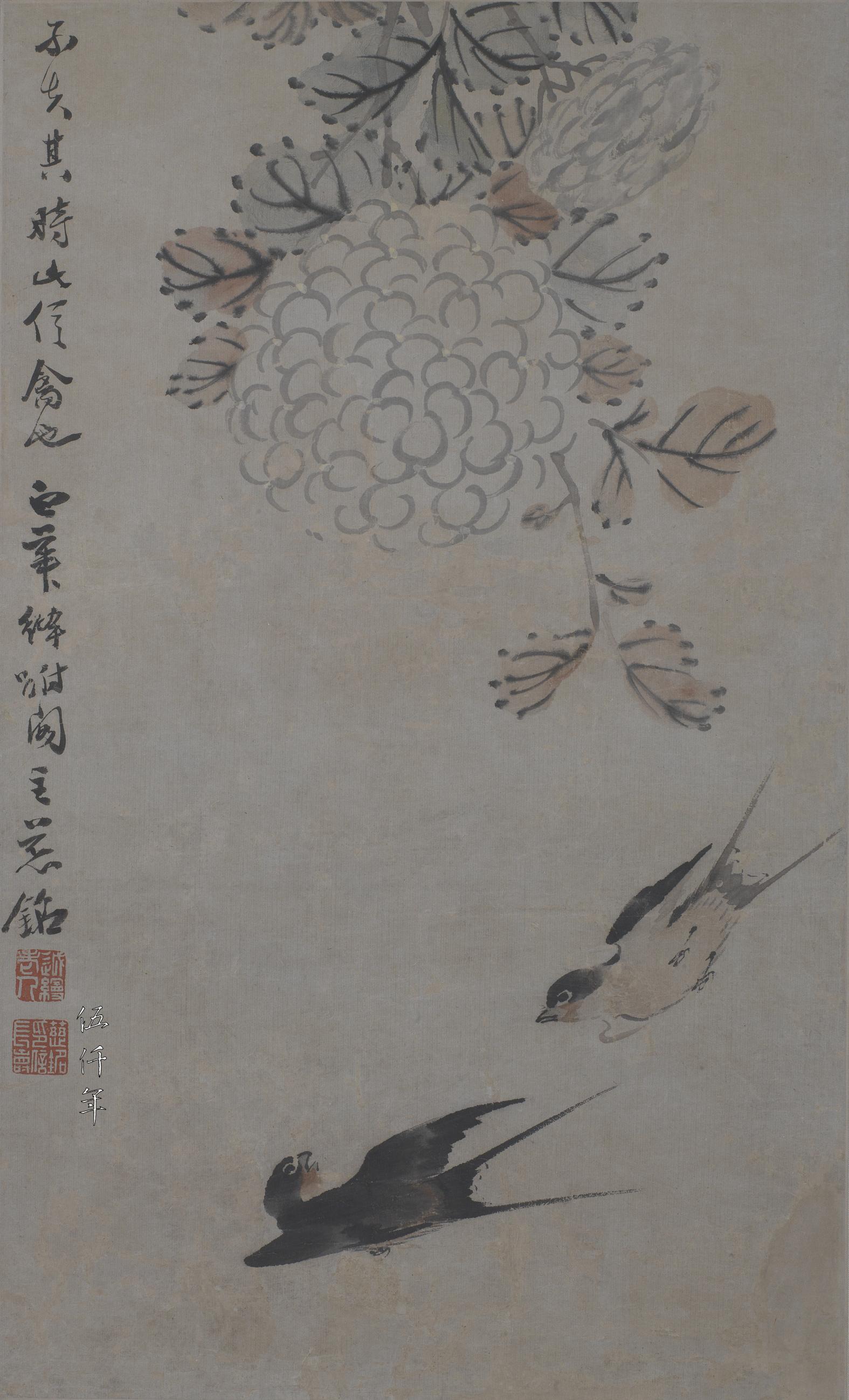
Painting of Twin Swallows by Li Tz’u-ming
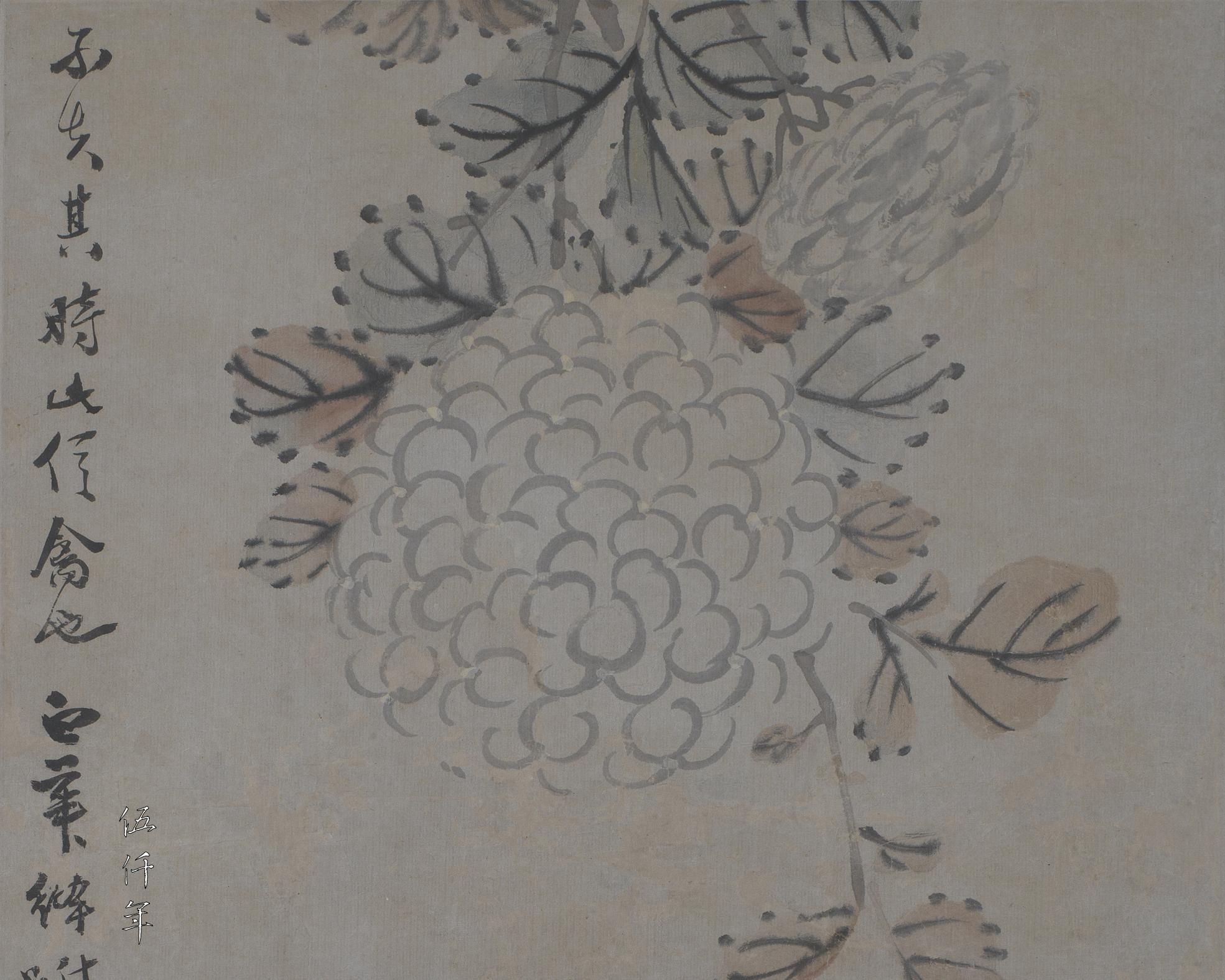
First detail of Painting of Twin Swallows by Li Tz’u-ming
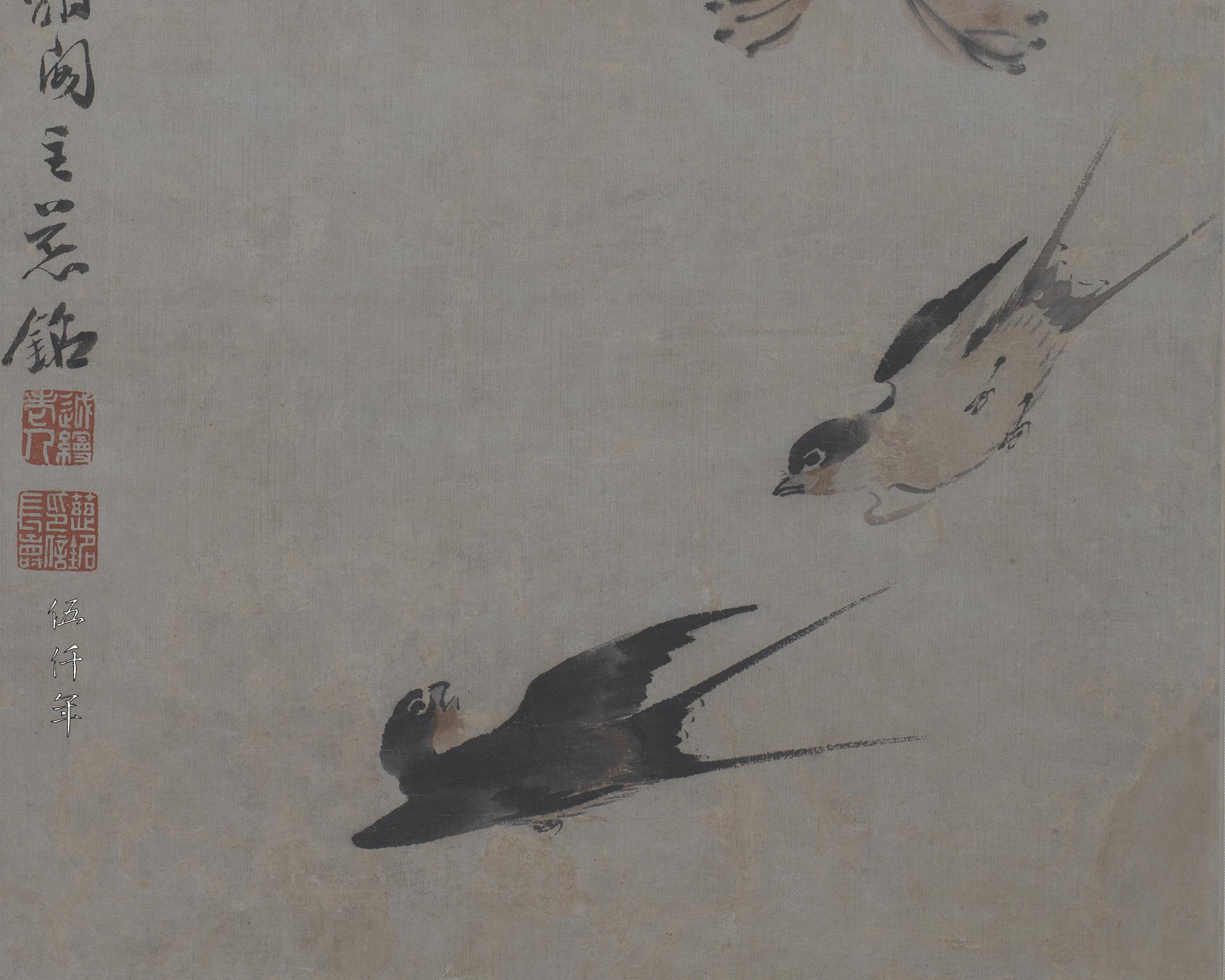
Second detail of Painting of Twin Swallows by Li Tz’u-ming
In the Studio of Prunus Ode Collection, there is a painting by Li Tz’u-ming titled Twin Swallows. It was painted for self-amusement late in his life and is exceptionally rare.
Li Tz’u-ming inscribed these words on the painting:
“Never behind time, this is indeed a dependable bird.
Master of Pai-hua-chiang-fu Pavilion, Tz’u-ming.”
Seal impressions: “Yüeh-man Lao-jen” (越縵老人), “Blessing of Longevity and Seal of Tz’u-ming” (慈銘印信長壽).
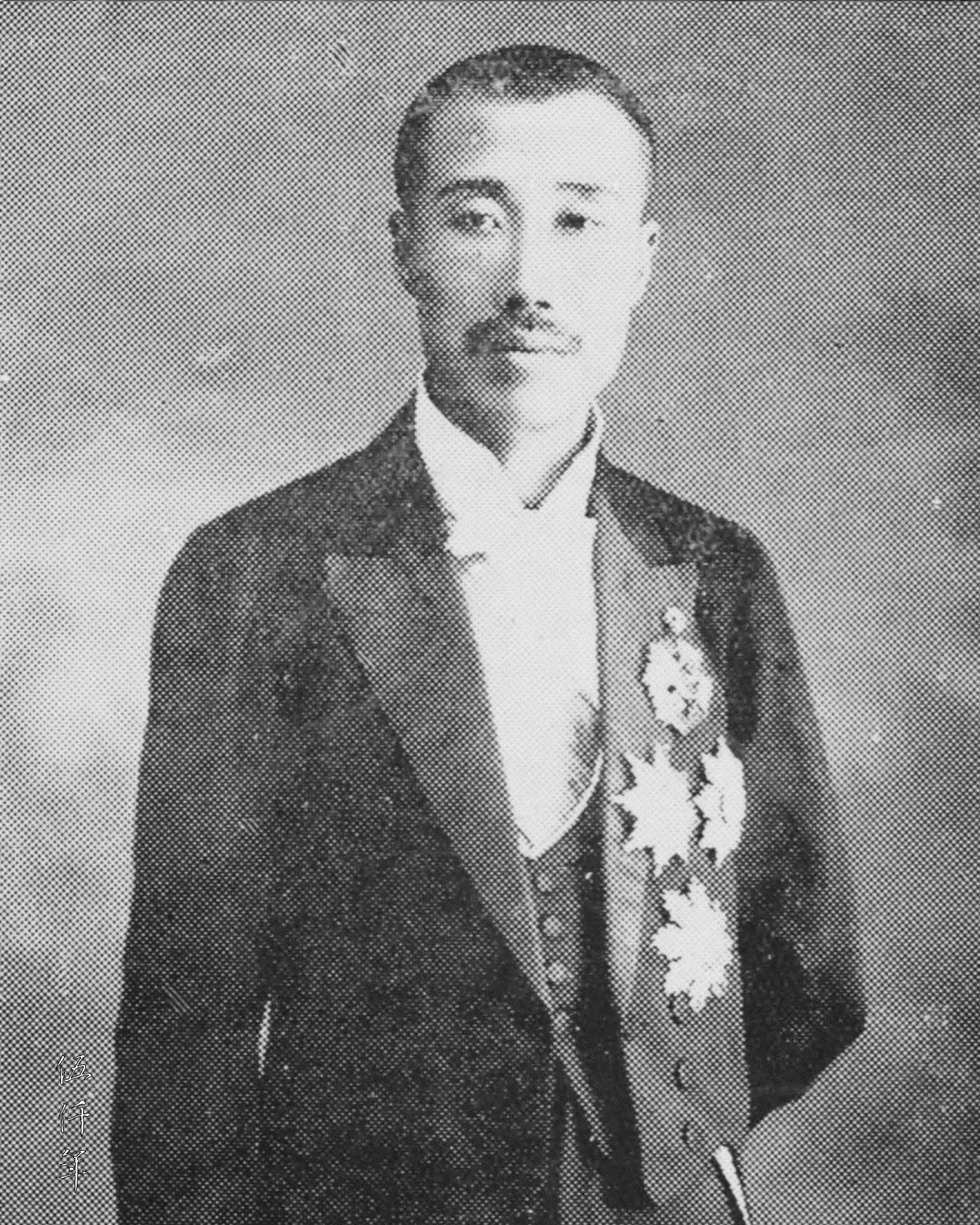
Portrait of Minister Chang Hu
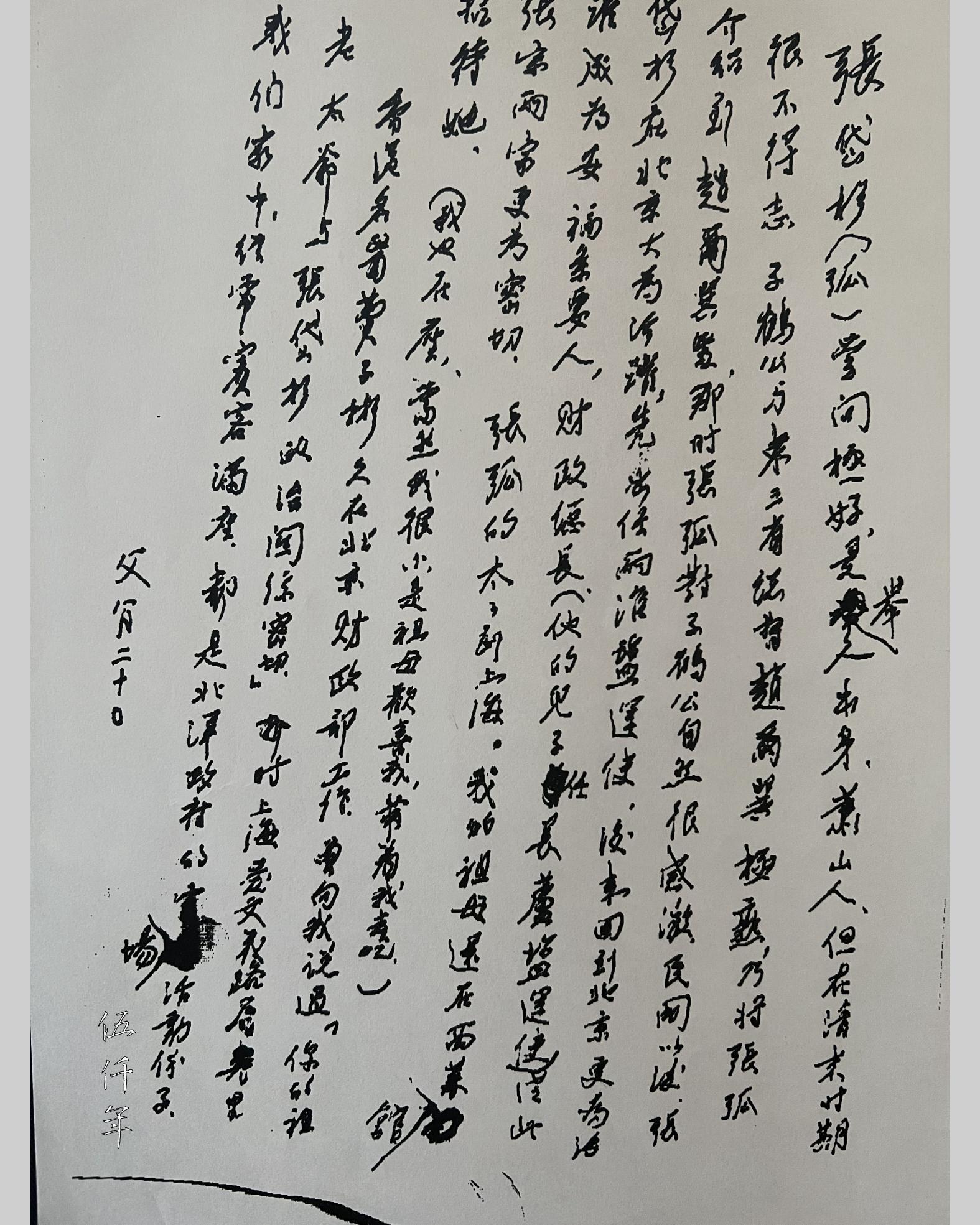
Faxed letter by Mr. Soong Hsün-leng, dated 20 August 2006
Chang Tai-shan’s endeavor to raise funds was of paramount importance to the publication of Yüeh-man T’ang Diary. On 20 August of the 95th year of the Republic of China 2006, my father sent me a letter in which he elaborated on the friendship between Chang Tai-shan and Soong Ts’u-he (宋子鶴), my great-grandfather. He wrote:
“Chang Tai-shan, original name Hu (弧), a native of Hsiao-shan, was a very learned scholar who had attained the qualification of provincial graduate, or chü-jen (舉人). However in late Ch’ing, he was quite unsuccessful in his official career. My grandfather Ts’u-he was a close friend of Chao Erh-hsün (趙爾巽 1844-1927), governor-general of Liaoning, Kirin and Heilungkiang provinces. Ts’u-he then introduced Chang Hu (Tai-shan) to Chao Erh-hsün.
Naturally Chang Hu was very grateful to my grandfather. After the founding of the Republic of China, Chang Hu became very active in Peking. He first served as salt distribution commissioner of Liang Huai (the areas in the south and north of the mouth of Huai River in Kiangsu province). Later, after returning to Peking, he was even more active than before, becoming a key figure in the Anfu Clique (安福系) of politicians, and was appointed minister of finance. His son served as salt distribution commissioner of Ch’ang-lu. From then on, the Chang and Soong families became ever closer. When Chang Hu’s wife visited Shanghai, my grandmother entertained her at a Western restaurant. I was there too, though still very young, My grandmother was fond of me and took me along for the meal. The well-known Chinese physician in Hong Kong Fei Tzu-pin (費子彬 1890-1981), who worked in the Ministry of Finance in Peking for a long time, once told me: ‘Your grandfather had close political ties with Chang Tai-shan.’ At that time, our family residence on Kuang-jen Lane beside Avenue Road in Shanghai was frequently filled with visitors, all politicians active in the Peking government.”
In the letter, “Ts’u-he” refers to my great-grandfather. His original name was Tsun-wang (尊望), his tzu was Tzu-he (子鶴), and his hao was Chi-an (寄盦). He was born in the 24th year of the Tao-kuang reign 1844, and died in the 13th year of the Republic of China 1924. He was appointed deputy salt distribution commissioner of the eastern and western areas of Chekiang province, salt distribution commissioner of the Ho-tung Circuit in Shansi province, as well as commander-general of the anti-smuggling army. He authored an unpublished work Selected Writings on Salt Administration (Yen-cheng Chi-yao 鹽政輯要). The epitaph on his tomb was written by the Hanlin academician Chin Hsi-hou (金息候 1878- 1962), whose original name was Chin Liang (金梁).
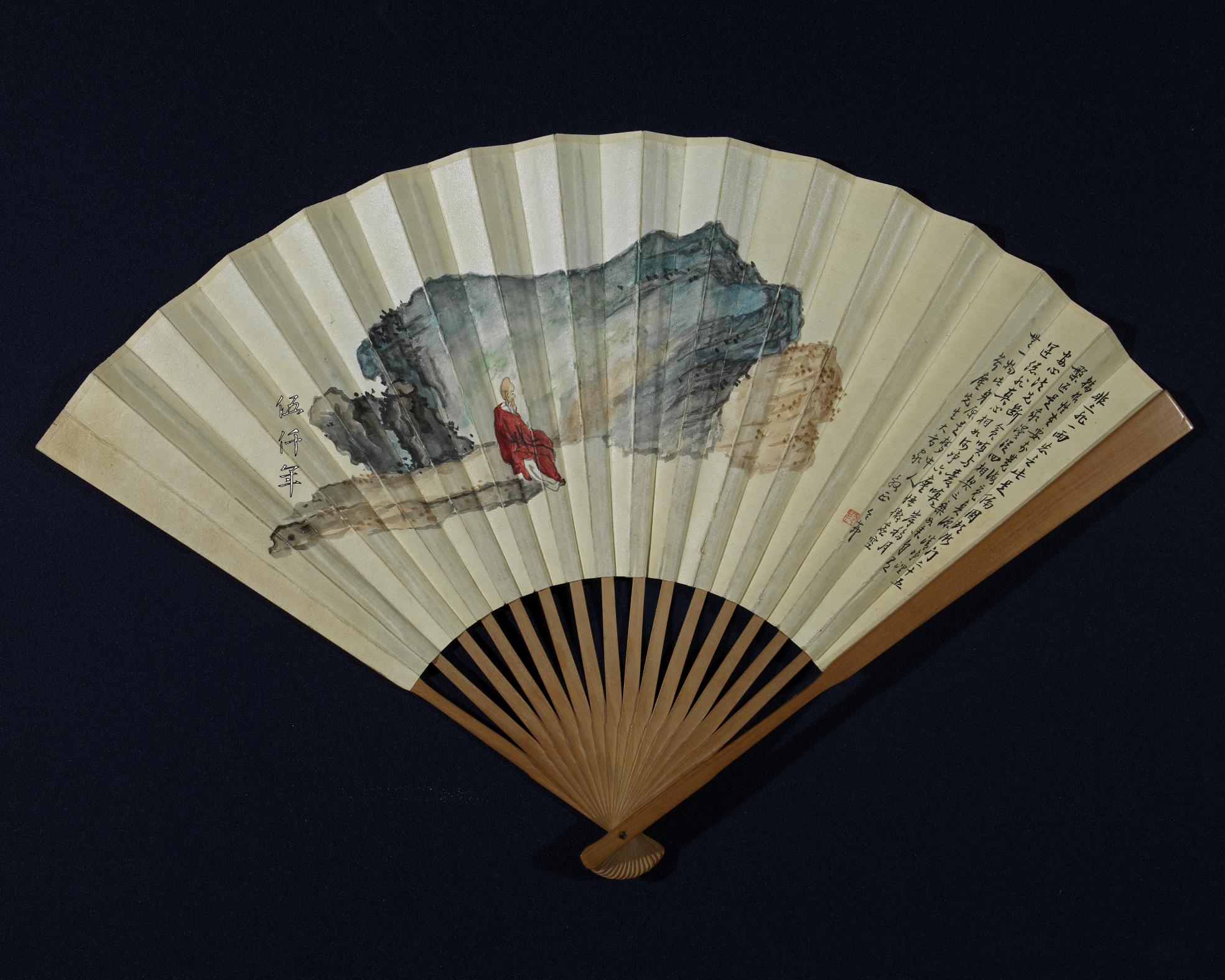
Folding fan with painting by Yang Ling-fu on one side and calligraphy by Chang Hu on the other
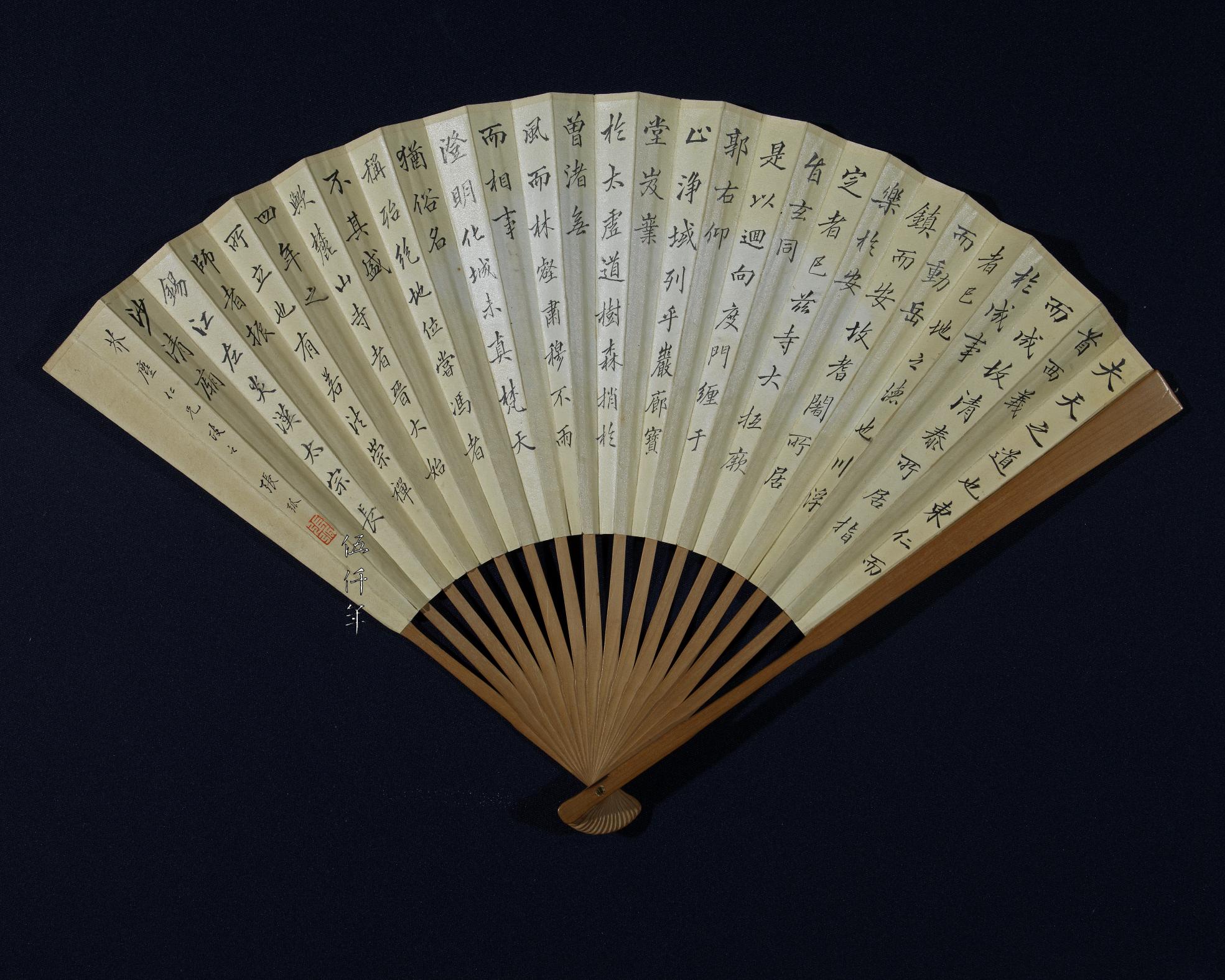
Folding fan with calligraphy by Chang Hu on one side and painting by Yang Ling-fu on the other
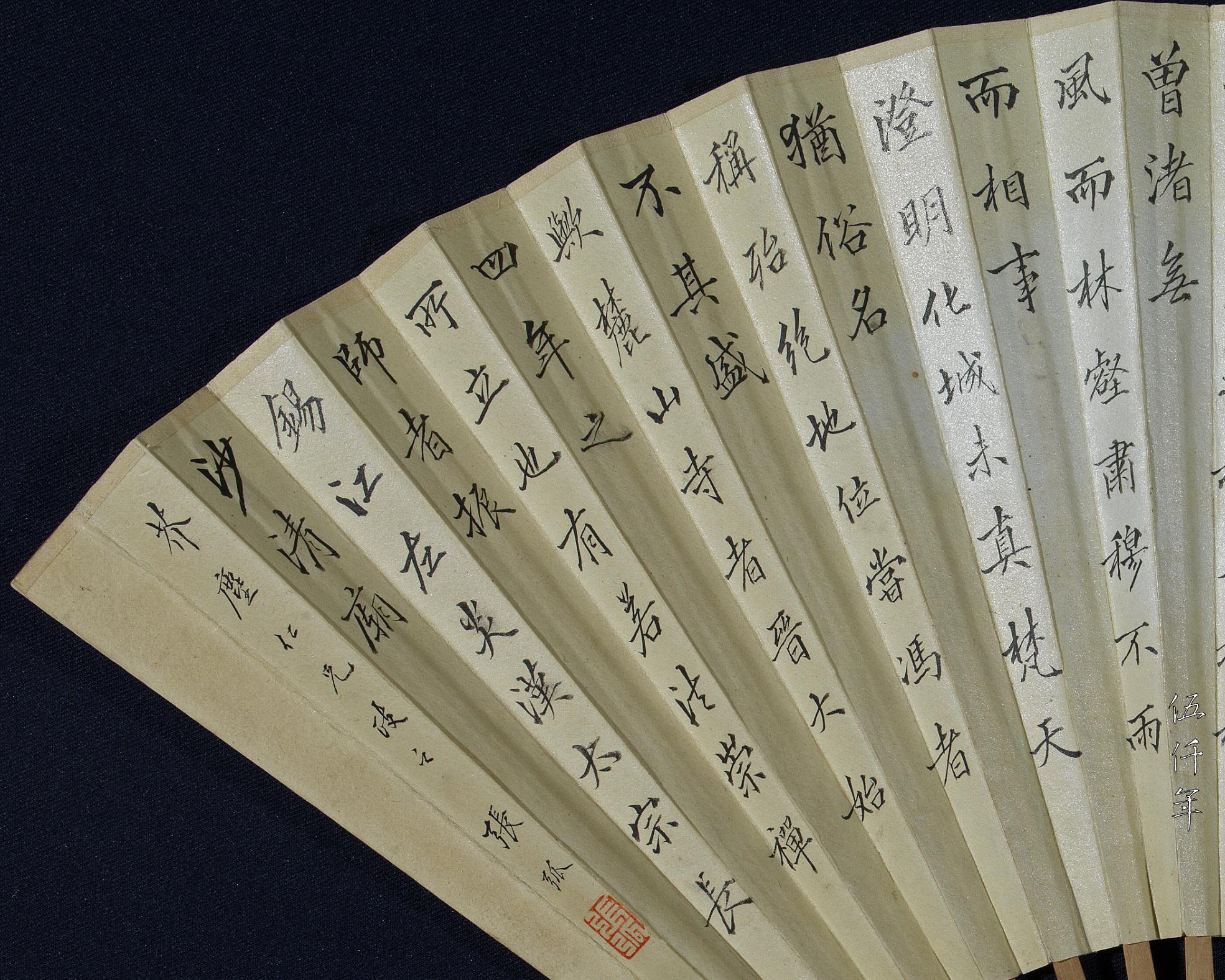
Detail of folding fan with calligraphy by Chang Hu
In the Studio of Prunus Ode, there is a folding fan with the calligraphy of Chang Tai-shan on one side and a painting by Yang Ling-fu (楊令茀 1887-1978) on the other side. The folding fan was dedicated to Ch’ien Chieh-ch’en (錢芥塵 1886-1969). We are thus able to appreciate the calligraphy of Chang Tai-shan.
The text of the regular script inscribed by Chang Tai-shan comes from the opening passage of Lu-shan Temple Stele (Lu-shan Ssu Pei麓山寺碑). It reads:
“According to the Way of Heaven, the east signifies benevolence, carrying the meaning of beginning, the west signifies righteousness, carrying the meaning of accomplishment. Thus peace and quiet reside in the West with those who are accomplished.
According to the Nature of Earth, rivers always flow and move, mountains are constant and calm. That is why Buddhists like to live in a place of tranquility. The seclusion of this monastery is based upon the same principle. The merit gained in practice turns to grace those seekers of deliverance, who are gathered here on the right side of the city wall. These admirers of Pure Land line the high corridors, and the grand halls soar into the clouds.
The dense Bodhi trees stretch out to the sandbank. Without wind, the groves and ravines are silent and solemn. Without rain, all manifestations are crystal clear. The temporary realm of the monastery is beyond description, even the celestial domain is common by comparison. Worldly reputation is ephemeral, even for those in positions of power.
This Lu-shan Temple (麓山寺) was founded in the 4th year of T’ai-shih reign of the Chin dynasty (268 AD). At that time, the Buddhist monk Ch’ung carried his pewter staff and preached in the eastern and southern regions of the Yangtze River. When he first arrived in Ch’ang-sha, he stayed at the Emperor T’ai-tsung Temple from the Han dynasty.
Presented to my esteemed elder brother Chieh-ch’en, Chang Hu.”
Seal impression: “Chang Hu”.
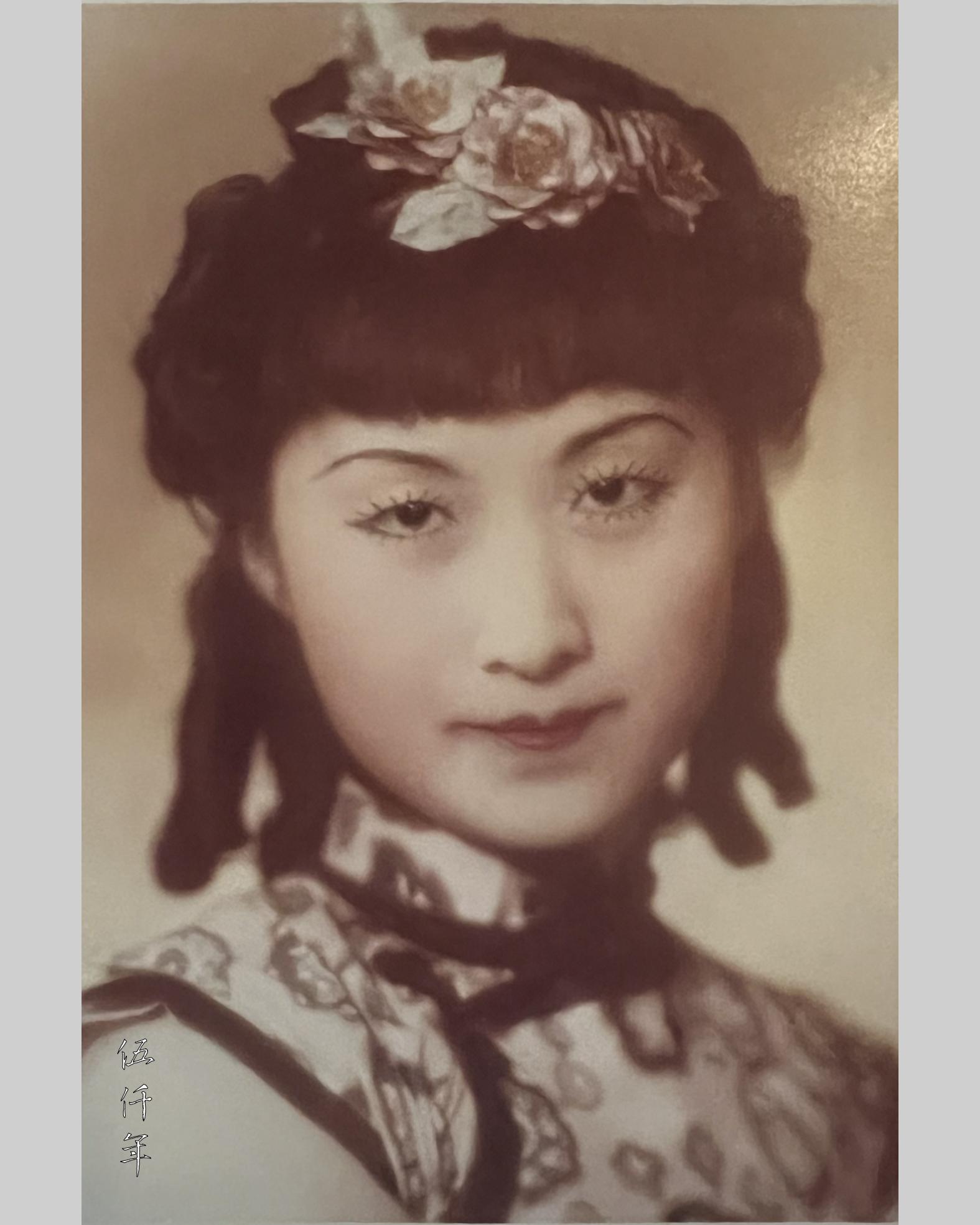
Portrait of Ms. Chou Lien-hsia
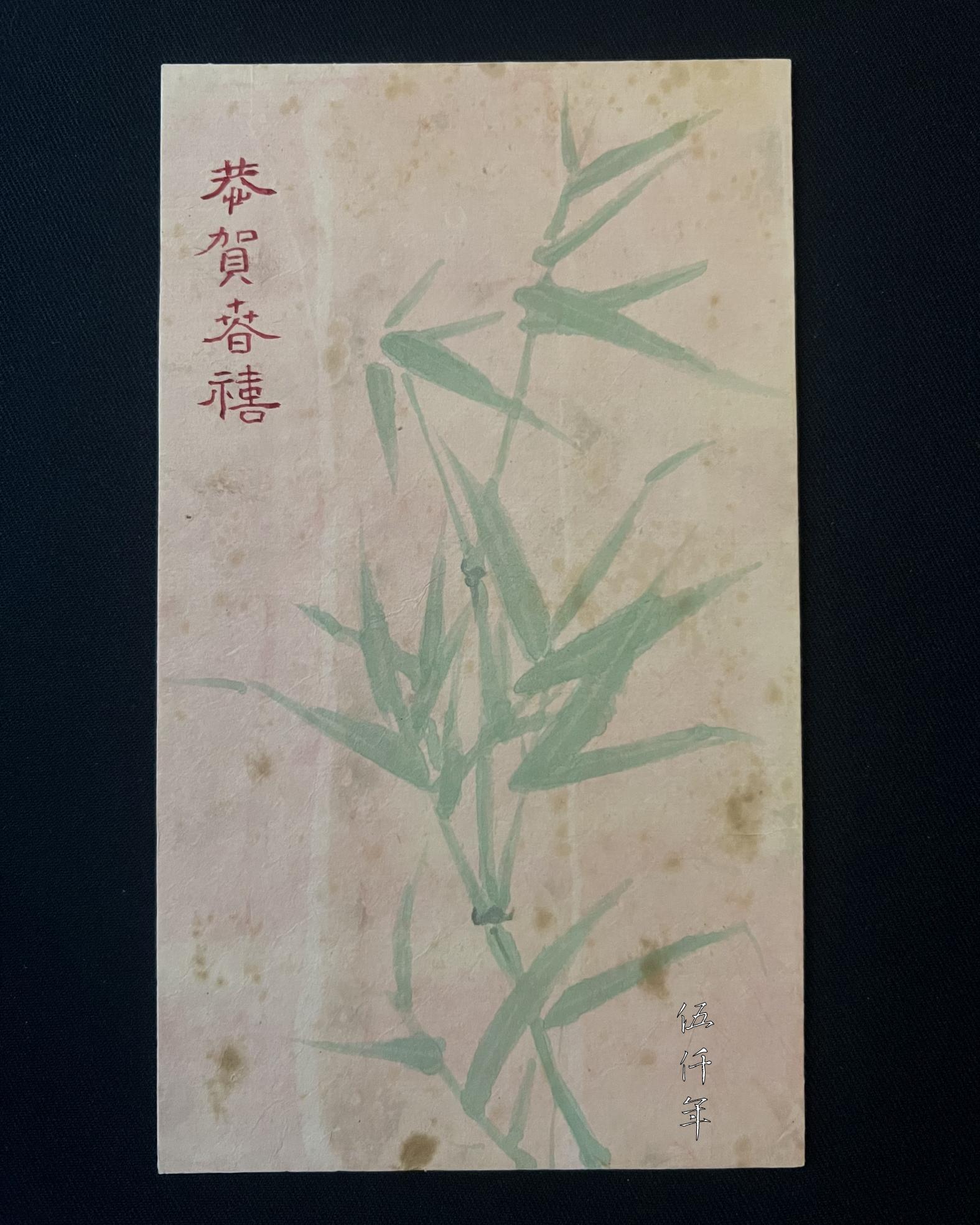
Front cover of New Year greeting card with salmon-red bamboo by Ms. Chou Lien-hsia
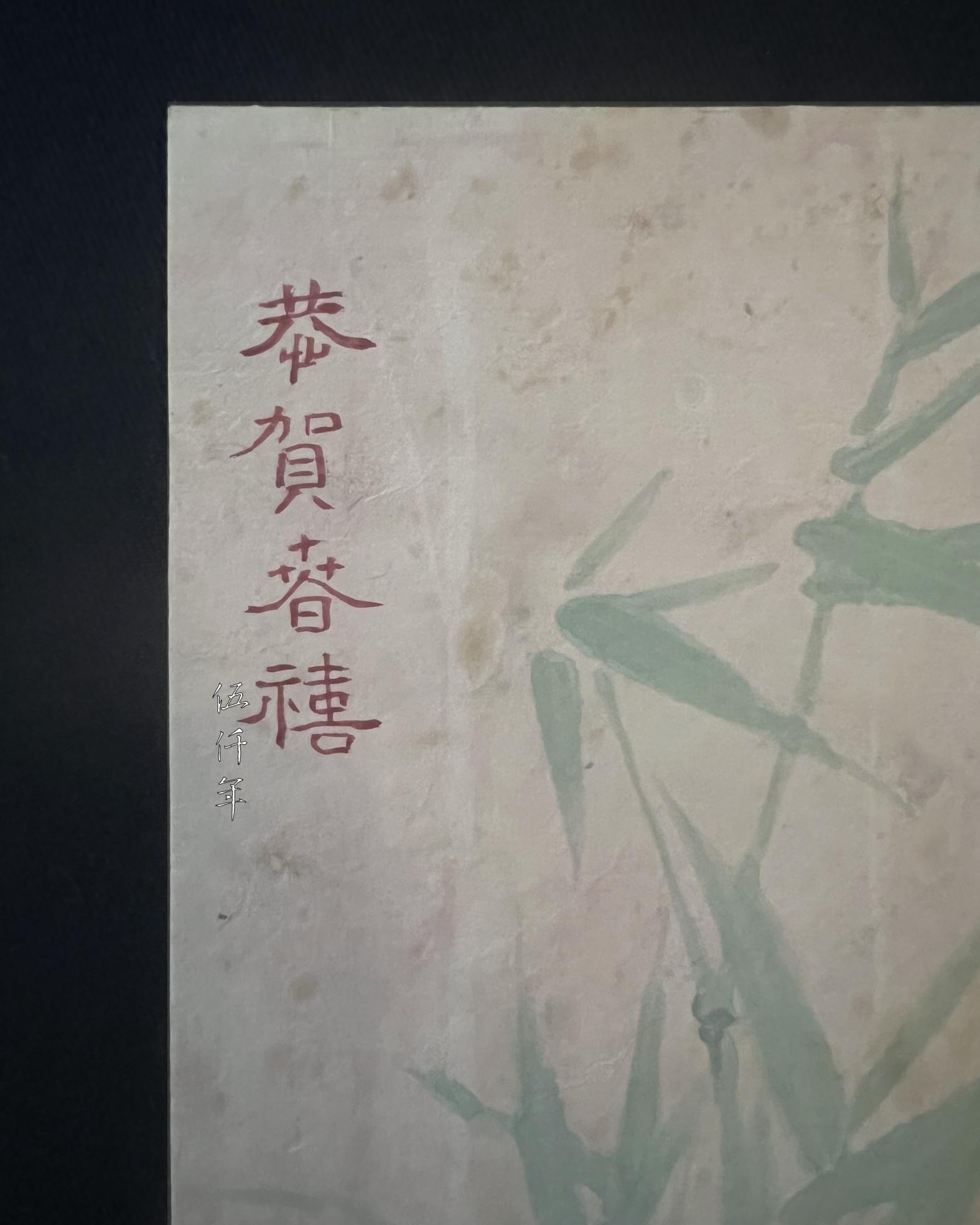
Detail of bamboo on front cover of New Year greeting card
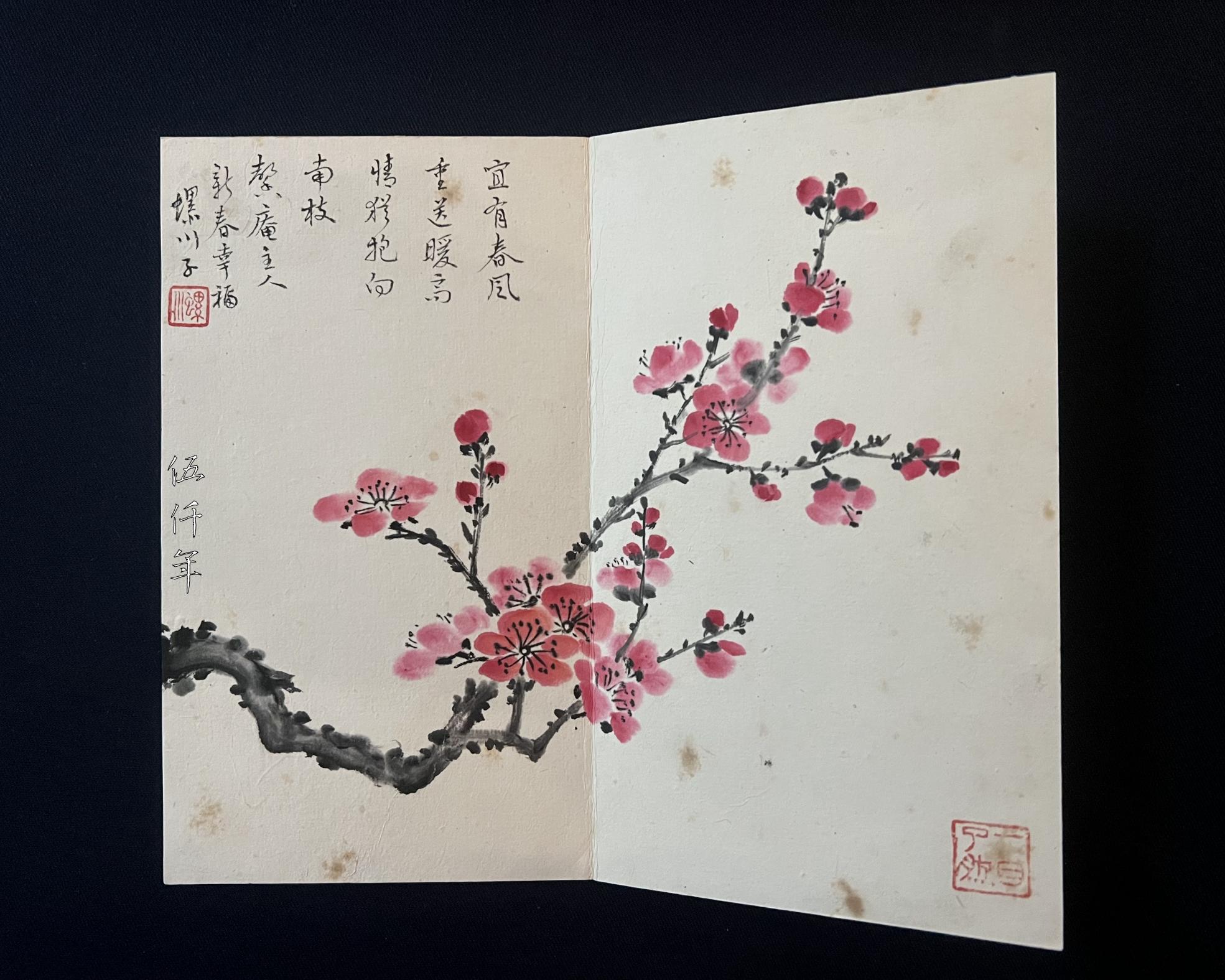
Inside pages of New Year greeting card with red prunus by Ms. Chou Lien-hsia
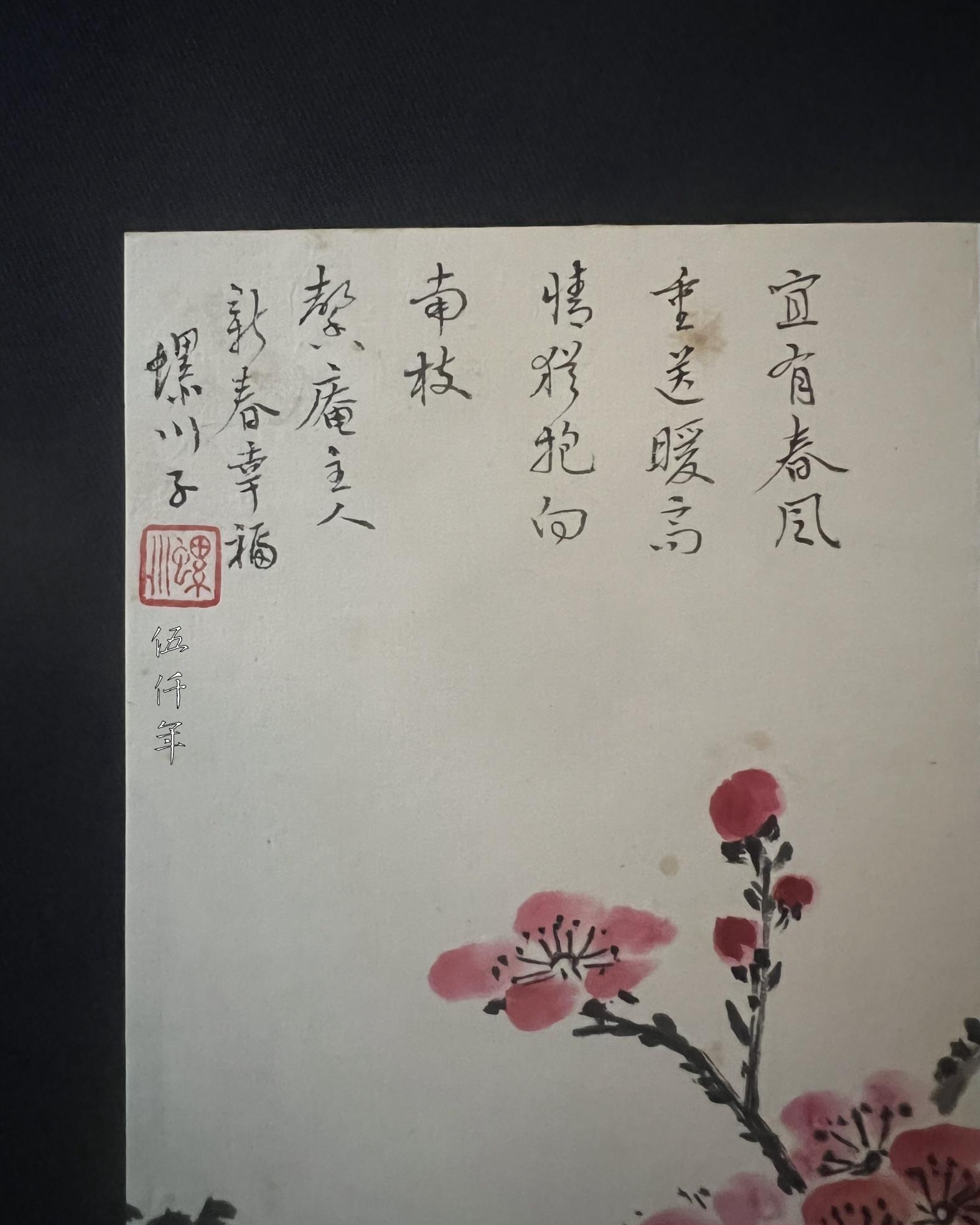
Detail of prunus on inside pages of New Year greeting card
In the spring of 1976, the tenth year of the Cultural Revolution, my father’s literary confidante Aunt Chou Lien-hsia (周鍊霞) sent a hand-painted New Year greeting card from Shanghai. On the cover was a painting of salmon-red bamboo, inscribed with the characters “Respectfully Wishing You Spring Blessings”. Inside the card was a painting of red prunus, inscribed with these words:
“How fitting the spring breeze brings warmth again,
Still embracing such deep sentiment towards the south.
Master Hsing-an,
New Year Happiness.
Luo-ch‘uan-tzu (螺川子).”
Seal impressions: “Luo-ch’uan (螺川)”, “I-mu-liao-jan (See clearly with one eye一目了然)”.
Luo-ch‘uan-tzu was the hao of Aunt Chou Lien-hsia.
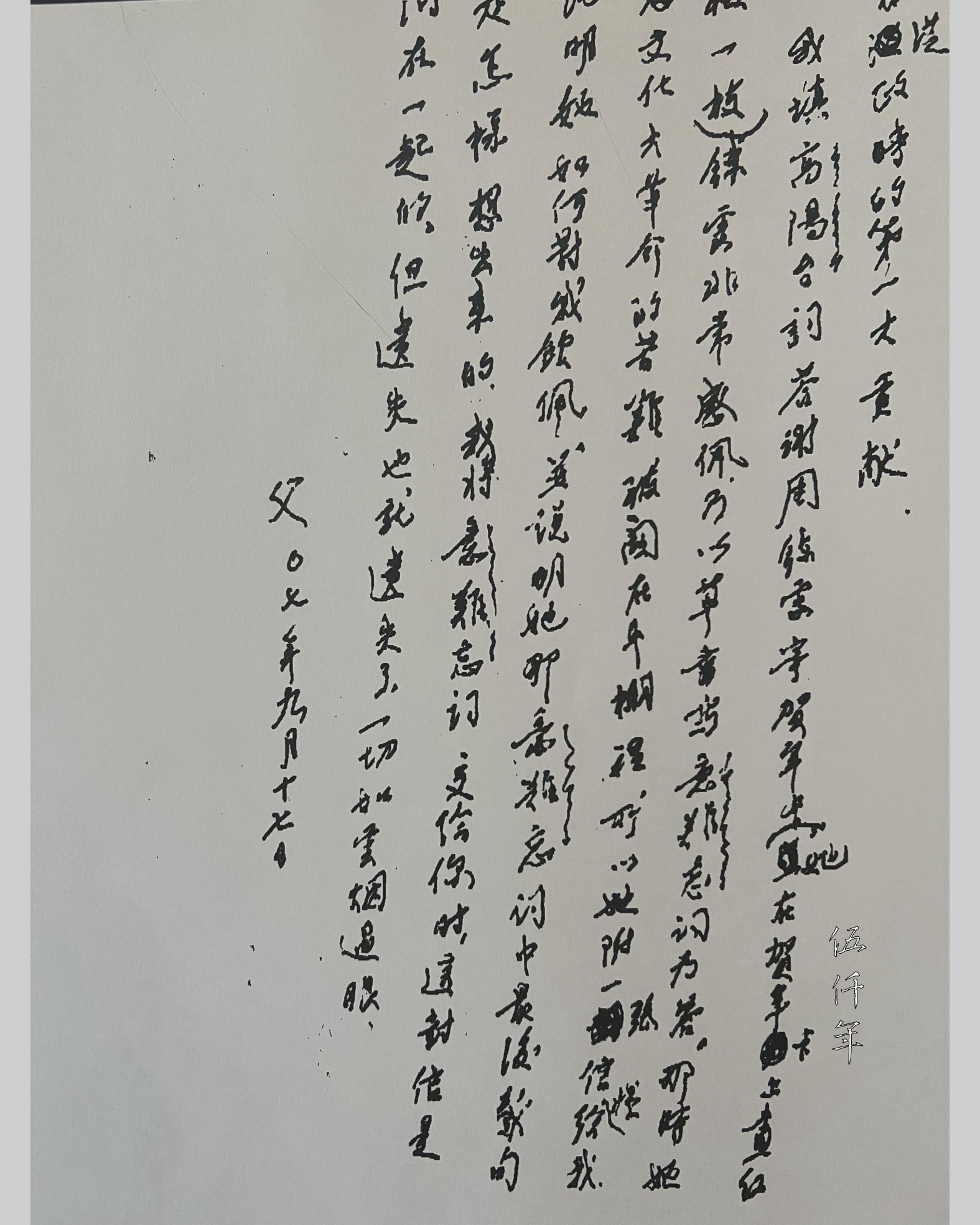
Faxed letter by Mr. Soong Hsün-leng, dated 17 September 2007
On 17 September 2007, thirty-one years after the end of the Cultural Revolution in 1976, my father wrote me a letter in which he recalled the hand-painted greeting card. Some of his words are:
“I composed a tz’u lyric To the tune Kao yang t’ai (高陽台) to thank Chou Lien-hsia for her New Year greeting card (she painted a red prunus branch on the card). Lien-hsia was deeply moved and appreciative, in return she wrote a tz’u lyric To the tune I nan-wang (意難忘) in cursive script.
At that time, she was enduring the hardships of the Cultural Revolution and was confined in the ‘cow shed’ (an illegal place of political detention). She enclosed a letter to me in which she spoke of her admiration and explained how she conceived the closing lines of her I nan-wang tz’u lyric. When I gave you the sheet of I nan-wang tz’u lyric, that letter was originally attached with it. But if it is lost, it is lost. All things pass before the eyes like cloud and smoke.”
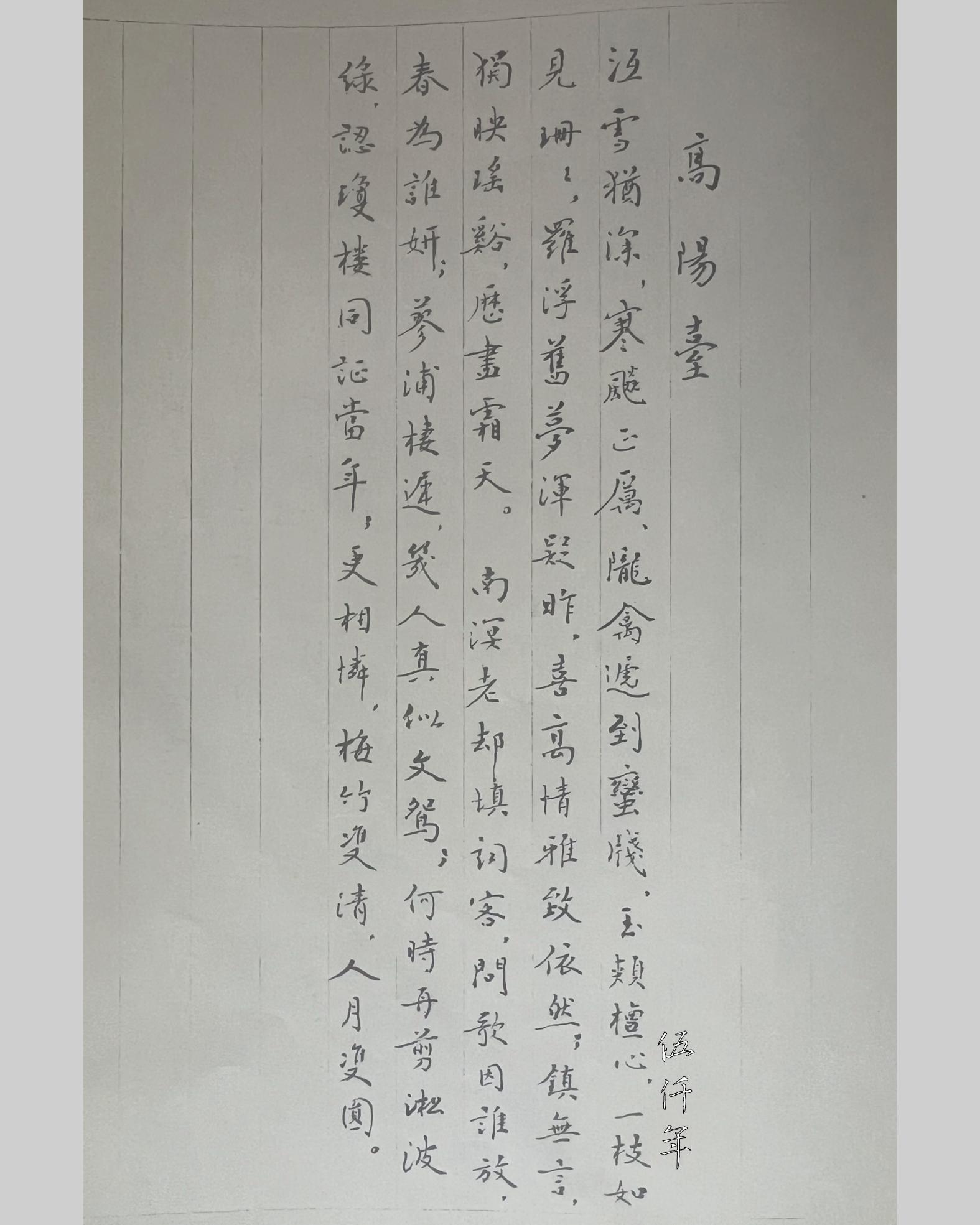
To the tune Kao yang t’ai handwritten by Mr. Soong Hsün-leng
My father composed the tz’u lyric To the tune Kao yang t’ai to thank Aunt Chou Lien-hsia. It reads:
“The snow lies frozen and deep;
A cold wind bites.
A parrot carries a letter
In its beak.
Jade cheeks,
Sandalwood heart
Of the plum-blossom;
Like these petals
I see you
Come slowly towards me.
My dream encounter
With the Plum-blossom Fairy
Seems but yesterday.
I rejoice to see
Nothing has changed.
Your lofty sentiments,
Your exquisite taste,
Are as of old.
Ineffable,
A lone reflection
In the water,
Going through
This frosted world.
Here in the Southern Seas
This old poetaster
Asks
For whom
Are the songs sung?
For whom
Is the spring fair?
Faithful birds
Nest on the river;
How many keep faith
As they do?
When will we once again
Cut through the green waters
Of Woosung River?
When will we
Find the beautiful house?
Reaffirm the past?
My feelings now are deeper,
Purer,
Than plum and bamboo.
As the moon is round,
So will our love
Form a circle.”
The tz’u lyric To the tune Kao yang t’ai was translated by Prof. John Minford, first published in The Fragrant Hermitage in 2005.
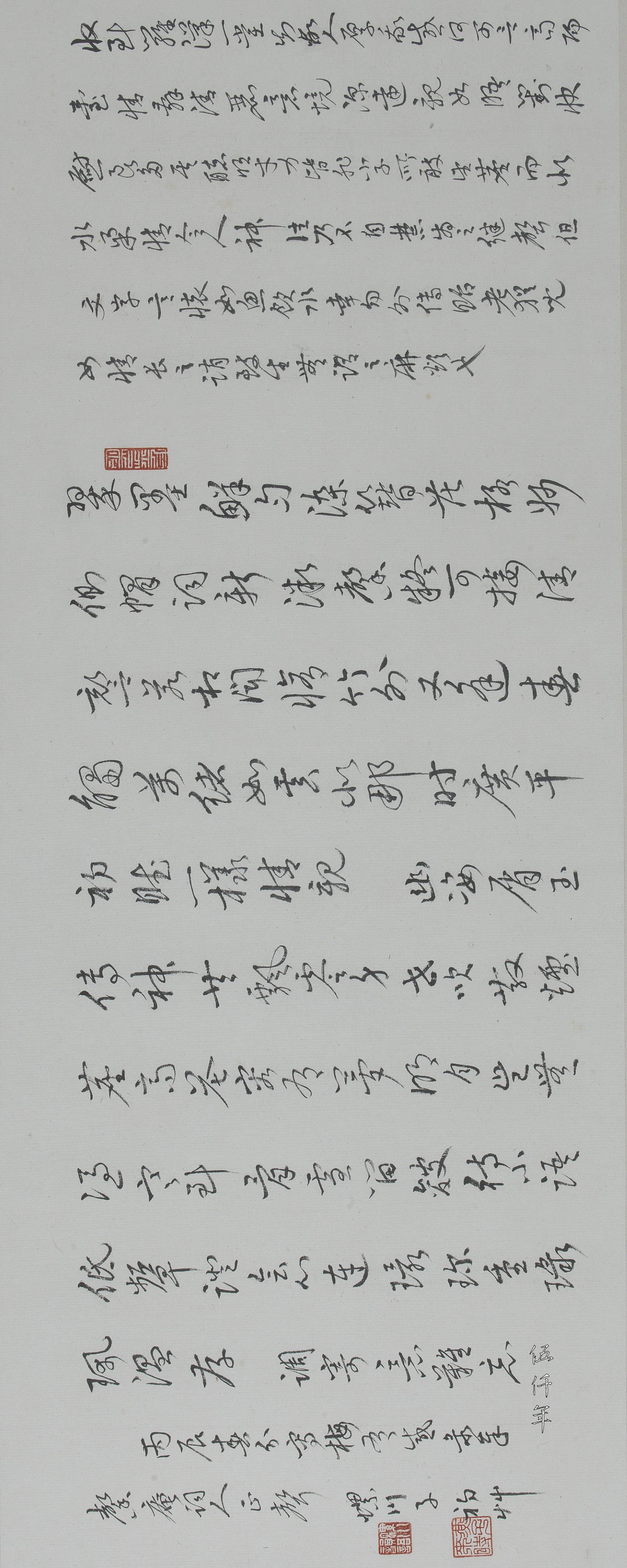
To the tune I nan-wang handwritten by Ms. Chou Lien-hsia
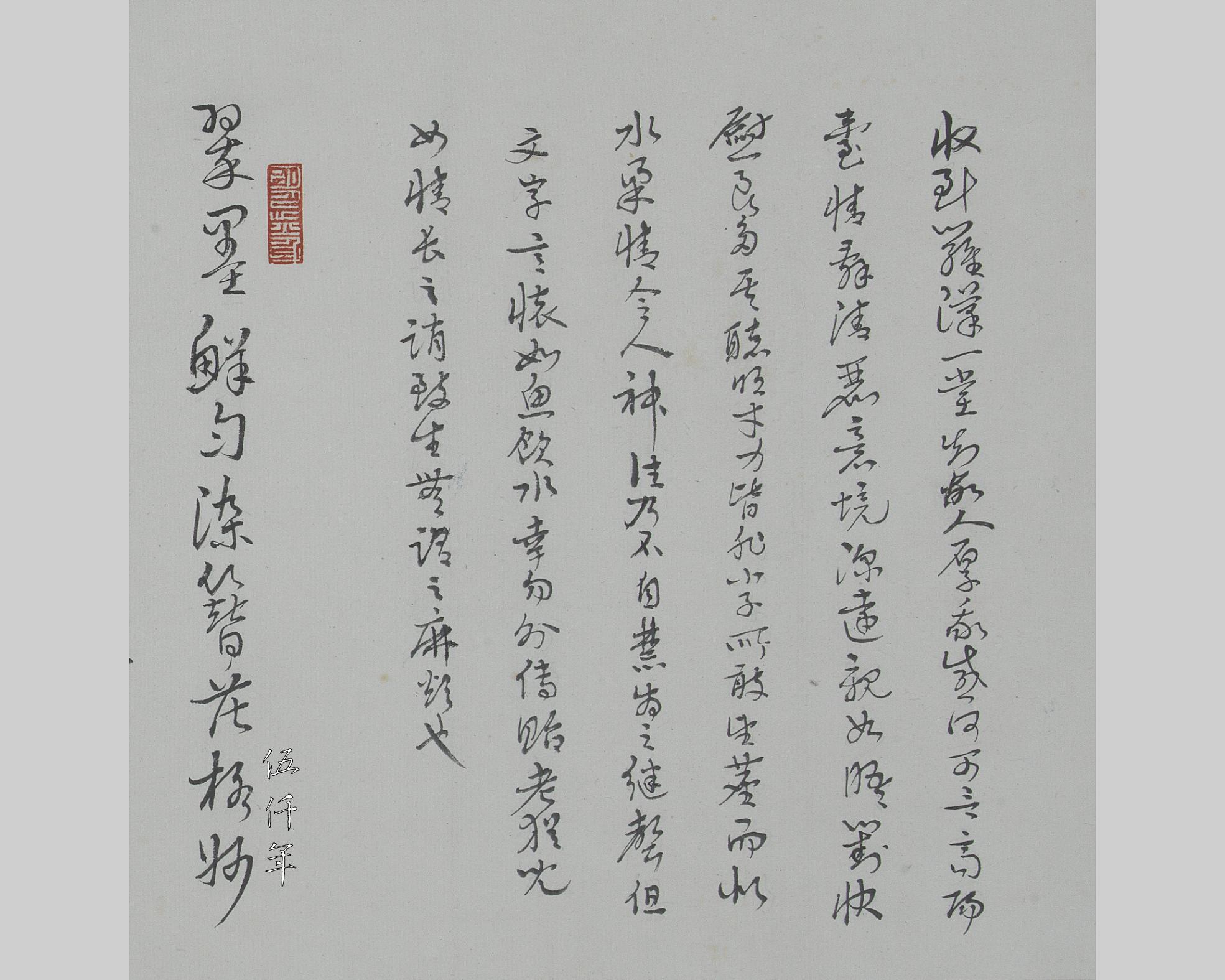
First detail of To the tune I nan-wang handwritten by Ms. Chou Lien-hsia
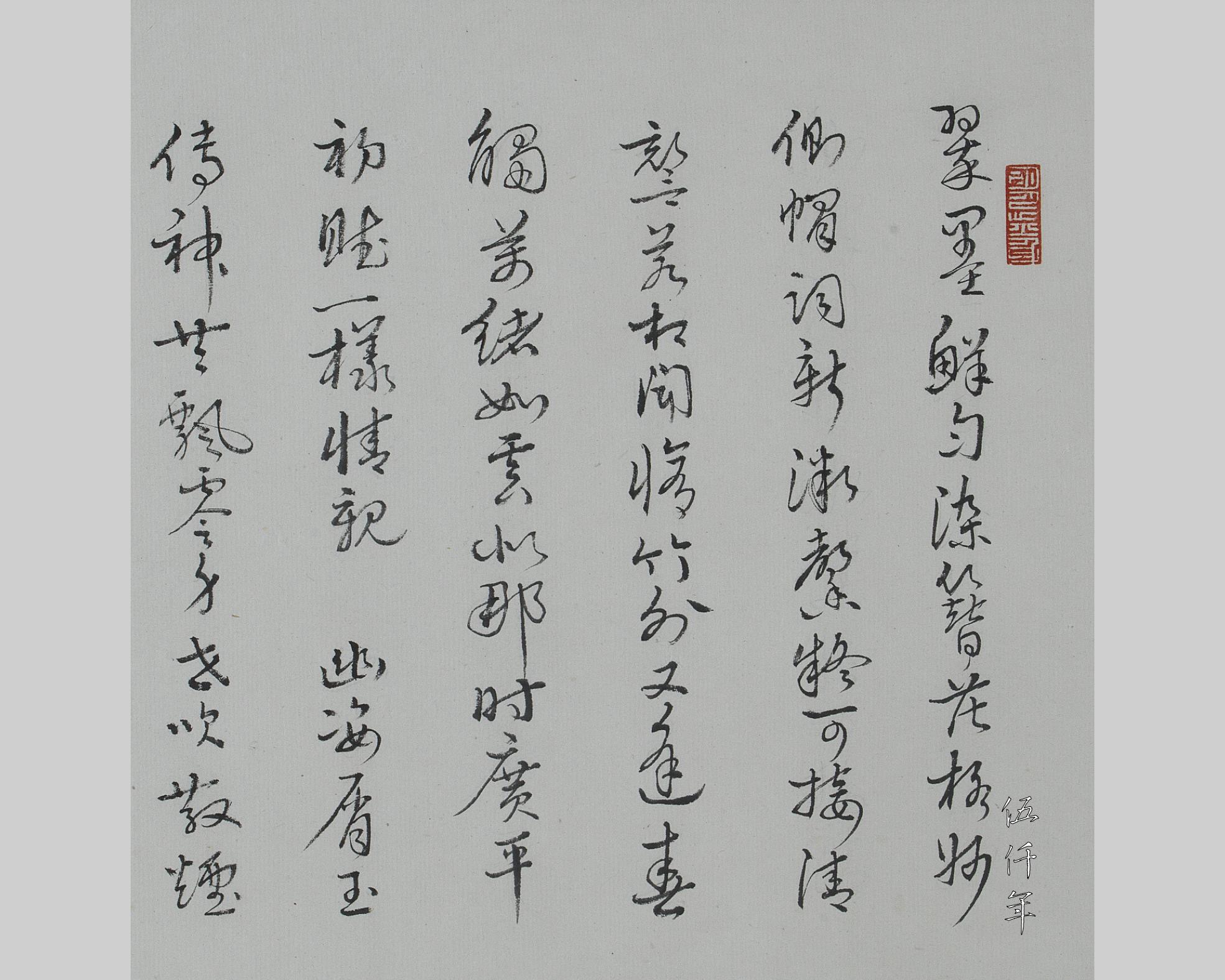
Second detail of To the tune I nan-wang handwritten by Ms. Chou Lien-hsia
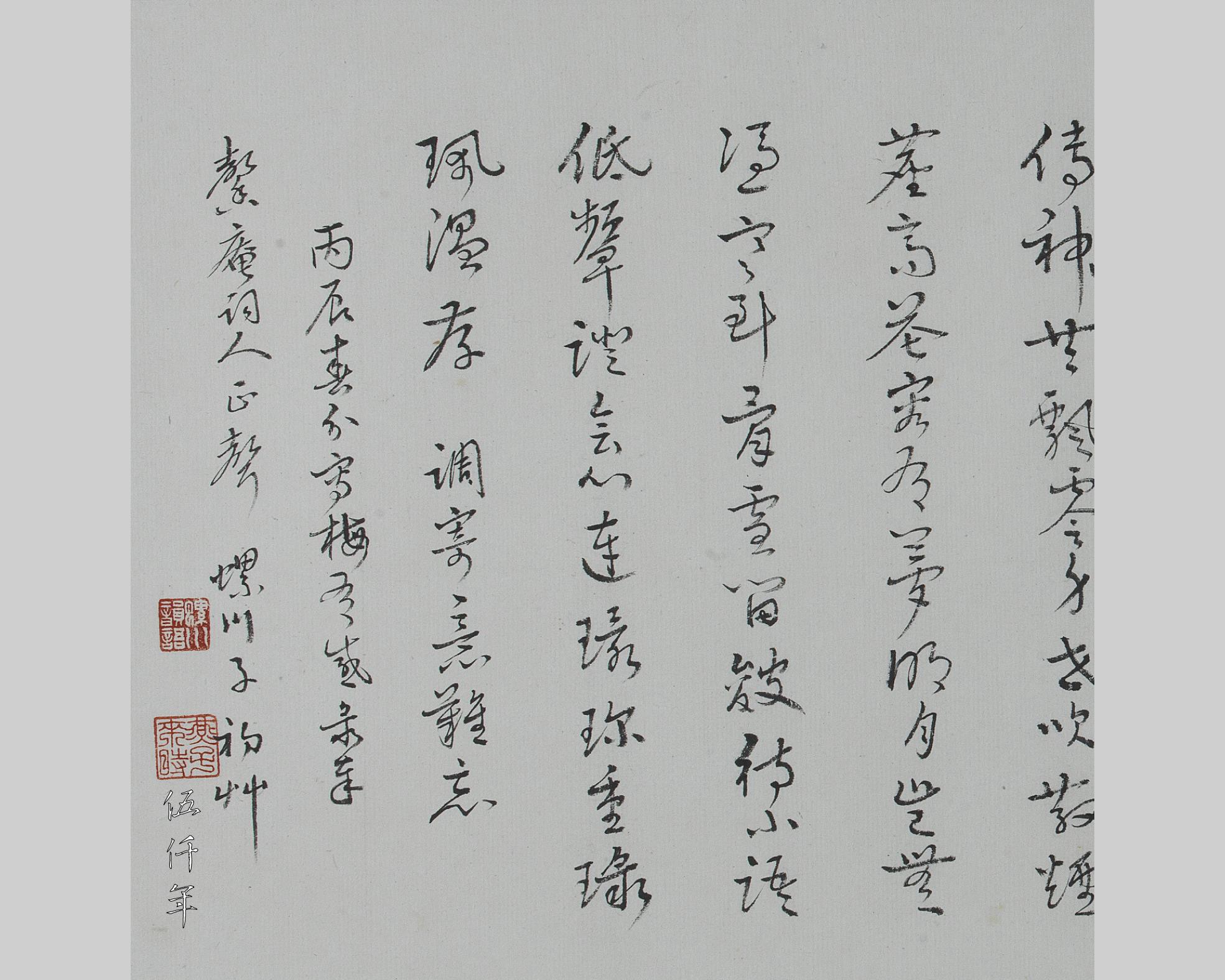
Third detail of To the tune I nan-wang handwritten by Ms. Chou Lien-hsia
Aunt Lien-hsia replied with a lyric To the tune I nan-wang, it reads:
“Upon receiving a statue of Lohan, I recognize the kind favour from my old friend. Words fail to encapsulate my gratitude. The language of Kao yang t’ai lyric is lucid and graceful, the artistic conception is deep and far, it is as intimate as meeting face-to-face, bringing me so much joy and comfort. Such brilliance and talent are far beyond anything that my meagre-self can hope to match. Your affection runs softly and gently like flowing water, and my spirit is lost in it. I am unable to restrain myself from composing a follow-up lyric. Yet words that speak the heart, is akin to fish drinking water. Please do not circulate this, lest we invite ridicule for romantic attachment even in old age and foment unnecessary trouble.
Luster of ink,
Fresh and even;
Writing by hand,
Neat and stylish;
A debonair offering
Of pristine lyric.
Fragrance so light,
Seems I can smell;
Voice so clear,
Seems I can hear;
Beyond this moment,
Comes Spring.
Feel the brush,
And emotions surge.
Recall years before,
Your first lyric;
Love so close,
No lesser today.
Lofty demeanor
Sketched in words;
Our fate entwine,
Both lives adrift;
Gust tore us apart
In dust and smoke.
Your exalted abode,
Haven for dreams;
Luminous moon,
An assured witness.
Chill touches the bone,
Wrinkles cast the skin.
Waiting to tell you
Softly and coyly,
From heart’s bottom
To take care
Over and over.
The jade pendant gift
Is still warm of wear.
A composition To the tune I nan-wang.
Written in Spring, third month of ping-ch’en (丙辰) year, while painting prunus. Copied and presented to Hsing-an the tz’u poet for rectification.
First draft by Luo-ch‘uan-tzu.”
Seal impressions: “Rhymed words by Luo-ch’uan (螺川韻語)”, “When swallows visit (燕子來時)”, “Incarnation of luminous moon (明月前身)”.
The I nan-wang lyric was composed in ping-ch’en year, corresponding to 1976.
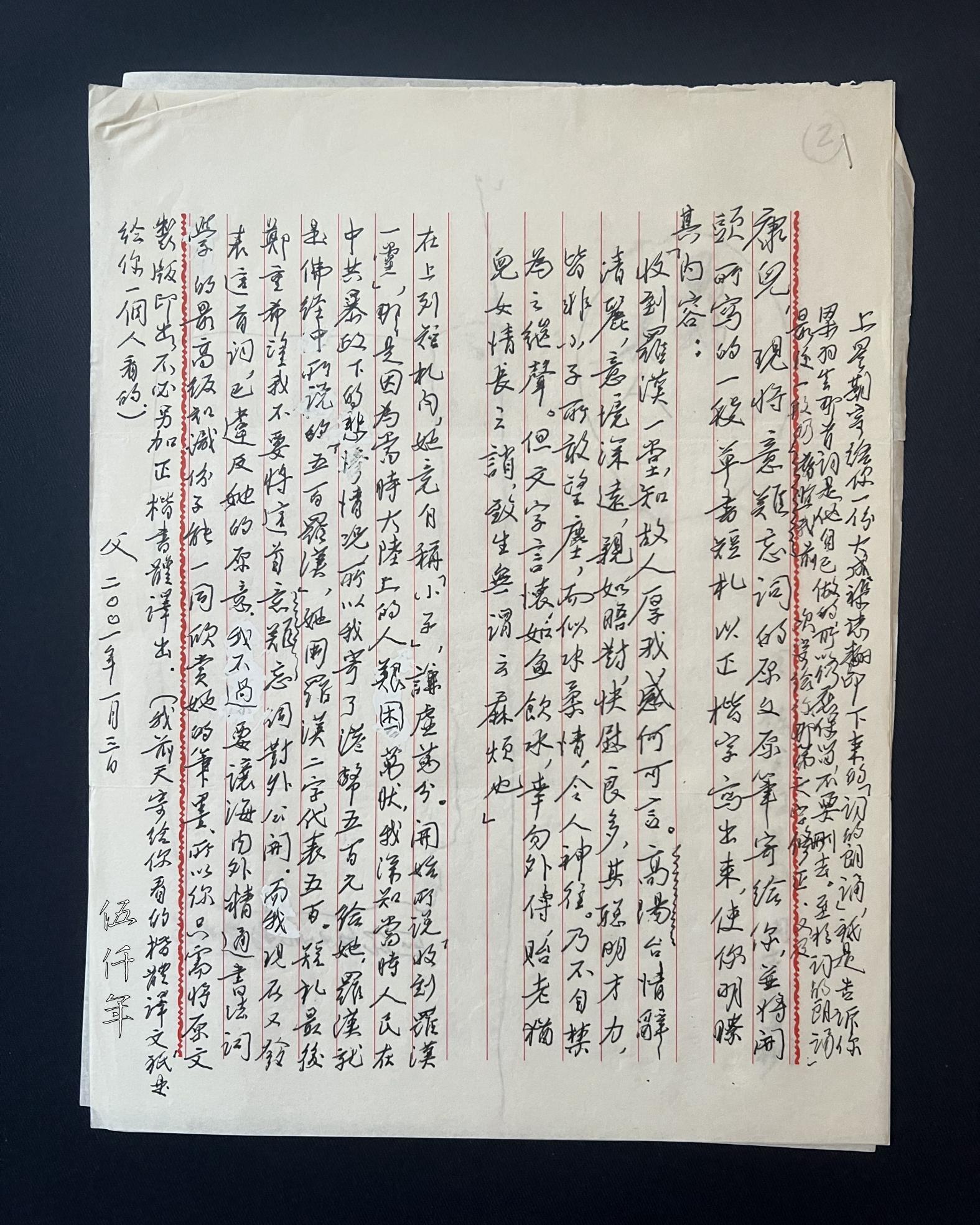
Letter by Mr. Soong Hsün-leng, dated 3 January 2001
Over the following few decades, my father wrote about this tz’u lyric To the tune I nan-wang on a number of occasions. His letter on 3 January 2001 reads:
“Son: I am now mailing you the original manuscript of I nan-wang lyric. I have also transcribed the attached cursive script letter, reproducing the text in regular script so that you can understand her writing …
In the attached short letter, she even referred to herself as ‘my meagre-self (小子)’, an expression of deep modesty. The first sentence was composed with these words: ‘Upon receiving a statue of Lohan’. It came about due to the desperate living conditions then prevailing in mainland China. I knew too well the immense suffering endured by the Chinese people under the tyranny of the communist regime at that time. So I sent her five hundred Hong Kong dollars. The word ‘Lohan’ refers to the Five Hundred Arhats in Buddhist sutras, therefore she used ‘Lohan’ to indicate the sum of five hundred.
At the end of the letter, she earnestly asked me not to make the I nan-wang lyric public. My publication of this lyric now already contradicts her original wish. I do so merely hoping that those connoisseurs of calligraphy and tz’u lyric inside and outside China, intellectuals of the highest standard, can appreciate her writings and calligraphy. Therefore, you only need to make a reproduction of the original manuscript, there is no need to include the transcript in regular script. (The transcript in regular script I sent you the day before yesterday was intended for you to read alone.)”
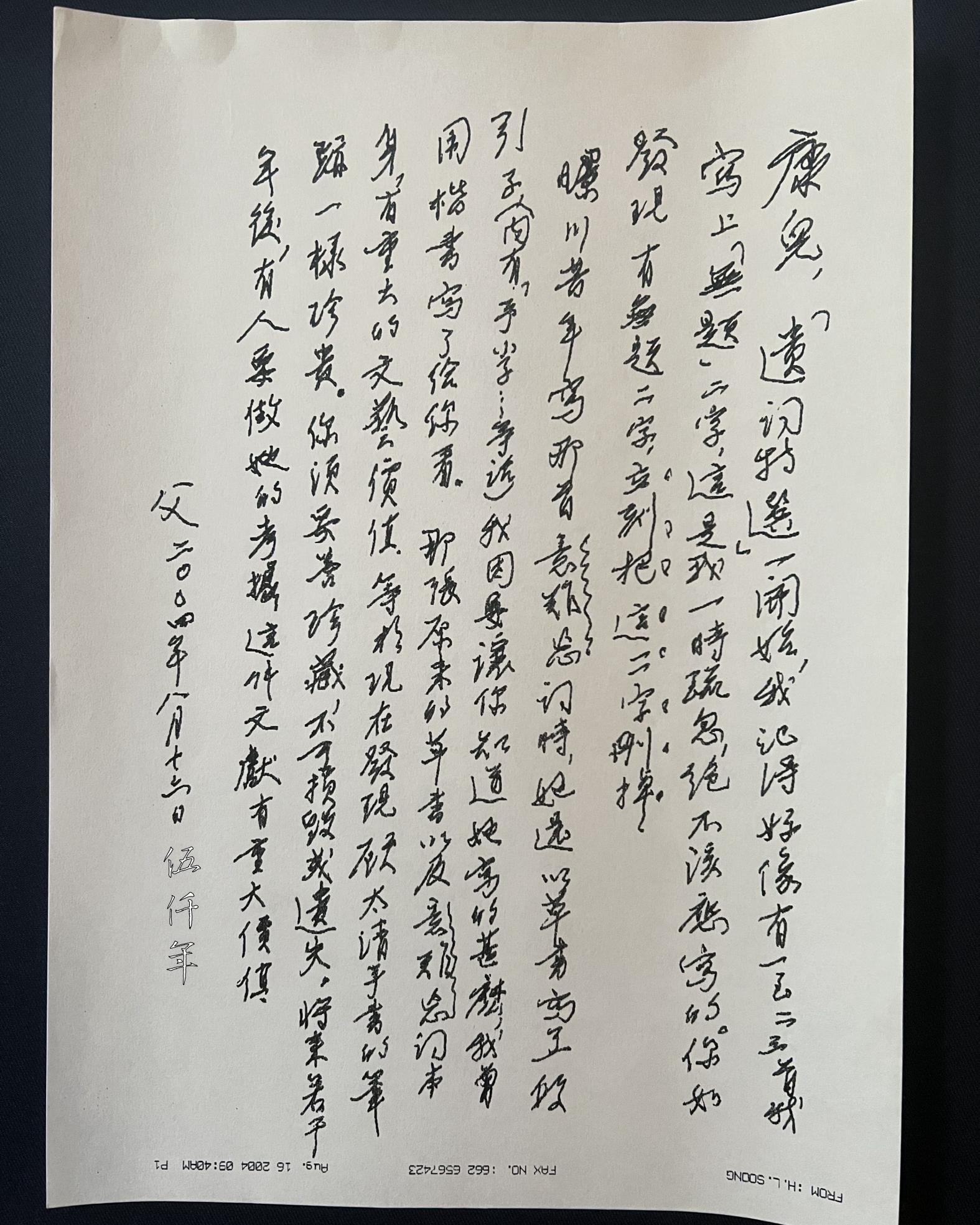
Faxed letter by Mr. Soong Hsün-leng, dated 16 August 2004
Three years later, on 16 August 2004, my father wrote to me in a letter:
“When Luo-ch’uan composed that I nan-wang lyric years ago, she also wrote a prefatory note in cursive script (containing expressions such as ‘my meagre-self’, etc.). Because I wanted you to understand what she wrote, I transcribed it into regular script for you to read. The original note in cursive script, together with the I nan-wang lyric itself, possess immense literary and artistic value. It is comparable to the discovery of a handwritten manuscript by Ku T’ai-ch’ing (顧太清 1799-1877) today. You must safeguard it, not damage or lose it. In the future, in years to come, should anyone undertake scholarly research on her work, this document will prove to be of great importance.”
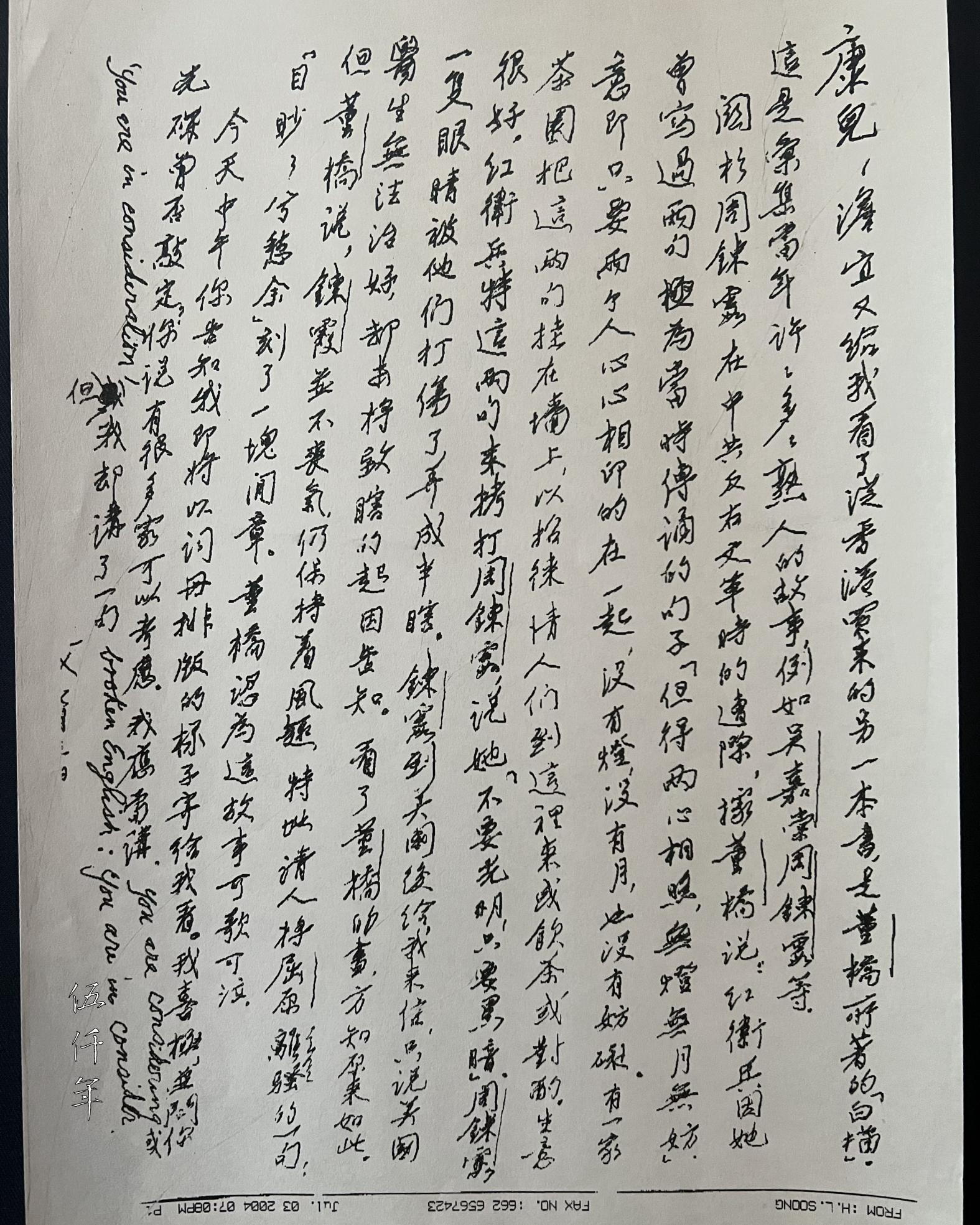
Faxed letter by Mr. Soong Hsün-leng, dated 30 July 2004
On 30 July 2004, my father wrote a letter to discuss Aunt Chou Lien-hsia’s ordeal during the Cultural Revolution:
“Son, your sister showed me another book she bought in Hong Kong, Line Drawing (Pai-miao白描), written by Tung Ch’iao (董橋). It is a collection of stories about many acquaintances from those years, such as Wu Chia-t’ang (吳嘉棠 1913-1982) and Chou Lien-hsia, among others.
Regarding Chou Lien-hsia’s hardship during the Anti-Rightist Campaign of the Cultural Revolution, Tung Ch’iao wrote: The Red Guards targeted her because she had written two lines that became very popular at the time - ‘As long as two hearts appear to light up each other, it does not matter if there is no lamp or moon.’ This means that when two people are in love together, even if they are deprived of lamplight or moonlight, it makes no difference. A teahouse displayed these two lines on its wall to attract romantic couples to drink tea or wine, and business flourished. The Red Guards, however, seized upon the lines to denounce and torture Chou Lien-hsia, accusing her of ‘rejecting light and embracing darkness only’. During the beatings they injured one of her eyes, leaving her partially blind. After Chou Lien-hsia emigrated to the United States, she wrote to me only to say that American physicians were unable to treat her condition, never mentioning how she had lost her sight. It was only after reading Tung Ch’iao’s book that I learned the cause. However, Tung Ch’iao observed that she never succumbed to despair, she remained witty and humorous. She even had a seal specially carved with the line from Li Sao (離騷) by Ch’ü Yüan (屈原 339 BC – 278 BC): ‘My sight is murky and I am filled with sorrow (目眇眇兮愁余)’. Tung Ch’iao regarded this episode to be both deeply moving and admirable …”
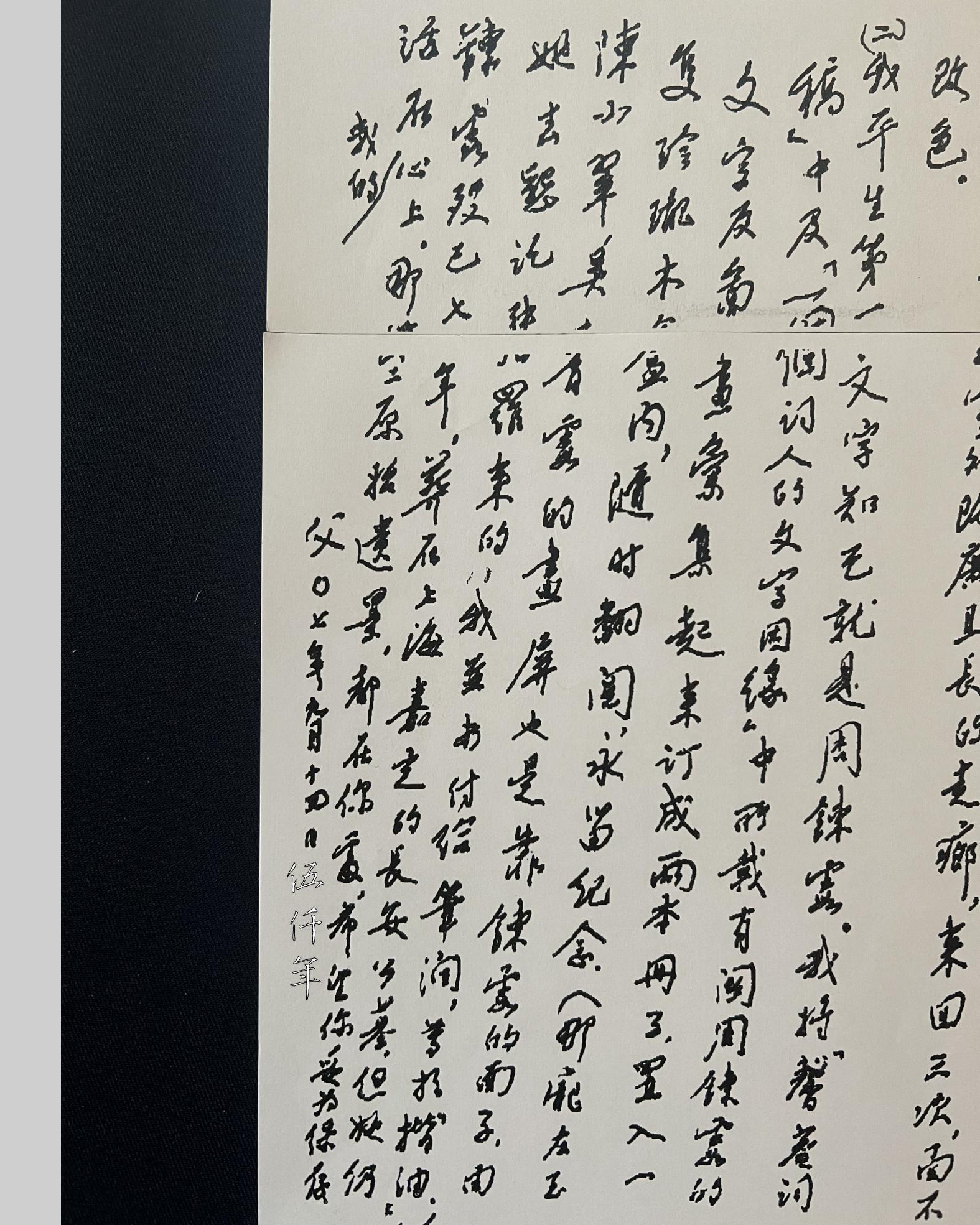
Faxed letter by Mr. Soong Hsün-leng, dated 14 September 2007
On 14 September 2007, seven years after Aunt Chou Lien-hsia passed away, my father wrote me a letter and said:
“The foremost literary confidante in my life is Chou Lien-hsia. I have gathered together all her writings and pictures that appear in The Fragrant Heritage (馨菴詞稿) and The Cultural World of a Ci Poet (一個詞人的翰墨因緣), they were bound into two booklets, placed in an exquisite wooden box, to read whenever I want, and to remember her forever.
Regarding the set of four hanging scrolls by Pang Tso-yü (龐左玉 1915-1969), Ch’en Hsiao-ts’ui (陳小翠 1902-1967), Wu Ch’ing-hsia (吳青霞 1910-2008) and Chou Lien-hsia, three were acquired by taking advantage of Lien-hsia’s friendships with them. She besought on my behalf, and I paid no remuneration whatsoever, in effect I benefited for free.
Lien-hsia had passed away for seven years, and she was buried in Changan Public Cemetery (長安公墓) at Chia-ting in Shanghai. Yet she continues to live in my heart. Those original manuscripts are all with you, I hope you will preserve them properly.”
At that time, my father was already ninety-seven years old. He knew the road now left was swift and short. His only wish was for his treasured cultural artefacts to be long preserved in the world.
To ponder on the preservation of cultural artefacts, how extraordinarily difficult it can be. During the ten year period of the Cultural Revolution, most were reduced to ashes. Those fortunate to survive are dependent on the custodianship of knowledgeable people, yet most of those we deem knowledgeable have perished along the way. In addition, the Classical World itself has fallen and dissipated in the bloodbath. Thus I have conscientiously chronicled the past, to leave a trace of the Classical World that once pervaded the whole of China.
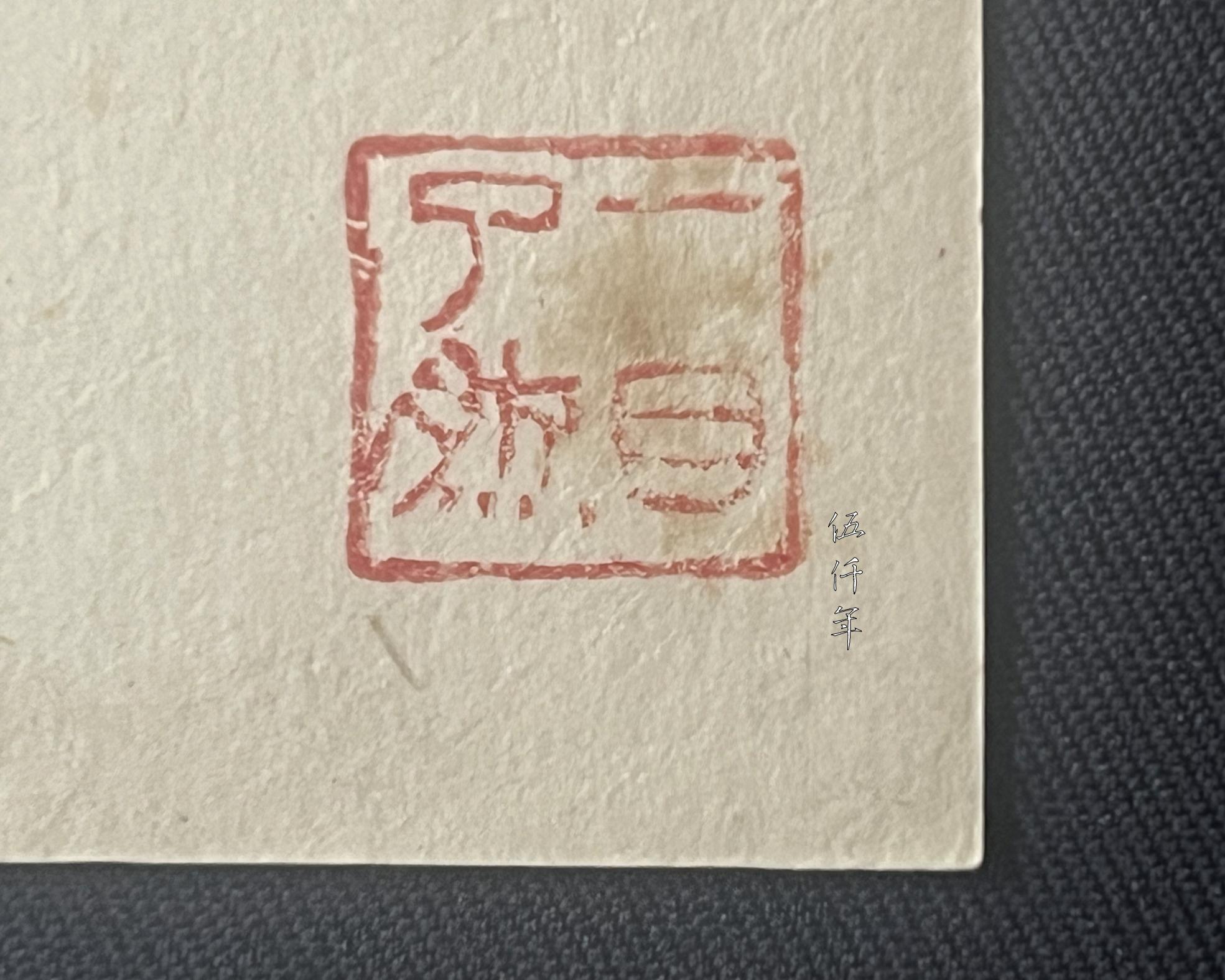
Seal of Ms. Chou Lien-hsia with the words: “See clearly with one eye”