Since ancient times, any family who manages to continue the literary tradition for two generations is admired and lauded. Some luminaries are the father and daughter from Han dynasty, Ts’ai Yung (蔡邕 132-192 AD) and Ts’ai Wen-chi (蔡文姬 177-249 AD); the father and sons from Sung dynasty, Su Hsün (蘇洵 1009-1066), Su Shih (蘇軾 1037-1101) and Su Che (蘇轍 1039-1112). Their stories are well known.
In the last hundred years, recurrent catastrophes have decimated a great part of traditional culture. Those who still appreciate the works of the father and son duo: I Shun-ting (易順鼎), an acclaimed late Ch’ing poet, and I Chün-tso (易君左), a popular Republican literatus, are few.
Though I Shun-ting was a classical poet and I Chün-tso a modern writer, both articulated the angst and indignation of their times. Now that we are living in unsettled times, reading their works evoke our woes too.
Curatorial and Editorial Department
In the final years of the Ch’ing dynasty, in the early years of the Republic of China, there lived a father and a son, I Shun-ting (易順鼎) and I Chün-tso (易君左), who aroused innumerable educated men and women with their patriotic zeals, and stirred countless literary men and women with their lyrical flairs.
The father I Shun-ting lived in a time when China was being partitioned by foreign powers, when the country was nearly ravaged and crushed. The son I Chün-tso lived in a time when mainland China fell to the communists, when cultural lineage was almost obliterated. The experiences of father and son are of course different, but their despair and anguish are nonetheless identical. The country crumbled, tears were shed endlessly, the theme and imagery of their writings are very much alike.
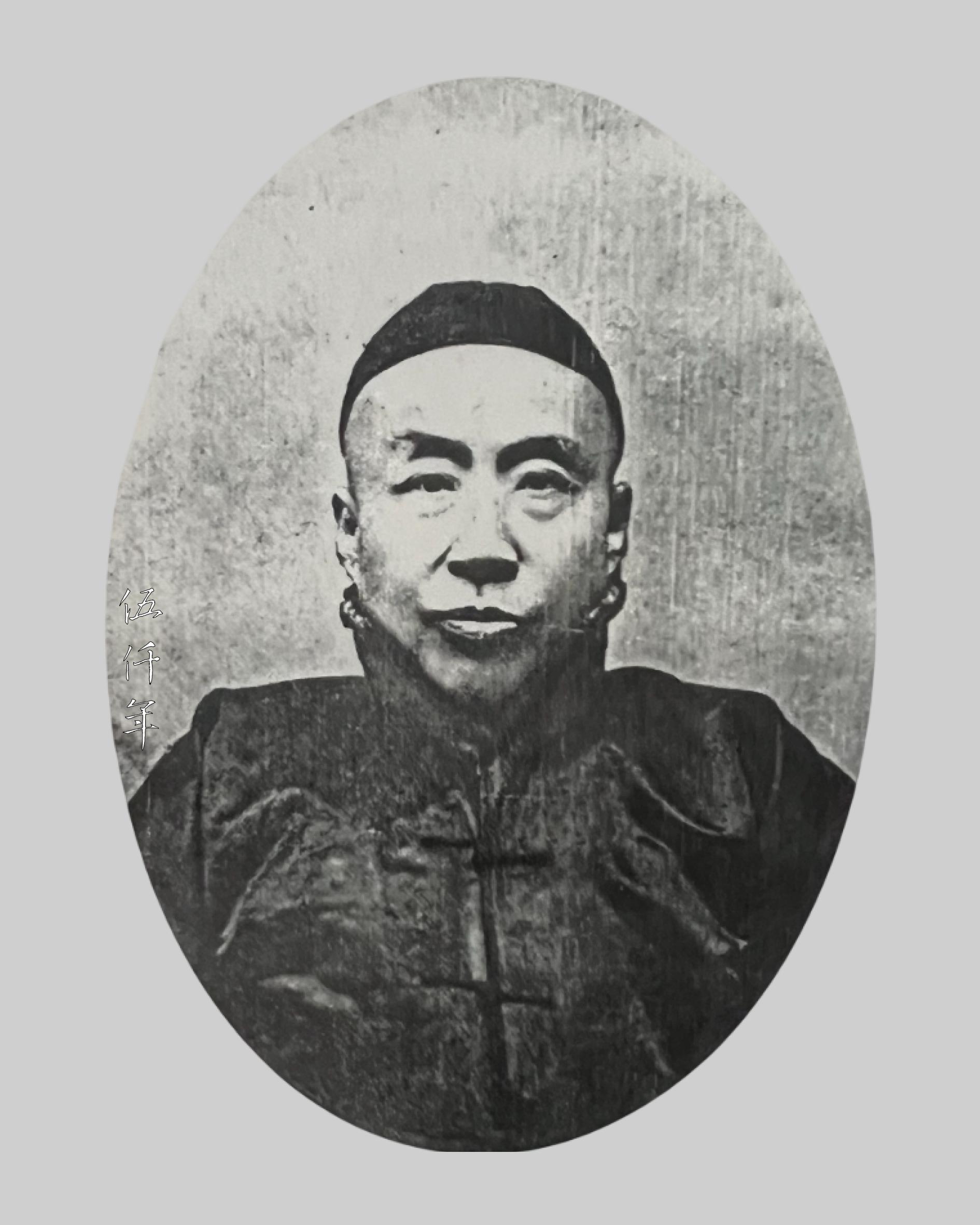
Portrait of I Shun-ting
I Shun-ting was born in 1858 and died in 1920. His father I P’ei-shen (易佩紳), hao Hu-shan (笏山), held the positions of surveillance commissioner of Kweichow province, provincial administration commissioner of Szechwan and provincial administration commissioner of Kiangsu. I Shun-ting used the tzu of Shih-fu (實甫), Shih-fu (石甫), Chung-shih (中實), Shou-fu (碩甫), Chung-shuo (仲碩). He named his studio Ch’an-ch’i Lou (懺綺樓), Ch’in-chih Lou (琴志樓). He used many hao, Mei-ch’ieh (眉伽), K’u-an (哭盦), K’u-an (哭庵), K’u-an (哭厂), I-an (一庵). He was a native of Lung-yang in Hunan province. He attained the chü-jen (舉人) degree in the 1st year of the Kuang-hsü reign, 1875, and was appointed director of the Ministry of Justice, expectant circuit censor, lecturer at Liang-hu College (兩湖書院) in Wu-han of Hupeh province, circuit censor of Ch’in-lien in Kwangtung province, circuit censor of Kao-chou, Lei-chou and Yang-chiang in Kwangtung province. During the Republican era, he was appointed counselor of the Bureau of Engraving and Printing, substitute director of the Bureau of Engraving and Printing, and was a member of the Candidate Eligibility Review Committee. He had three sons, Chia-fu (家鈇), Chia-yüeh (家鉞) and Chia-chu (家鑄). Chia-yüeh used the tzu of Chün-tso (君左) and was commonly known by this name. I Shun-ting wrote many volumes of work, such as The Anthology of Four Souls (四魂集), Collection of Works by K’u-an (哭盦叢書), Collection of Works from Ch’in-chih Lou (琴志樓叢書), and others.
In the 20th year of the Kuang-hsü reign, 1894, at the age of thirty seven, I Shun-ting composed an essay titled Autobiography of K’u-an (哭盦傳). The year before, his mother passed away. A section of the essay reads:
“For a period of over twenty years in my life, I was a child prodigy, then a gifted poet, afterwards I became a heavy drinker, a knight-errand. In my youth, I was a celebrated literatus, a scholar of the Classics, a man of letters, an eminent official, a hermit ….
Suddenly going eastward, suddenly going westward, suddenly leaving, suddenly staying, teachers and friends tease me as the “magic dragon”. My behavior is erratic, I can follow Confucius, I can follow Mo-tzu, I seem rude, I seem mellow, I cannot be described by simplistic demeanor. My writings are the same, it can be classical, it can be contemporary, it can be simple, it can be rich, it cannot be assessed on simplistic facet.”
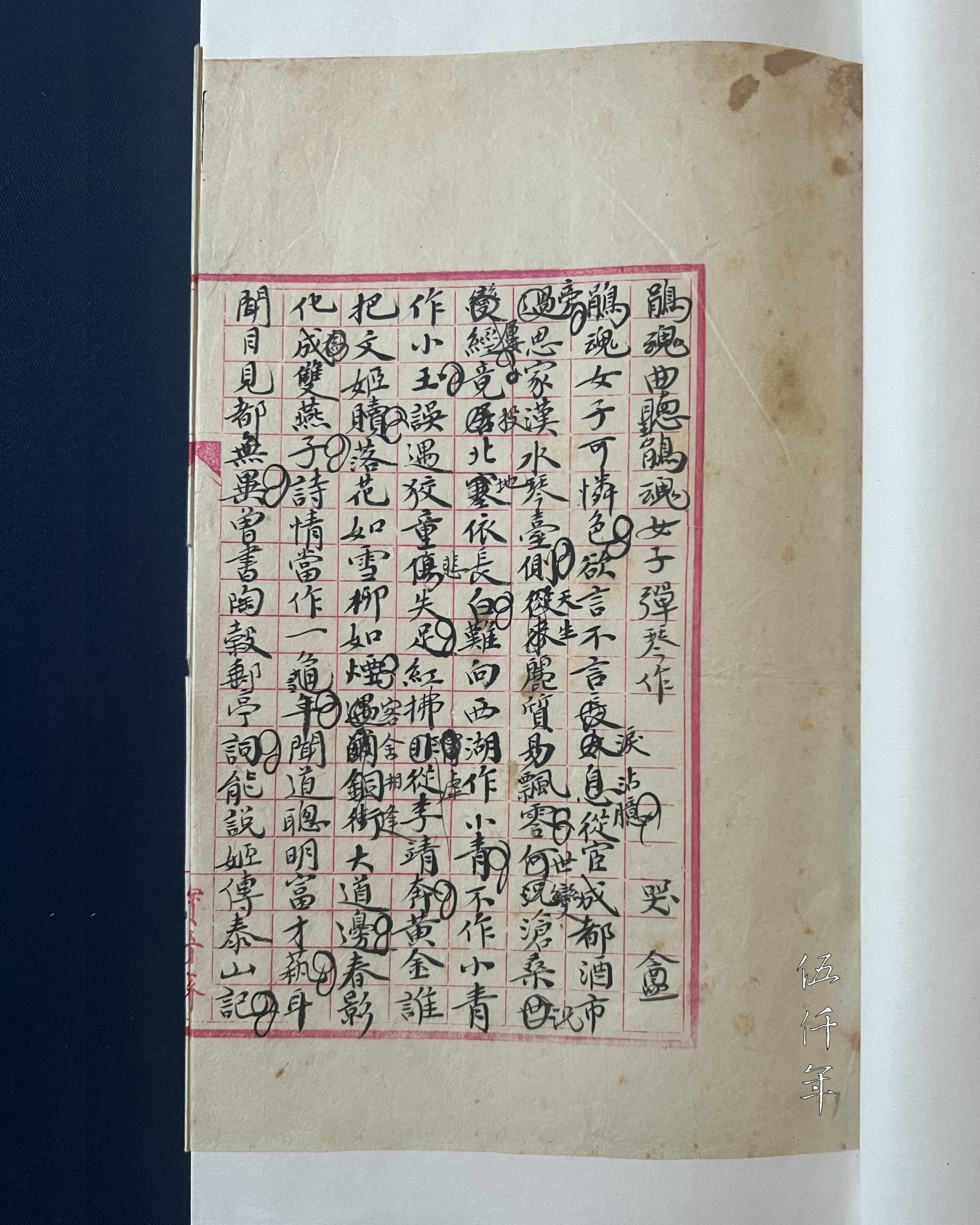
Manuscript of The Lyric of Cuckoo Soul-Written After Listening to Lady Cuckoo Soul Playing the Zither, by I Shun-ting
This is a sketch of the eccentric poet. However “a child prodigy” and “a gifted poet” are not boastful words, the poetry critic Ch’en Yen (陳衍) in the early Republican era claimed in A Collection of Modern Poetry, Conversations on Poetry from Shih-i Studio (近代詩鈔、石遺室詩話): “When I Shun-ting was a child, he was known as a child prodigy. When he grew up, he acquired the reputation of a talented poet.” He further claimed: “He was curious about all academic studies, such as textual research, economics, rhythmic prose, poetry and tz’u lyrics. He wrote nearly ten thousand poems in his lifetime. Together with the Provincial Administration Commissioner Fan Tseng-hsiang (樊增祥), they are called the Two Titans of Literature.” In the 6th year of the Kuang-hsü reign, 1880, when I Shun-ting was twenty three years old, he paid his respects to the Minister of Justice P’an Tsu-yin (潘祖蔭). P’an said to him: “I once read the poetry scroll you submitted (known as hsing-chüan 行卷). Your literary prowess is astounding, I have long been an admirer! ” P’an then told the other directors in his Ministry: “I Shun-ting wielded a brush that surpasses those before him and those after him.” Indeed many high officials were infatuated with his writings, which were also ardently passed around by those in the literary world. In his old age, he commissioned a seal that was engraved with these words: “A child prodigy at five, cultivations accumulated in six lives, The Anthology of Four Souls, footprints on top of ten mountains.”
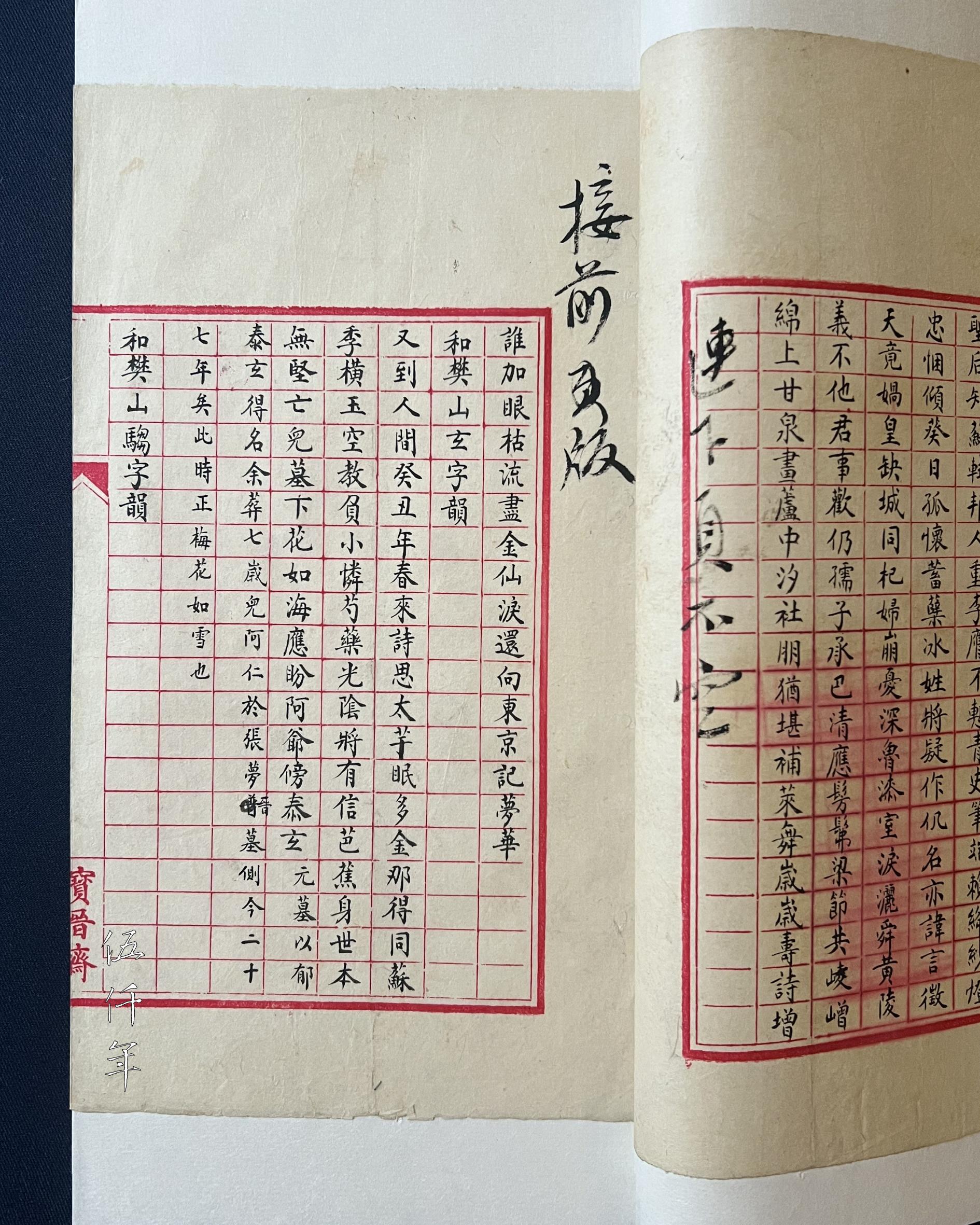
Manuscript of a response poem by I Shun-ting, dedicated to Fan Tseng-hsiang
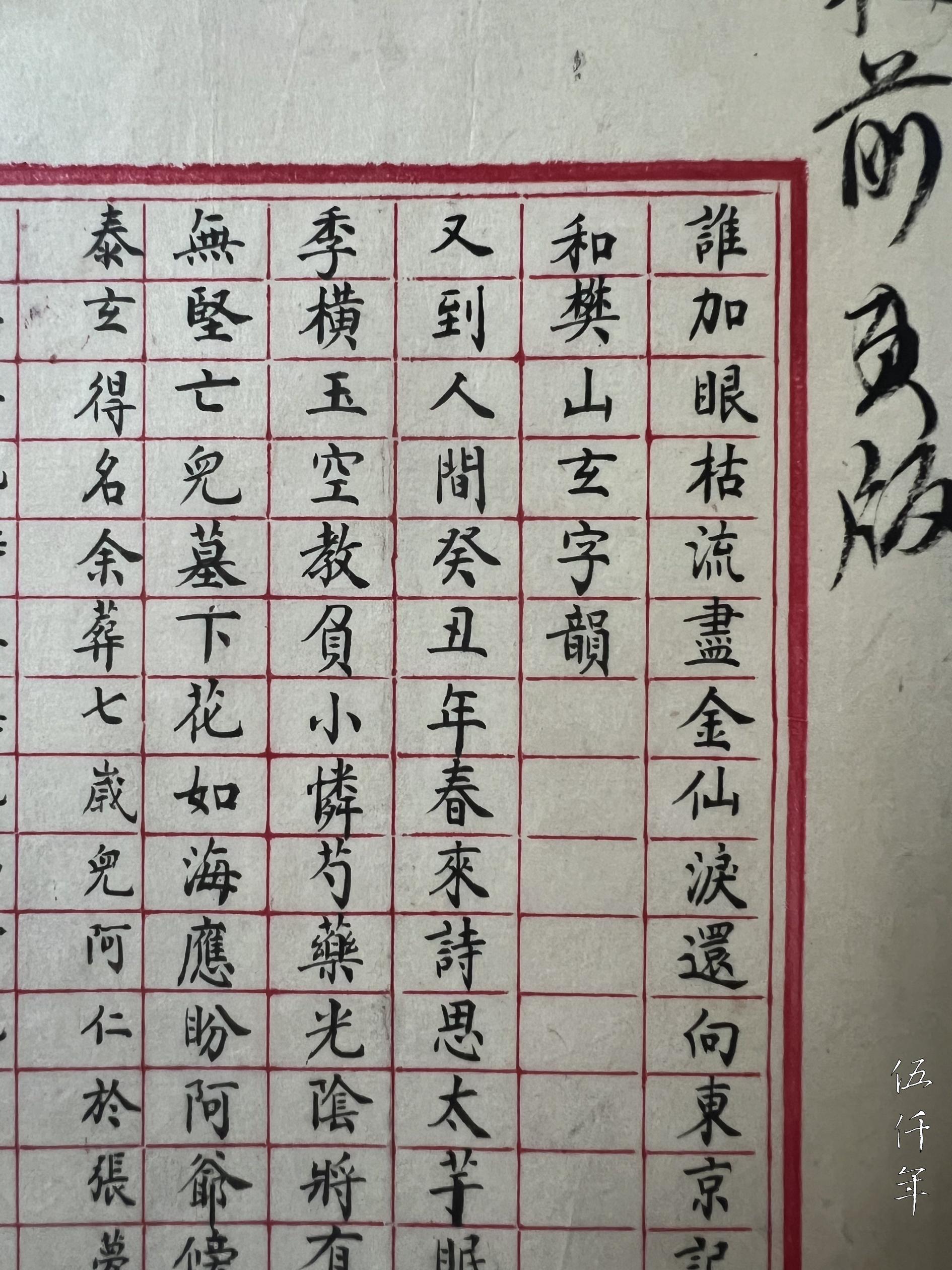
Manuscript detail of a response poem by I Shun-ting, dedicated to Fan Tseng-tsiang
Autobiography of K’u-an further says:
“K’u-an thought it was possible to cry about everything in the world, yet somehow he did not manage to cry. Even when his wife and son passed away he did not manage to cry. When his mother passed away, he still had his father. K’u-an reckoned he should not hastily follow her. He then realized there is nothing to cry about in the world, except for not ever seeing his mother. Subsequently there is not a day he does not cry. He swears he will cry to the very end, till death. So he adopted the hao of K’u-an, meaning the Crying Hermitage.”
This is powerful emotion derived from the purest form of filial piety, its utmost manifestation. After the death of his mother, I Shun-ting built a hut next to the tomb to cry. He collected his writings from the three year mourning period, and published them under the title Miscellaneous Printing from Mu-kao Studio (Mu-kao Lu Tsa-k’ei 慕皋廬雜刻). He then adopted the hao of K’u-an. His mother’s surname was Ch’en (陳), and she was known for her virtues. She was the daughter of Ch’en Yung-hao (陳永皓), the district magistrate of Ch’ang-yüan. A pair of memorial couplets from the local gentry were hung at her funeral, the words were : “A revered mother of the world, A worthy sage among women.”
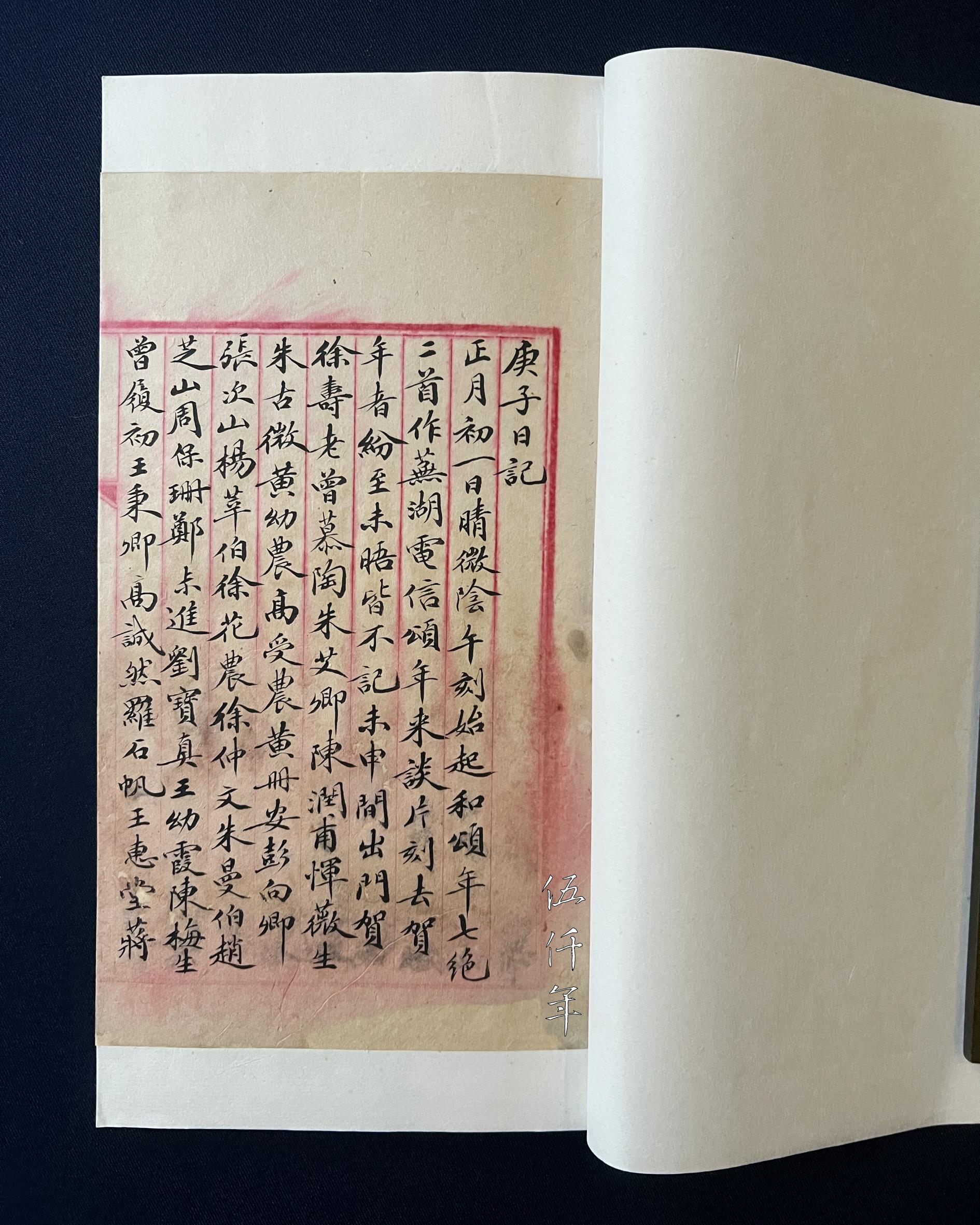
First page of Manuscript Diary of Keng-Tzu Year by I Shun-ting
On 1 July in the 20th year of the Kuang-hsü reign, corresponding to 1 August 1894, China declared war on Japan. I Shun-ting complied with his father’s instruction to join the war even though he was still adhering to the mourning period for his mother. I Shun-ting was ready and even determined to die on the battlefield, so he composed A Farewell Poem to My Dear Brother, Sisters and Wives. He first travelled to Nanking to visit Liu K’un-i (劉坤一), governor-general of Kiangnan and Kiangsi provinces, who also held the position of superintendent of the Naval Ministry. Then he travelled to Tientsin to visit Li Hung-chang (李鴻章), governor-general of Chih-li. At the end of the year, he arrived in Peking to submit a memorial to the throne to oppose the peace agreement. The petition was rejected by the throne from the outset.
In the following year, the Chinese P’ei-yang Fleet was destroyed by the Japanese Navy. On 23 March in the 21st year of the Kuang-hsü reign, corresponding to 17 April 1895, the Treaty of Ma-kuan was ratified. China had to pay war indemnity of two hundred million k’u-p’ing (庫平) taels, and the territories of Taiwan and Liao-tung Peninsular were ceded to Japan. I Shun-ting marched hastily from T’ang-shan to Peking, he submitted the Memorial to Beseech the Court to Abandon the Treaty and Dismiss the Treacherous Officials. The petition was again swiftly rejected. On 2 May in the 21st year of the Kuang-hsü reign, corresponding to 25 May 1895, the people in Taiwan refused to become Japanese subjects, they established The Republic of Taiwan, adopting Yung-ch’ing as reign, and elected the Governor of Taiwan T’ang Ching-sung (唐景崧) as president. I Shun-ting telegraphed Liu K’un-i and volunteered to join the army, on 29 May, corresponding to 21 June 1895, he arrived in Tainan. He met Liu Yung-fu (劉永福), regional commander of Taiwan, and was assigned the positions of commander-general of three battalions, counselor of Office of Military Affairs. By then, Keelung and Taipei had fallen. I Shun-ting composed a set of six poems titled Broodings in Taiwan, commending Taiwanese resistance against Japanese occupation. Some lines are:
Which road at Jade Gate points to life?
Dreamingly egress the world for good.
A letter has crossed the great divide,
Natives bide on cloud capped peaks.
A few zealots swear to recover this land,
Passing tattooed tribesmen on the way.
Still so remote from my old abode,
Too ashamed there is nothing I can do.
Such devout subjects on this faraway island,
Truthful to two centuries of royal favour.
Here to fight for Emperor and for fair rule,
Tearful none too virtuous is here to serve.
Who can forget the battles of chivalrous knights?
Each enthralled by Cathay’s garb and turf.
Crying over Chu-ya (朱崖) once Territory of Han,
Ts’ang-ko (倉葛) shouted We Citizens of Chou.
On 17 leap May, corresponding to 3 July 1895, I Shun-ting travelled to Nanking to visit Chang Chih-tung (張之洞), governor-general of Kiangnan and Kiangsi provinces. He failed to convince Chang to raise money for an army. On 27 July, corresponding to 15 September 1895, he voyaged to Taiwan for the second time, arriving in Tainan two days later. By then, Taichung had already fallen. On 6 August, he returned to mainland China to raise money, and received a petition from the loyalists in Taiwan who nominated him vice-president of the Republic of Taiwan. In late August, Japanese army attacked Tainan, in early September, Tainan fell, and the whole of Taiwan was occupied. He then returned to Wu-ch’ang. In the 22nd year of the Kuang-hsü reign, or 1896, he published The Anthology of Four Souls (四魂集). The first edition is now hard to find.
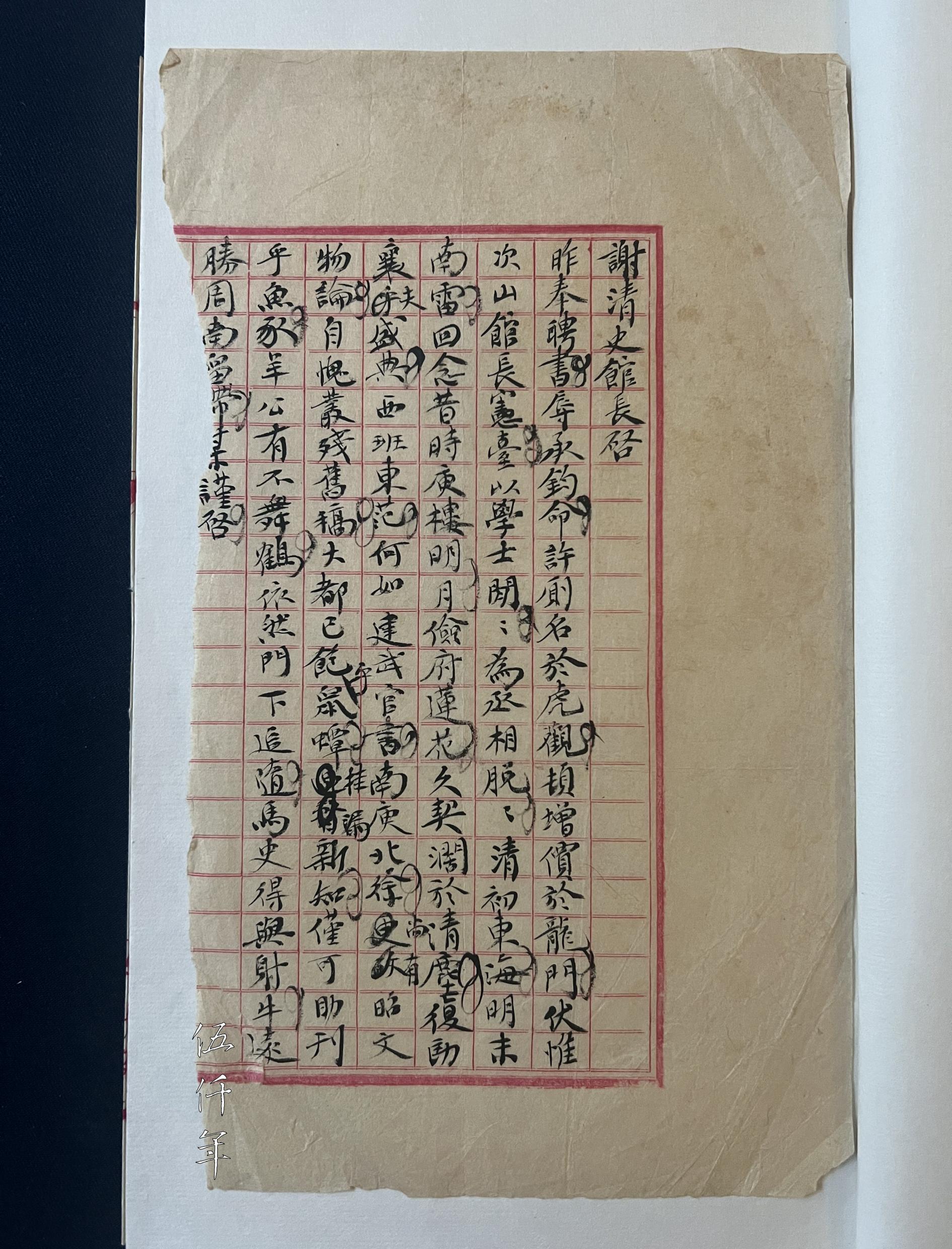
Manuscript of Letter to Thank the President of the Bureau of Historia Ch'ing by I Shun-ting
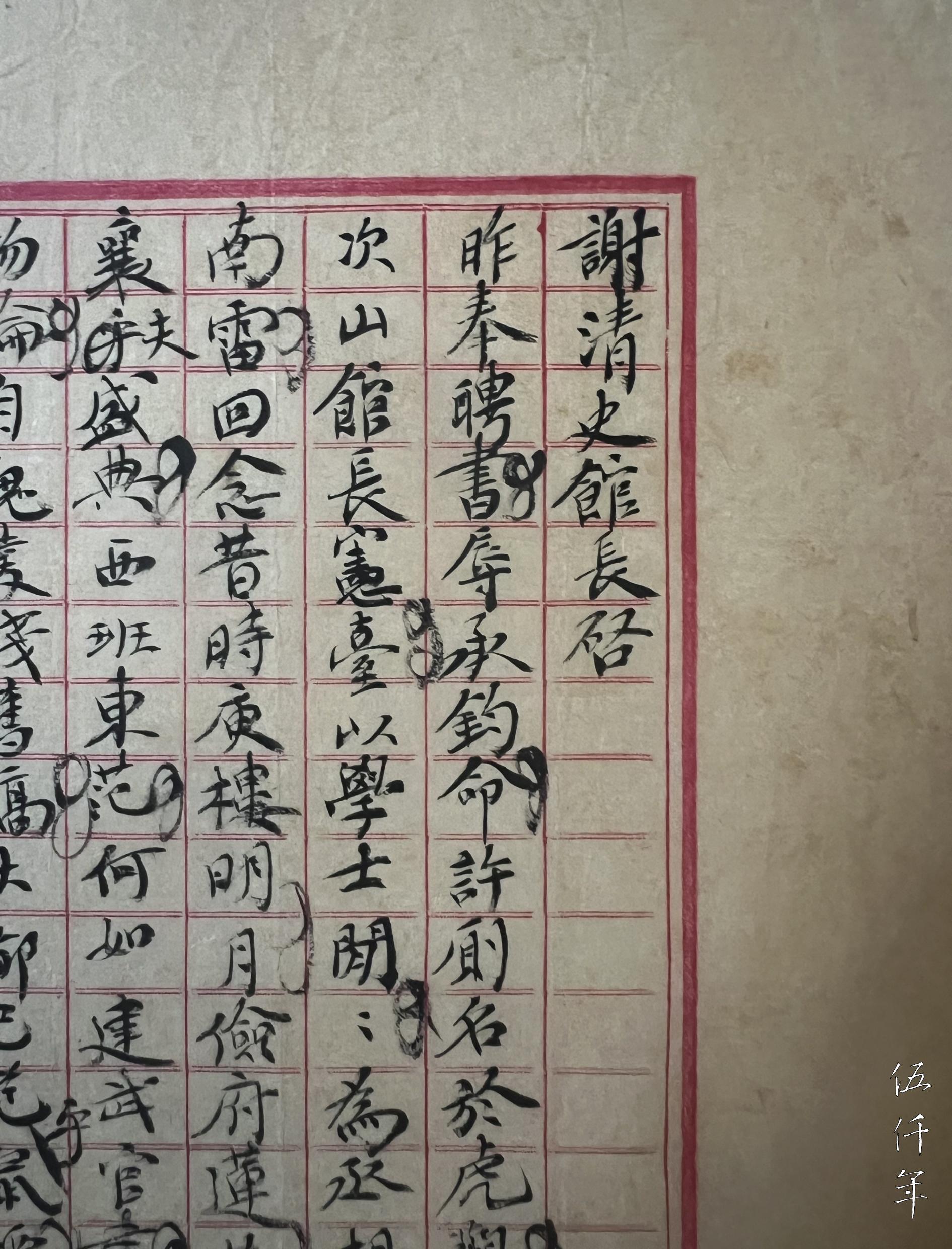
Manuscript detail of Letter to Thank the President of the Bureau of Historia Ch'ing by I Shun-ting
Approximately twenty years ago, I acquired nearly one hundred pages of handwritten manuscript by I Shun-ting. There is a page titled Letter to Thank the President of the Bureau of Historia Ch’ing, from which we learned that he was once invited to join the Bureau, but he tactfully declined. The letter reads:
“I received the Letter of Appointment yesterday and I am so undeserving of your behest. I have been allowed to tag my unworthy name to the world of scholarship, through which I promptly gained academic stature. I humbly reply to your eminent self, President Tz’u-shan (次山). A junior scholar leads a leisurely life, a high official can lead a perilous life, like the grand-chancellor of the Yüan dynasty T’o-t’o (脫脫). In early Ch’ing, there was Chu Chih-yü (朱之瑜), and in late Ming, there was Huang Tsung-hsi (黃宗羲). I remember in earlier times, I used to watch the full moon from Pavilion Keng Liang (庚亮) in Wu-ch’ang and enjoyed contemplating the lotus pond in the government house. For a long time, I indulge myself in unworldly realm, unperturbed by formal ceremonies. No matter what kind of official appointment, it is no more noteworthy than the court documents propagating Confucianism in the Chien-wu reign of the Han dynasty. No matter whether one is in the south or in the north, there is Literary Selections by Prince Chao-ming (昭明文選) and On the Equality of All things (齊物論) by Chuang-tzu (莊子). I am ashamed that manuscripts of my trivial writings have mostly been eaten by insects and rats, while my chronicles of new knowledge are full of errata. Yang Yu (羊祐) of the Chin dynasty kept a crane that could not flap its wings. Just like the crane, I will follow you earnestly despite my shortcomings. Records of the Grand Historian (史記) by Ssu-ma Ch’ien (司馬遷) is an offering to Heaven, far superior to staying in Chou-nan and achieving nothing.”
In the 3rd year of the Republic of China, 1914, the State Council established the Bureau of Historia Ch’ing. A wide circle of eminent scholars were invited to compile the history of Ch’ing dynasty. This letter was addressed to President Tz’u-shan, whose original name was Chao Erh-hsün (趙爾巽), born in 1844 and died in 1927. His tzu was Tz’u-shan (次山), Tz’u-shan (次珊), hao Kung-hsiang (公鑲), Wu-pu (無補), native of T’ien-ling in Feng-t’ien province. He belonged to the Han-Martial Plain Blue Banner. He attained the chin-shih (進士) degree in the 13th year of the T’ung-chih reign, 1874, and was appointed compiler and editor of the Hanlin Academy. He held the successive positions of surveillance commissioner of Anhwei province, provincial administration commissioner of Sinkiang province, provincial administration commissioner of Shensi province, provincial governor of Shensi province, provincial governor of Hunan province, minister of the Ministry of Revenue, governor-general of Hupeh and Hunan provinces, governor-general of Szechwan province, and governor-general of Liaoning, Kirin and Heilungkiang provinces. After the revolution, he was appointed president of the Bureau of Historia Ch’ing for thirteen years. I Shun-ting died in the 9th year of the Republic of China, 1920, so this letter would have been written between the 3rd year and the 9th year of the Republic of China, 1914-1920. The Bureau of Historia Ch’ing engaged the services of many eminent scholars, however the name of I Shun-ting has never appeared in the lists of chief editors and assistant editors. Having the good fortune to acquire this letter, we are able to learn more of his life story.
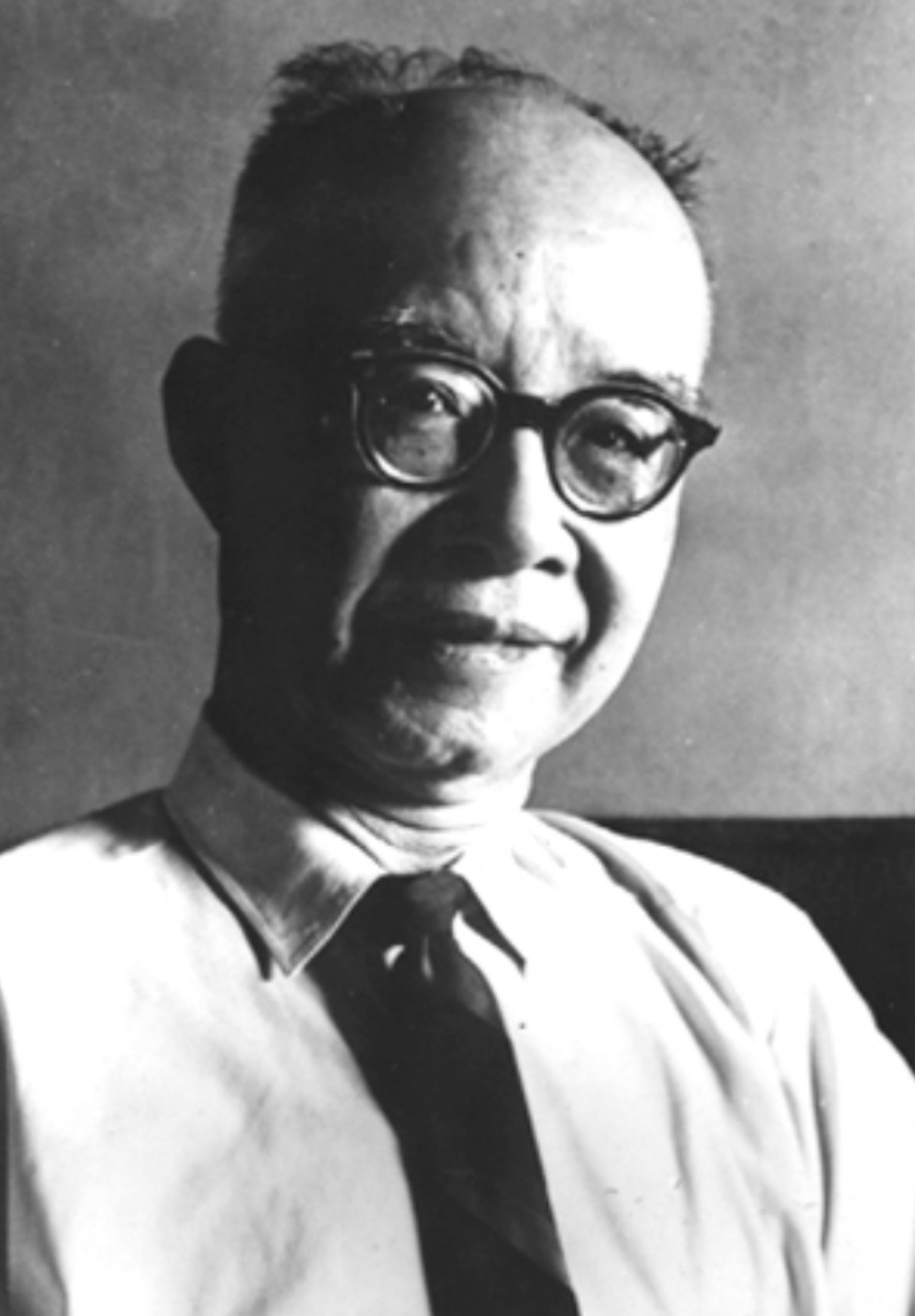
Portrait of I Chün-tso
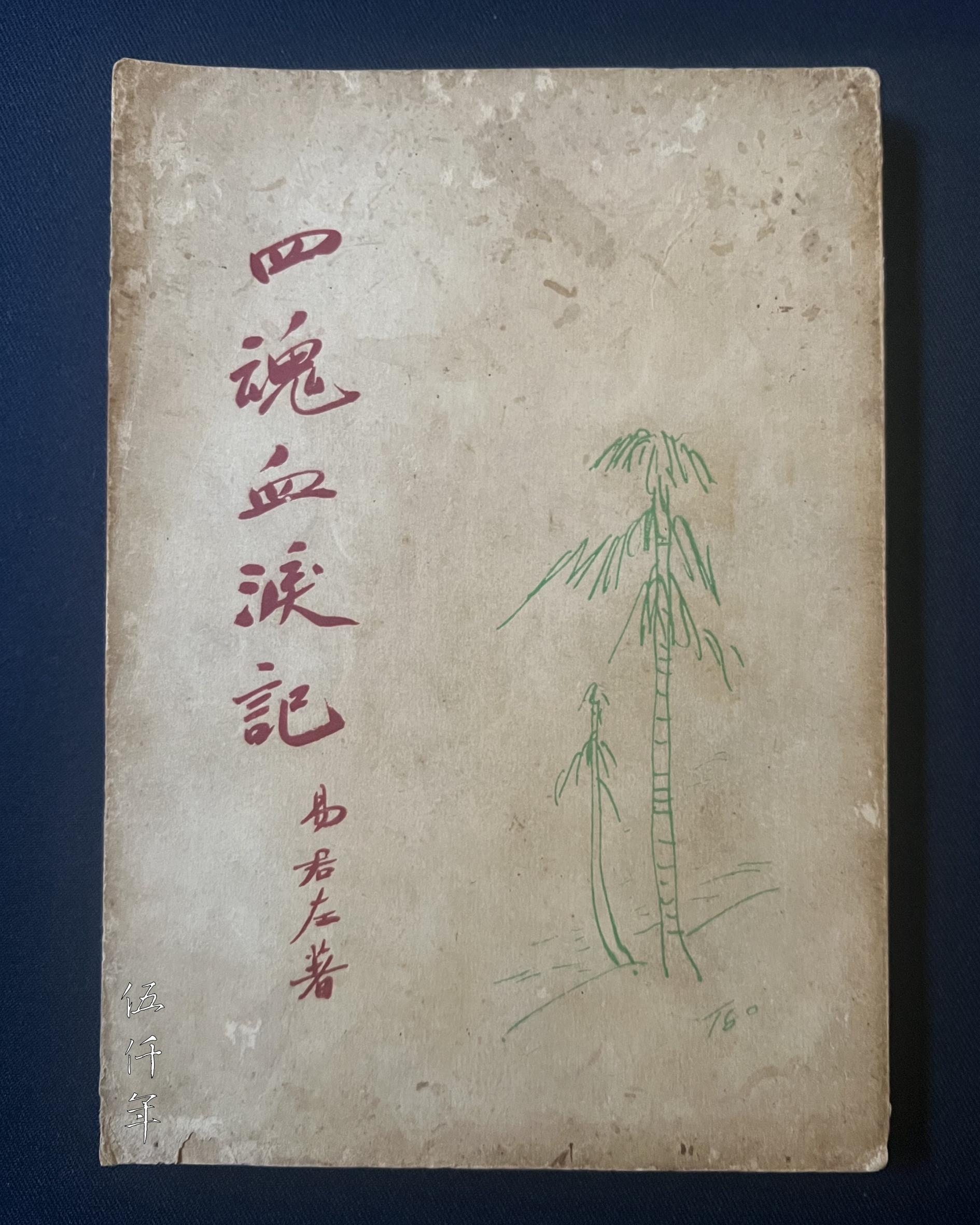
Front cover of The Heart-Wrenching Tale of The Anthology of Four Souls by I Chün-tso
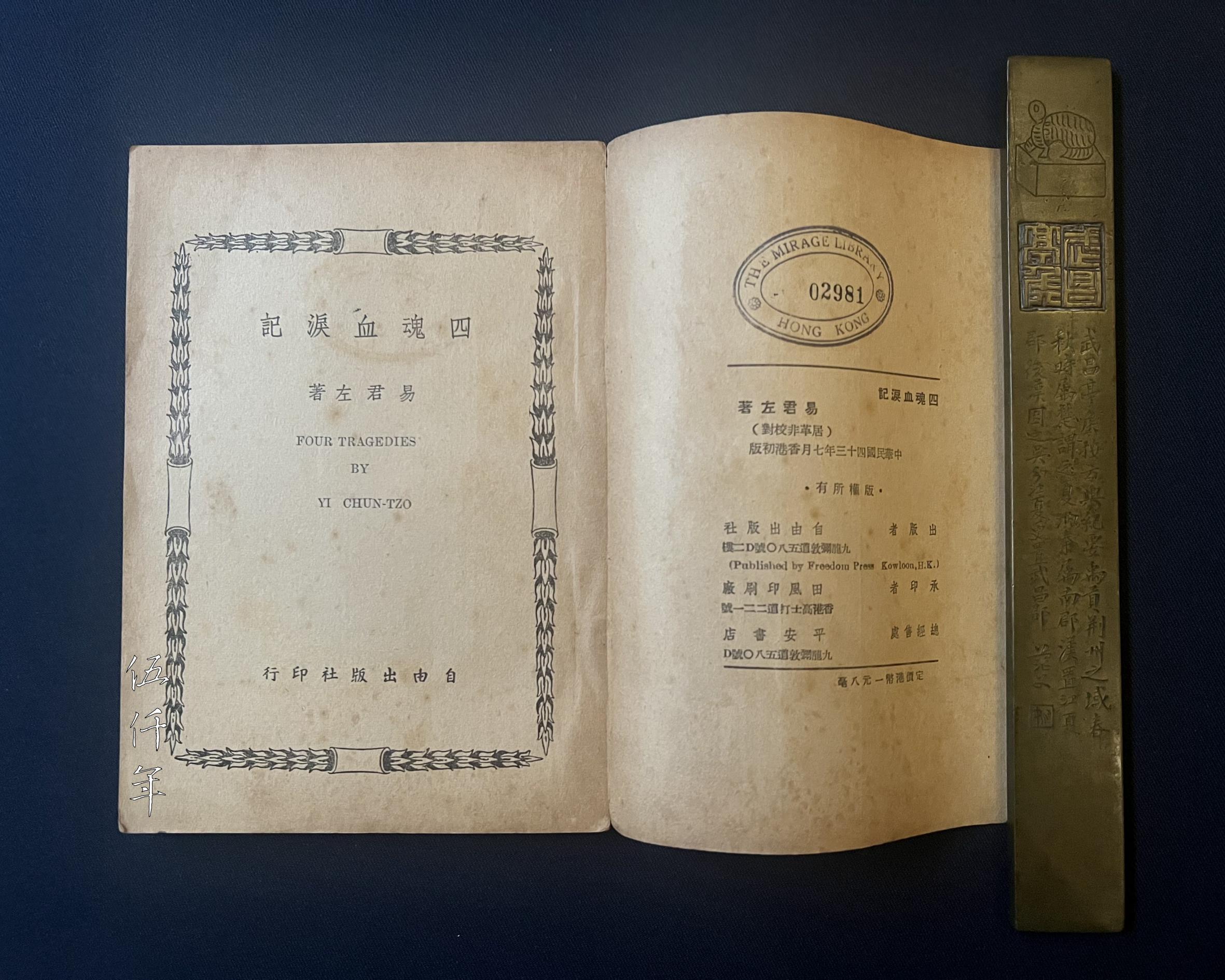
Title page of The Heart-Wrenching Tale of The Anthology of Four Souls by I Chün-tso
In the 43rd year of the Republic of China, 1954, the 5th year after the fall of mainland China to the communists, which also happened to be the 60th year or one chia-tzu (甲子) calendar cycle after the First Sino-Japanese War, I Chün-tso (易君左), son of I Shun-ting, was a refugee in Hong Kong. He looked back to his homeland with anguish and sorrow, not any less than his father, even in excess of his father. He published the book The Heart-Wrenching Tale of The Anthology of Four Souls (四魂血淚記). It is a full chronicle of his father’s visits to Taiwan and his attempts to save the country. Part of his Preface reads:
“In my thirty years of writing, there are only two works The Seige of Han-chung (漢中之圍) and The Heart-Wrenching Tale of The Anthology of Four Souls (四魂血淚記) that I exerted colossal effort, applied fervent passion, implemented a literary thrust that resembled the roar of Yantze River or the thunder of Yellow River. On the basis of acknowledged history of our time, I probed widely and quoted extensively, from the utmost depth of my sincere and pious heart, I composed these two painful and tearful tales.
Though these two works are about my grandfather and father, they are also depictions of all loyal, courageous, compassionate, loving, intelligent, sagacious individuals. Though these two works are short and inconsequential family stories, they can be seen as encapsulations of a selected chapter in our long and towering history.”
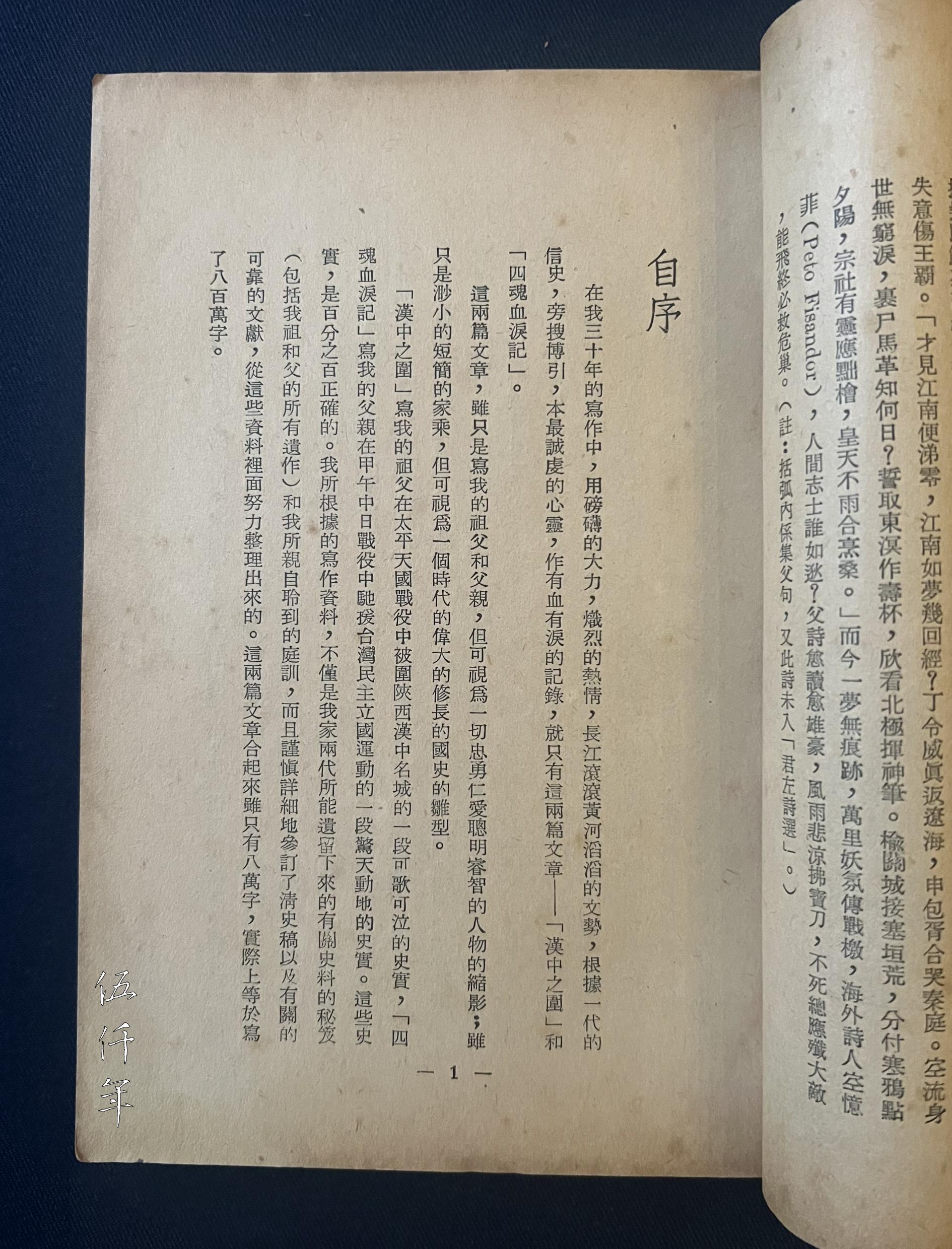
The Preface of The Heart-Wrenching Tale of The Anthology of Four Souls by I Chün-tso
The eighteenth chapter of The Heart-Wrenching Tale of The Anthology of Four Souls is titled An Epic Historical Poem: The Anthology of Four Souls, some selected passages are:
“Here, I have to insert this celebrated epic historical poem by my father.
The emblematic work of poetry in my father’s whole life is The Anthology of Four Souls. Like gold, like jade, each word is precious. It was a time of national calamity, Japan came out victorious in the First Sino-Japanese War, China had to pay indemnity and ceded her territories, humiliations followed humiliations. For a poet to confront such an era, how could he not be enraged and mournful!
The Anthology of Four Souls includes The Anthology of Northern Soul, The Anthology of Eastern Soul, The Anthology of Southern Soul, The Anthology of Returning Soul. There is no such chapter as The Anthology of Western Soul. However, there is a supplementary chapter titled The Anthology of Sea Soul. To conclude in one brief sentence: They are calling for the Soul. What Soul are they calling? At the time, my father was mourning the death of his mother. He wished to enact his filial duty, guard his mother’s tomb for three years, and then just die. Unexpectedly, the First Sino-Japanese War broke out. His father asked him to join the war despite the mourning period. He only wished to be a martyr in the battlefield, to complete his duties to family and country. The Soul he was calling was of course not his own soul, but the Soul of the Nation. The Soul of the Nation had been lost. He shouted at the top of his voice to call it back!
The Anthology of Northern Soul and The Anthology of Eastern Soul are collections of poetry that were composed in the two years of chia-wu (甲午) and i-wei (乙未), corresponding to 1894 and 1895. They are vivid depictions of the First Sino-Japanese War. The Anthology of Southern Soul consists of all the poems about joining the war effort, some are grand and majestic. The Anthology of Returning Soul consists of poems written after his return to mainland China from Taiwan. This is the chronological outline of these chapters.”
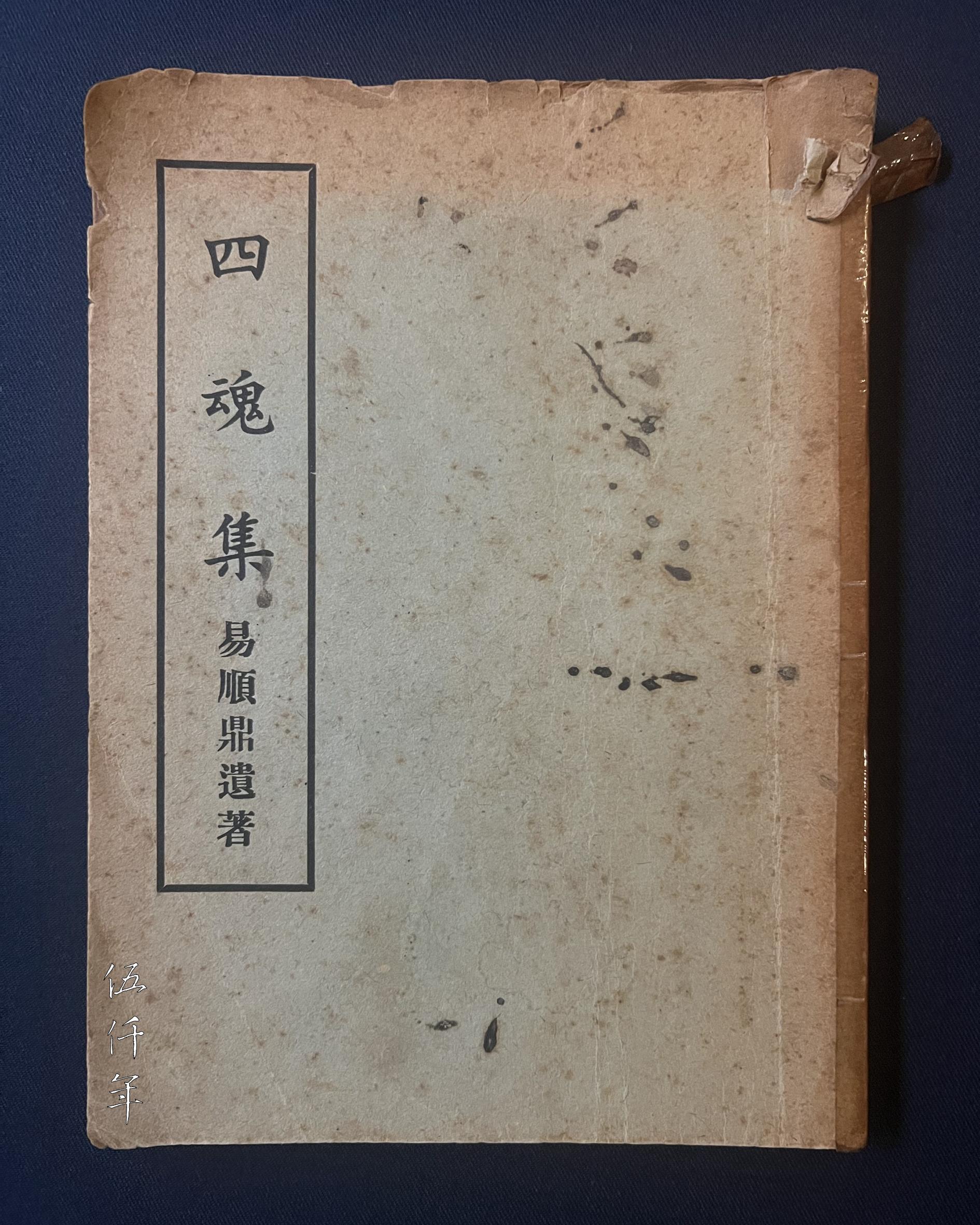
Front cover of The Anthology of Four Souls by I Shun-ting, reprinted in 1959
About thirty years ago, I bought a 1959 edition of The Anthology of Four Souls in a second hand bookshop in Taipei. I posted it to my father Mr. Hsin-an (馨菴, original name Soong Hsün-leng 宋訓倫), thinking he would be interested. There is an Afterword written by I Chün-tso at the end of the book. Some paragraphs are:
“I have long harboured the glorious ambition to compile a book with the works of my grandfather Mr. Hu-shan (hao of I P’ei-shen), my father Mr. Shih-fu (tzu of I Shun-ting), and my uncle Mr. Yu-fu (由甫). It will be known as The Complete Works of the Three I. An Appendix will be attached at the back, containing the poetry and prose of my aunt Ms. Yü (瑜). In the last few decades, countries of the world have been at war with each other. Our motherland continues to suffer many calamities. My family embarked on a tortuous journey and ended up as refugees, while I have been distressed, dejected and drained. Time passes by only too quickly, and now my ambition is still not fulfilled. I have not been able to carry out my filial duty, truly a hundred death cannot make remedy. When I was young, I learnt propriety from my elders, along with poetry and prose. When I was older, I read Chinese and Western classics extensively, meantime visiting many famous mountains and magnificent rivers. I feel so blessed that I have not deserted my family heritage. Now I am gradually turning old, undeservingly attached to some fleeting renown. It is difficult for a son of a poet to practice poetry. I live away from my homeland in the last ten years, my lament is deeper than ever, while the meter of my poetry becomes finer. Letters from fellow diaspora enquiring after my well-being flooded in. How would I dare to practice poetry? I only hope to share my ancestors’ works as inspirations for creative writing. Friends old and new frequently ask for copies of my ancestors’ works, in particular The Anthology of Four Souls, a work so distinct in history that people are all too eager to get hold of it. Subsequently, I have decided to print The Anthology of Four Souls first, to popularize it and to promote poetry education.”
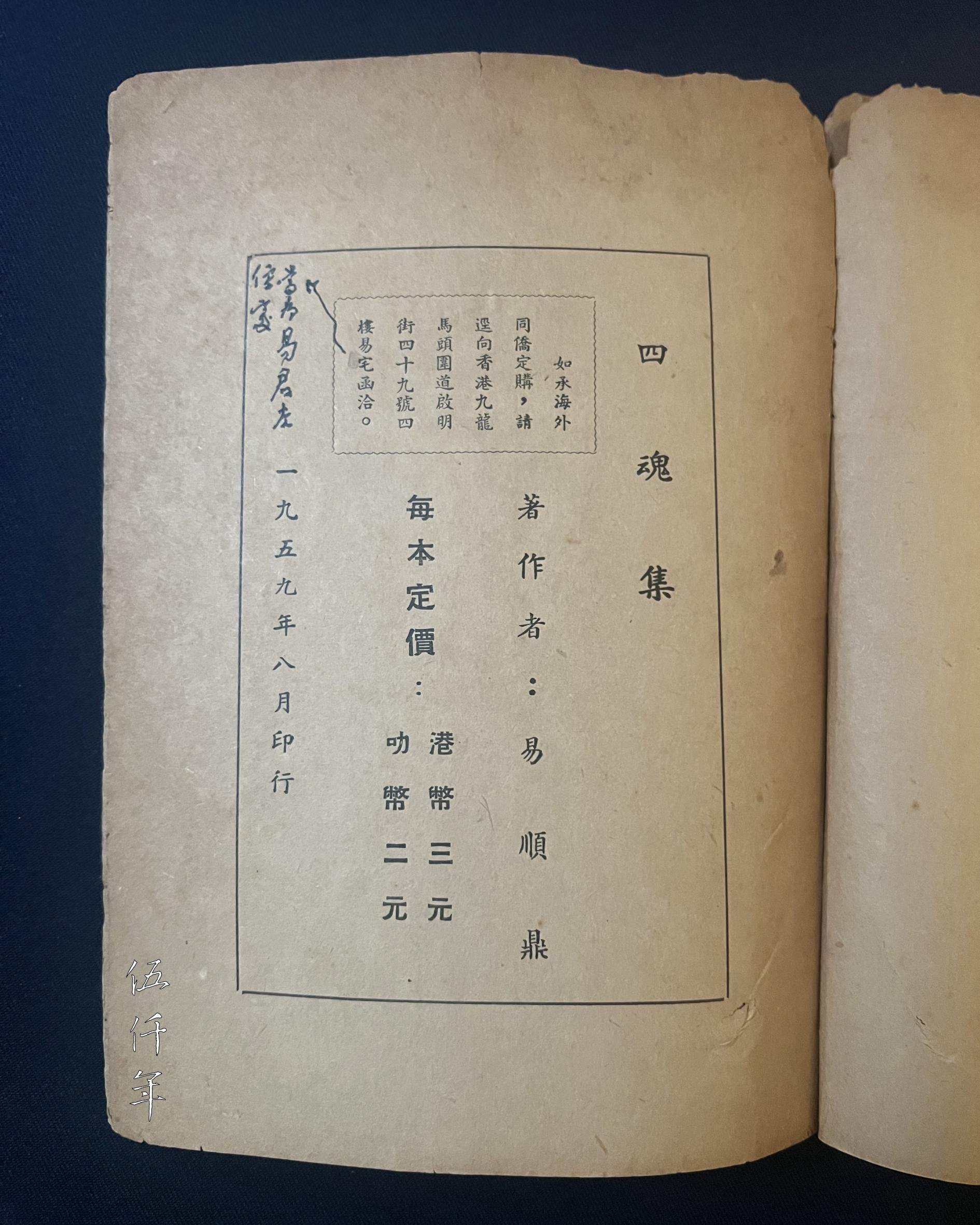
Copyright page of The Anthology of Four Souls by I Shun-ting
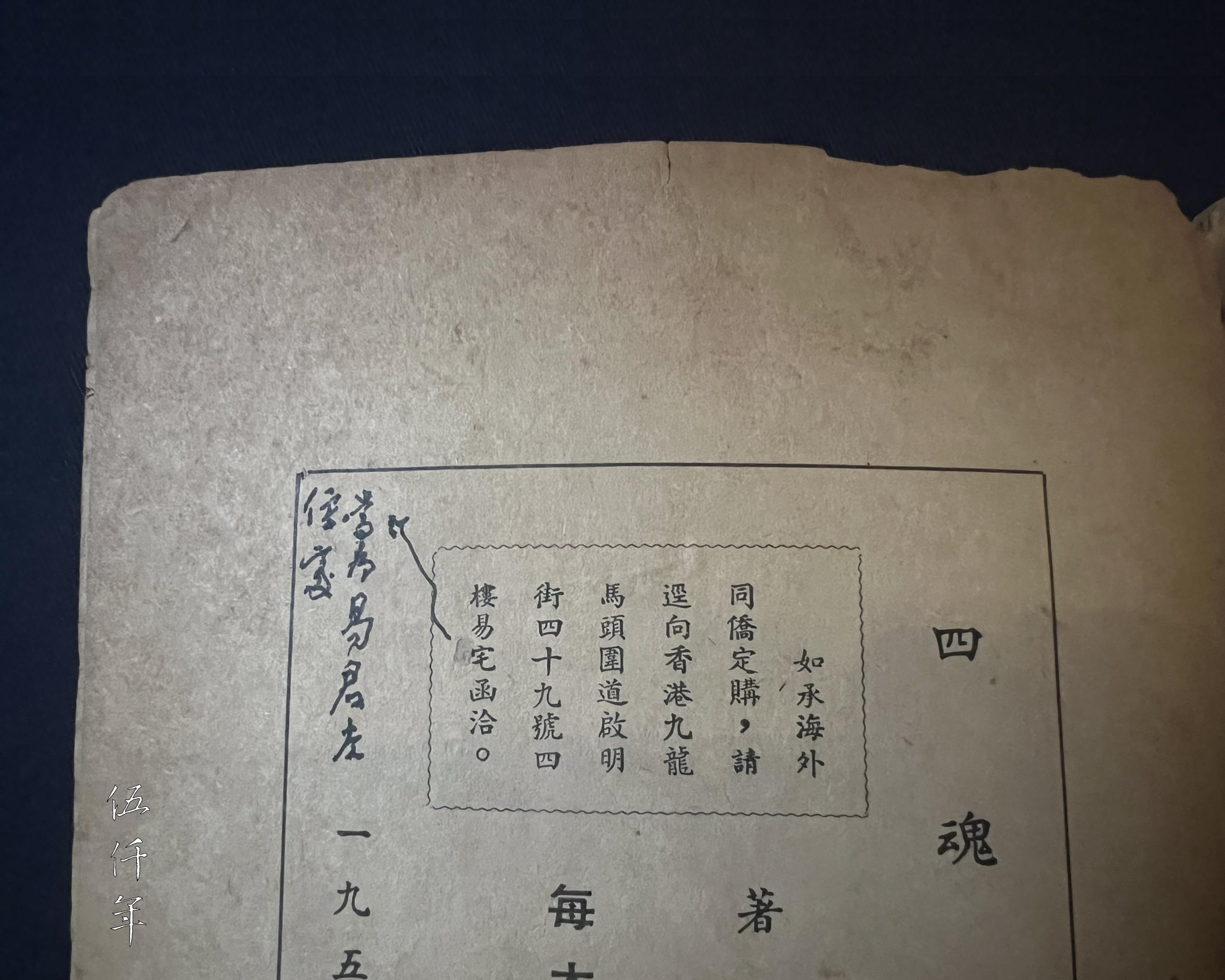
Copyright page of The Anthology of Four Souls by I Shun-ting, highlighting the inscription by Mr. Soong Hsun-leng
Leafing through the book, the publisher’s name is nowhere to be found on the copyright page at the back nor elsewhere. This is clearly a self published book. I Chün-tso wrote a concise advertisement on the copyright page, it says: “If orders from our fellow overseas diaspora are to be received, please contact the I household on the Fourth Floor, No. 49 Kai Ming Street, Ma Tau Wai Road, Kowloon, Hong Kong.” My father inscribed some words next to the advertisement: “This was where I Chün-tso lived.”
Having endured distress, agony and impoverishment, notwithstanding, I Chün-tso was fearful that his father’s poetry would be neglected and forgotten. He laboured to reprint The Anthology of Four Souls. It was an act of pure love from the depth of his heart. The filial piety that his father enacted was likely an inspiration for the descendants too. I Chün-tso had a small seal carved with the words: “A poet’s son”. Unsurprisingly, his calligraphy style is akin to his father’s. After his father died, he continued the spiritual connection with his father in another world through literature and art.
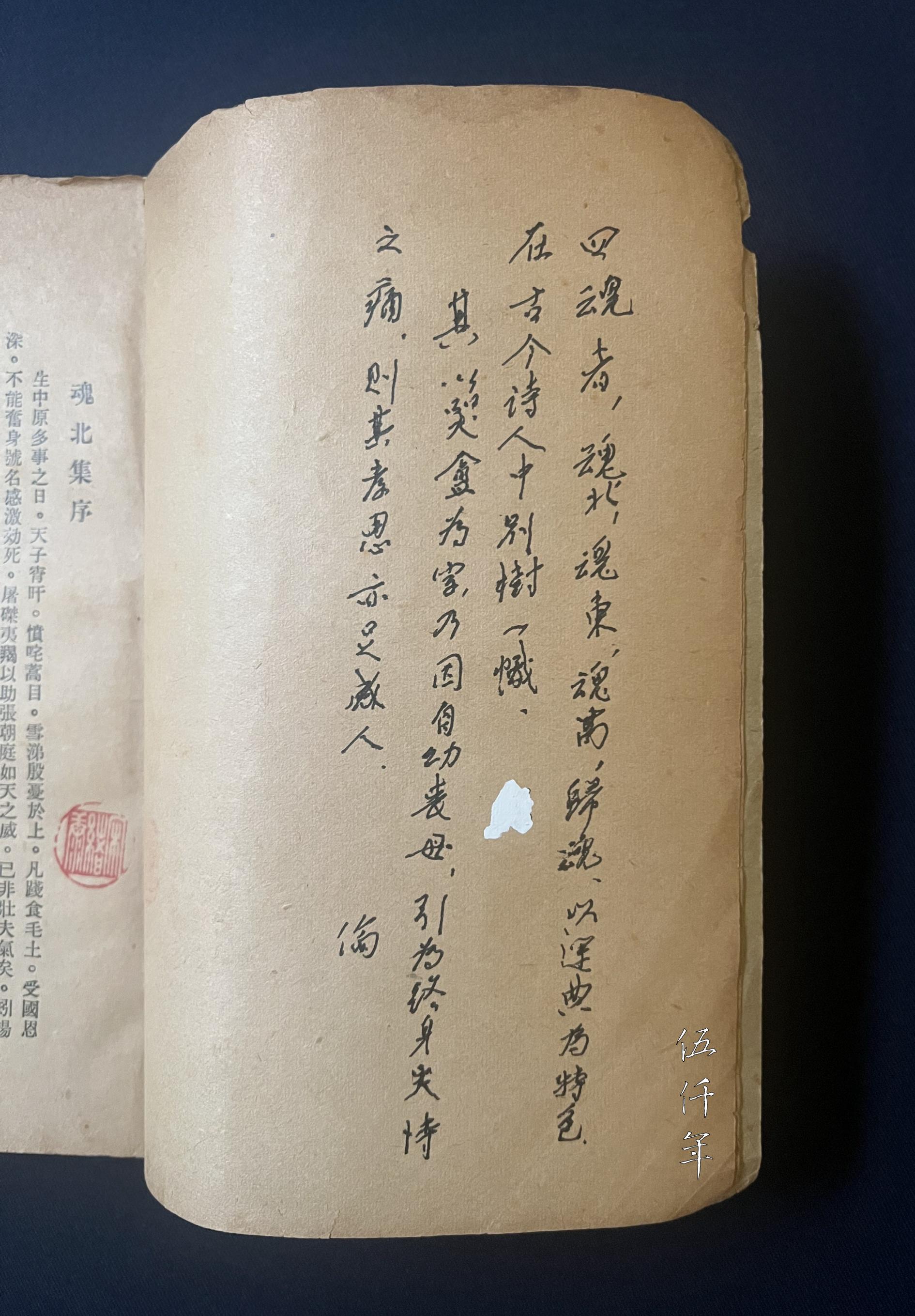
Back of title page of The Anthology of Four Souls by I Shun-ting, inscribed by Mr. Soong Hsun-leng
My father Mr. Hsin-an later inscribed the title page of the 1959 edition of The Anthology of Four Souls which I bought for him. The words are:
“The Four Souls are: Northern Soul, Eastern Soul, Southern Soul and Returning Soul. Many literary and historical allusions are used. This style is unique among poets past and present.
His tzu was K’u-an, for he lost his mother when young. He regarded this as his lifelong affliction. His pious thoughts were indeed touching.”
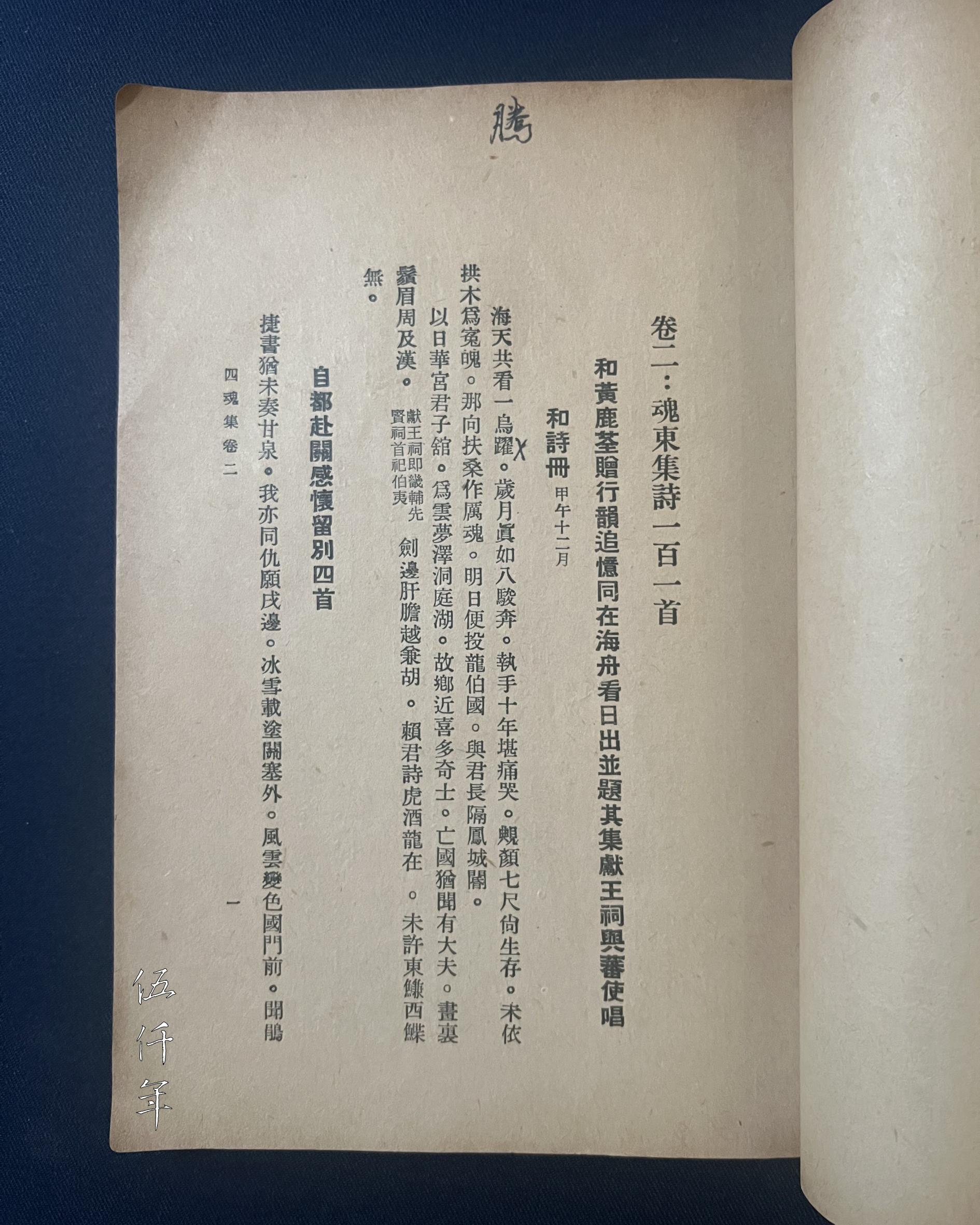
First page of The Anthology of Four Souls by I Shun-ting, errata correction by Mr. Soong Hsun-leng
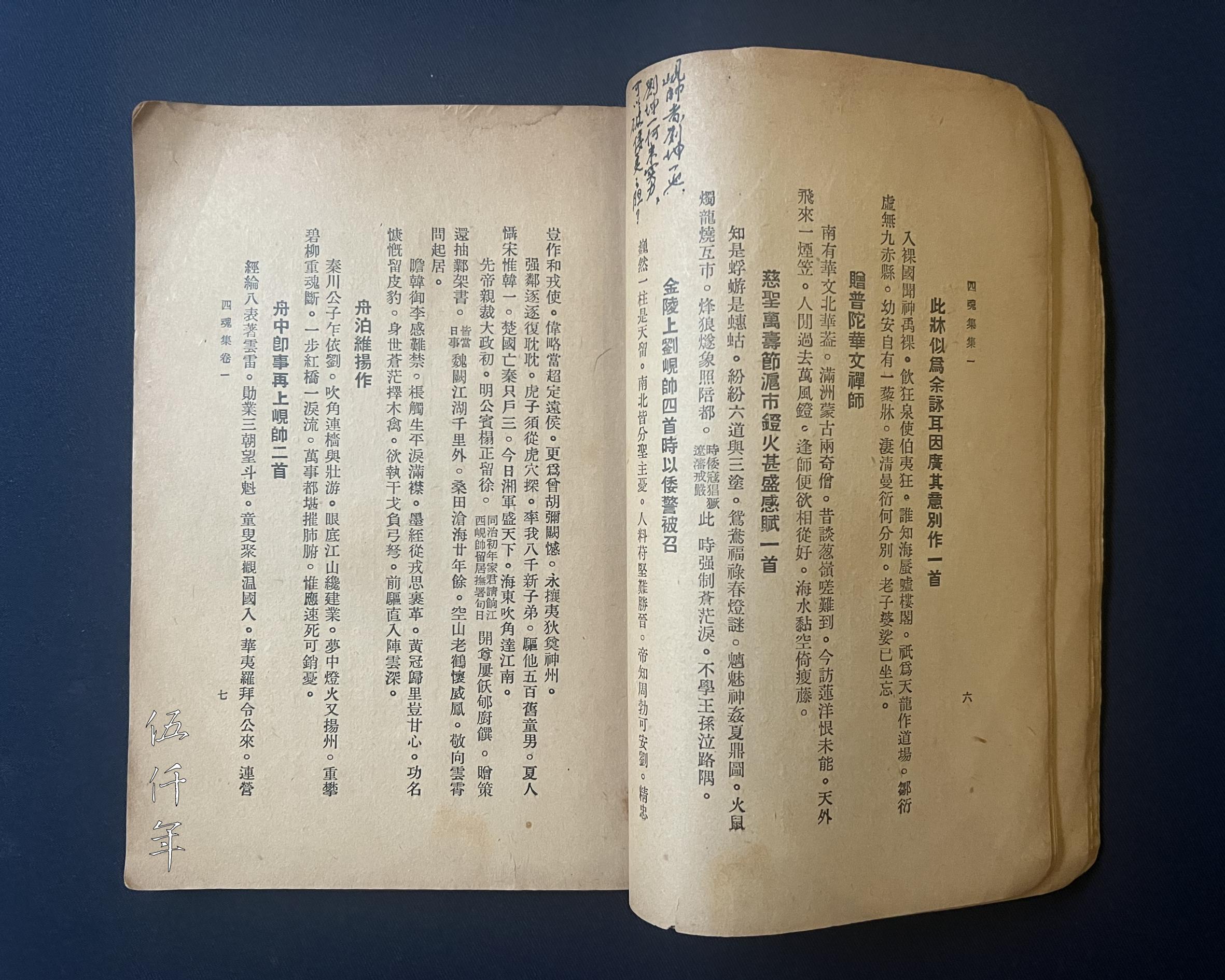
Page six of The Anthology of Four Souls inscribed by Mr. Soong Hsun-leng
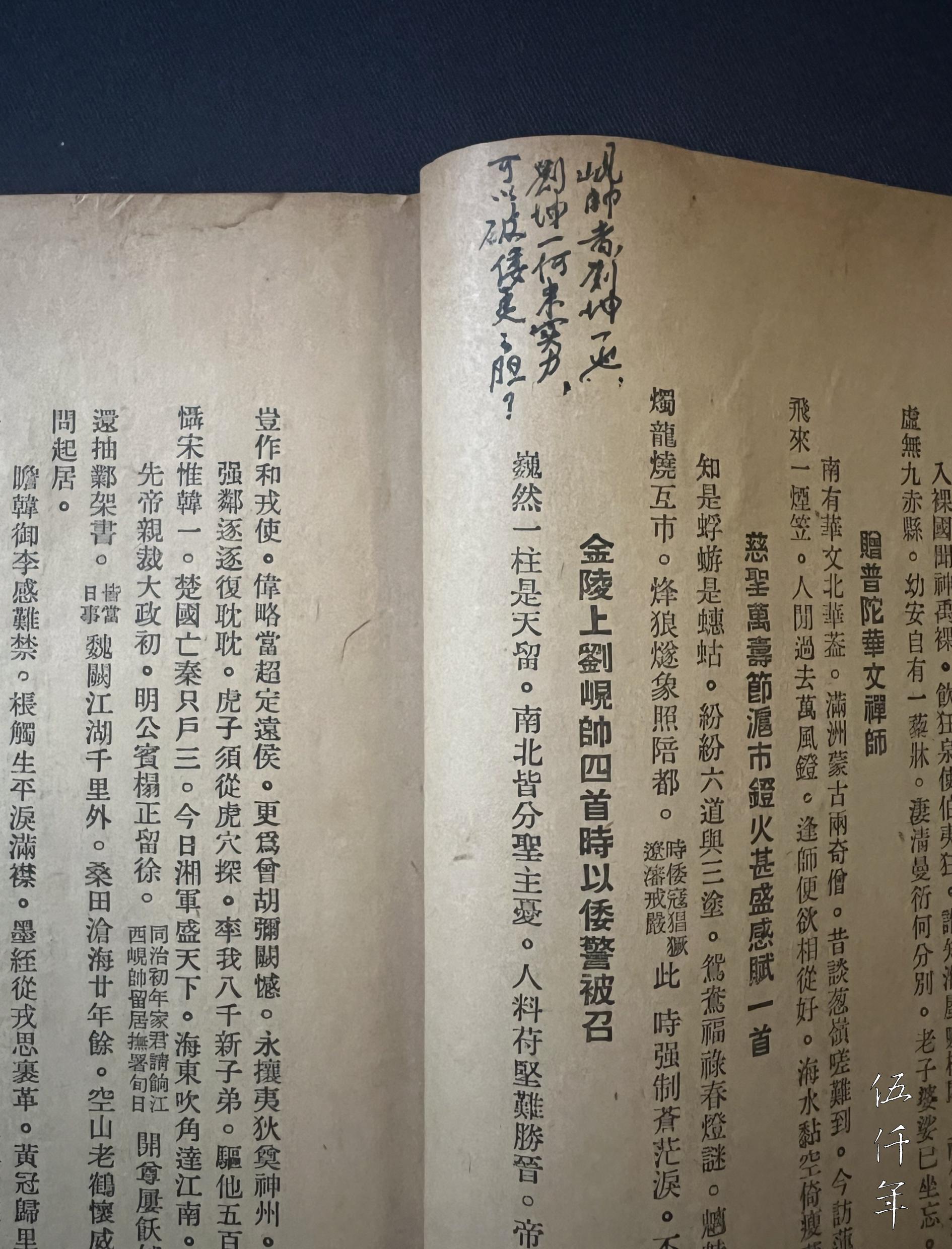
Page six of The Anthology of Four Souls, highlighting the inscription by Mr. Soong Hsun-leng
In the 19th year of the Kuang-hsü reign, 1893, when I Shun-ting was thirty six years old, he lost his mother. His extensive writings mourning his mother’s death easily created the impression that she died when he was young. My father inscribed more commentaries on the inside pages, some on printing errors, some his own literary insights. If future generations ever come across this inscribed copy, they will likely find many inspirations.
I Chün-tso was born in 1899 and died in 1972. His original name was Yüeh (鉞), tzu Chün-tso (君左), hao I-yüan (意園), Ching-chai (敬齋), his noms de plume were Yu-chün (右君), Erh-lang-shen (二郎神), K’ang-t’ao-wen (康匋文), Hua-hsi (花蹊), K’ung-ku Shan-jen (空谷山人), native of Lung-yang in Hunan province. In the 5th year of the Republic of China, 1916, he went abroad to Japan to study at Waseda University. In the 7th year of the Republic, 1919, he enrolled at Peking University. He was successively appointed adviser to the Provincial Government of Hunan Province, major general committee member of the Number Three Chamber of the Political Department of the Nationalist Government Military Affairs Commission, and commissioner of the Ministry of Information of the Chinese Nationalist Party. He was extremely fond of poetry and prose, at one time he published a book titled Small Talk on Yang-chou (閒話揚州) which instigated the residents of Yang-chou into vehement protest. After the fall of mainland China to the communists in 1949, he eventually made his way to Hong Kong. He held the positions of professor at Hong Kong Chu Hai College, chief editor of the Literary Supplement of Sing Tao Daily, professor and chair of the Department of Chinese Literature at Hong Kong Baptist College, director and head of publishing at the Hong Kong Branch of PEN International. In the 58th year of the Republic, 1969, he relocated to Taiwan and was appointed professor at Fu Hsing Kang College of the National Defense University. He wrote profusely and was proficient in calligraphy as well as painting.
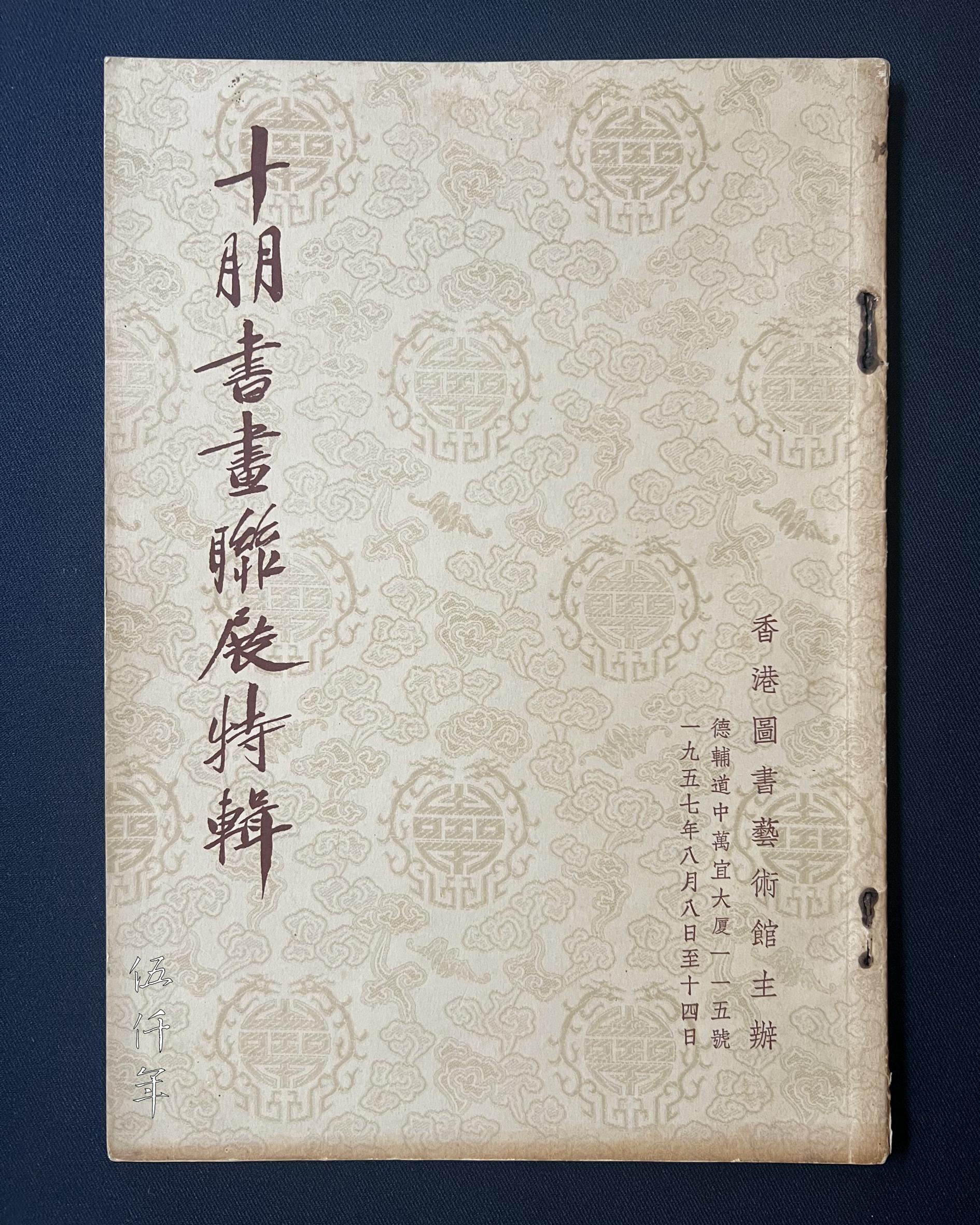
Front cover of Catalogue of Joint Exhibition of Calligraphy and Painting by Ten Friends
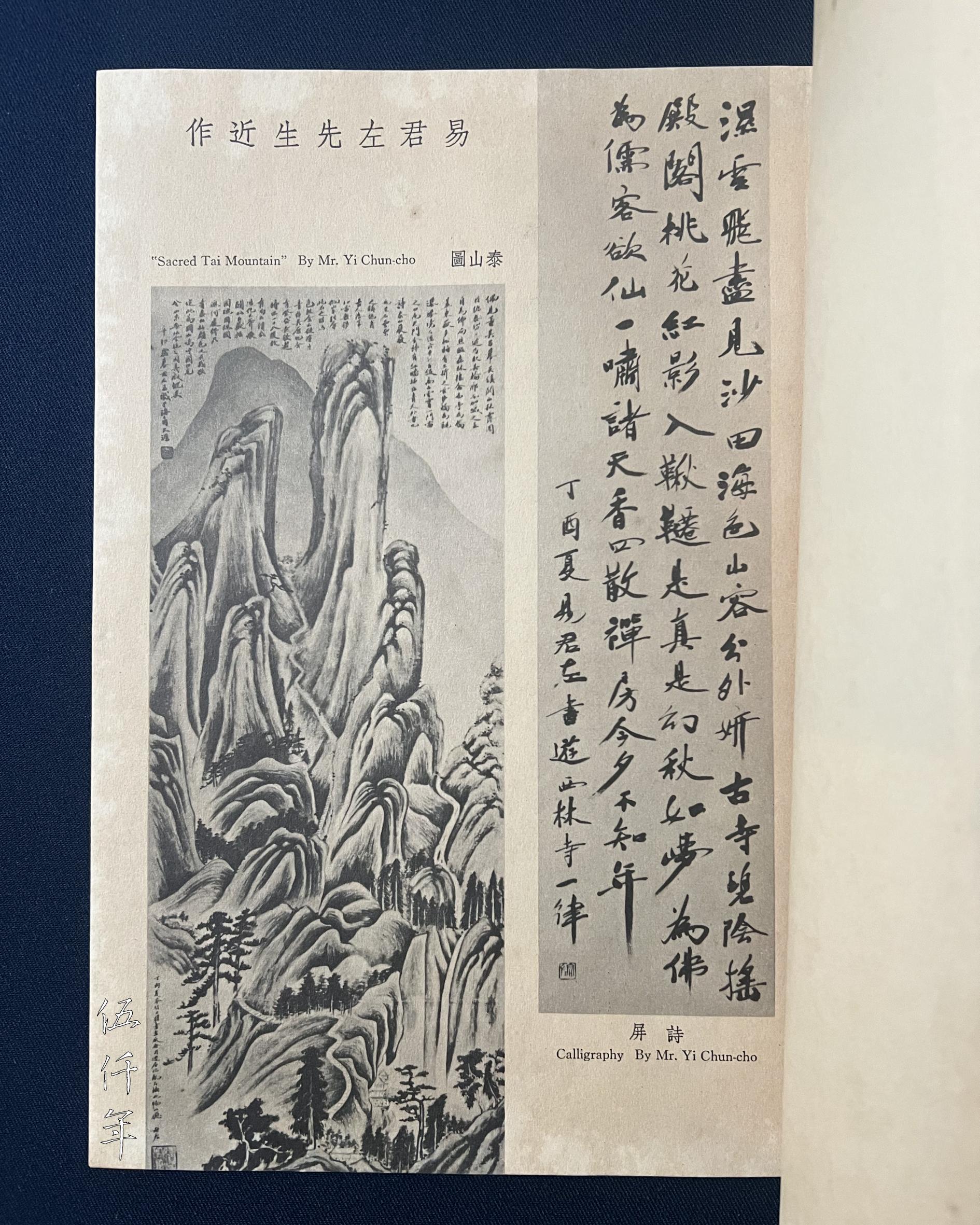
Inside page of Catalogue of Joint Exhibition of Calligraphy and Painting by Ten Friends, illustrating the recents works of I Chün-tso
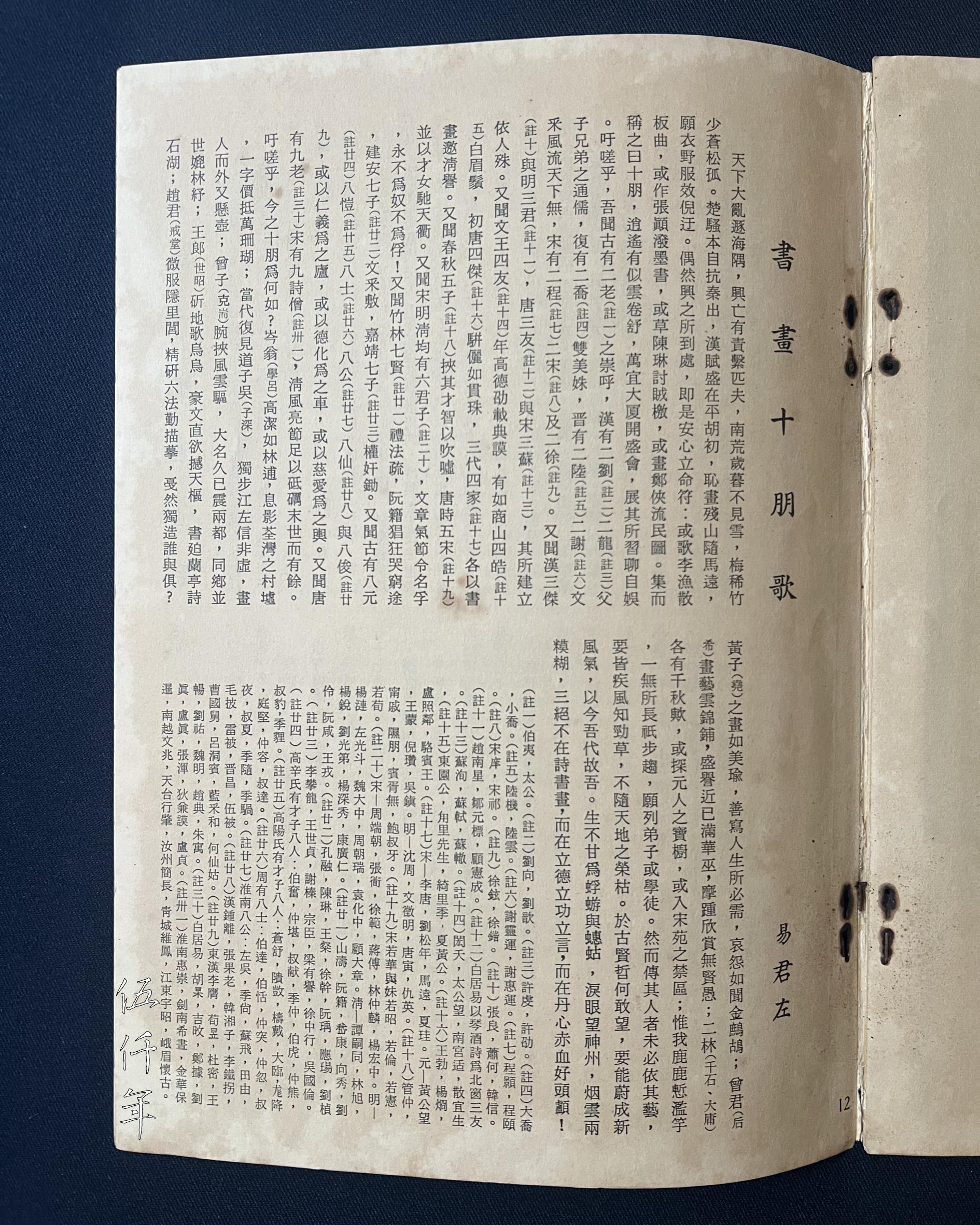
Inside page of Catalogue of Joint Exhibition of Calligraphy and Painting by Ten Friends, publishing A Song for Ten Calligraphy and Painting Friends by I Chün-tso was reproduced
I Chün-tso first arrived in Hong Kong in the winter of 1949. Eight years later, in August 1957, between 8th and 14th, he participated in an art exhibition titled Joint Exhibition of Calligraphy and Painting by Ten Friends, held at the Hong Kong Gallery of Books and Art. These ten friends were all emigre artists who fled communist China, namely Ts’en Hsüeh-lü (岑學呂), Wu Tzu-shen (吳子深), I Chün-tso (易君左), Tseng K’ei-chuan (曾克耑), Wang Shih-chao (王世昭), Chao Chieh-t’ang (趙戒堂), Huang Yao (黃堯), Tseng Hou-hsi (曾后希), Lin Ch’ien-shih (林千石) and Lin Ta-yung (林大庸). I Chün-tso contributed an article titled A Song for Ten Calligraphy and Painting Friends which was printed at the back of the Catalogue. The first paragraph and the last paragraph read:
First paragraph:
Flee to far shore from great turmoil,
Bear the burden of rise and fall.
No snow is here in Southern Winter,
Just some bamboo prunus and pine.
Songs are meant to fight the tyrant,
Prose will flow when land is free.
Ashamed to paint scraps of nation left,
Don the garb of hermit bygone.
By chance some whims have taken me here,
Whereby I settle my body and heart.
Last paragraph:
Legacy is not based on Art alone,
Be gallant and upright in the storm,
Be steadfast in boom and doom.
Dread to match the virtuous past,
For the world to sway our way,
Let the new-self redeem the old.
Spurn the lowly mayfly cicada life,
Gaze at motherland in teary eyes,
Fog and cloud are hard to tell.
Poetry, calligraphy and painting,
Surely not The Three Paragons.
Surely virtue, deeds and words,
Surely loyal heart, ardent blood, spare head.
Words such as “great turmoil”, “rise and fall”, “upright in the storm”, “loyal heart” and others, all are laden with lofty aspirations and purposes.
First poetry scroll in running script by I Chün-tso
Detail of first poetry scroll by I Chün-tso
Artist's signature of first poetry scroll by I Chün-tso
Artist's seal of first poetry scroll by I Chün-tso
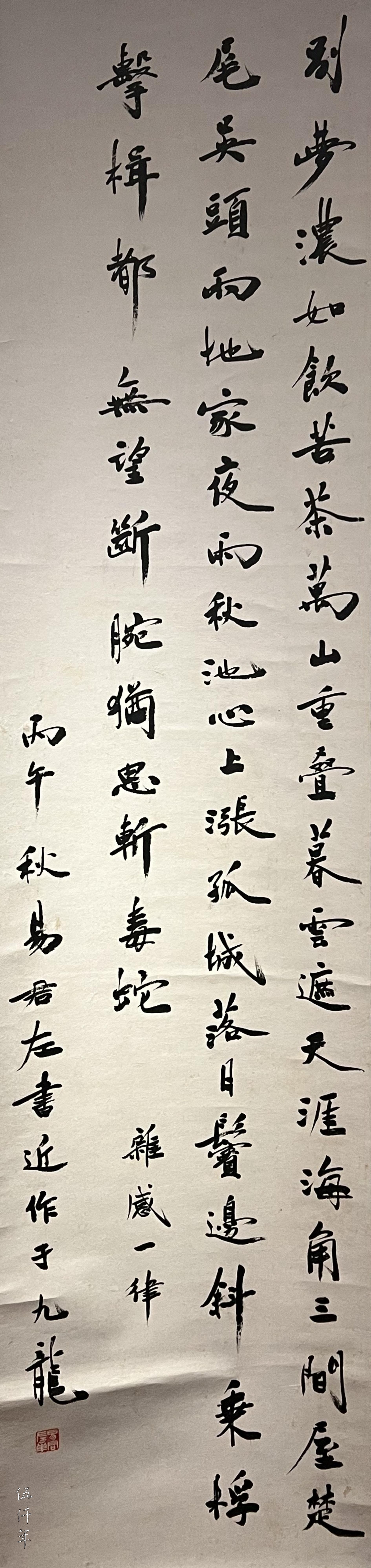
I have kept a number of calligraphy scrolls by I Chün-tso, two of which are particularly melancholic and touching.
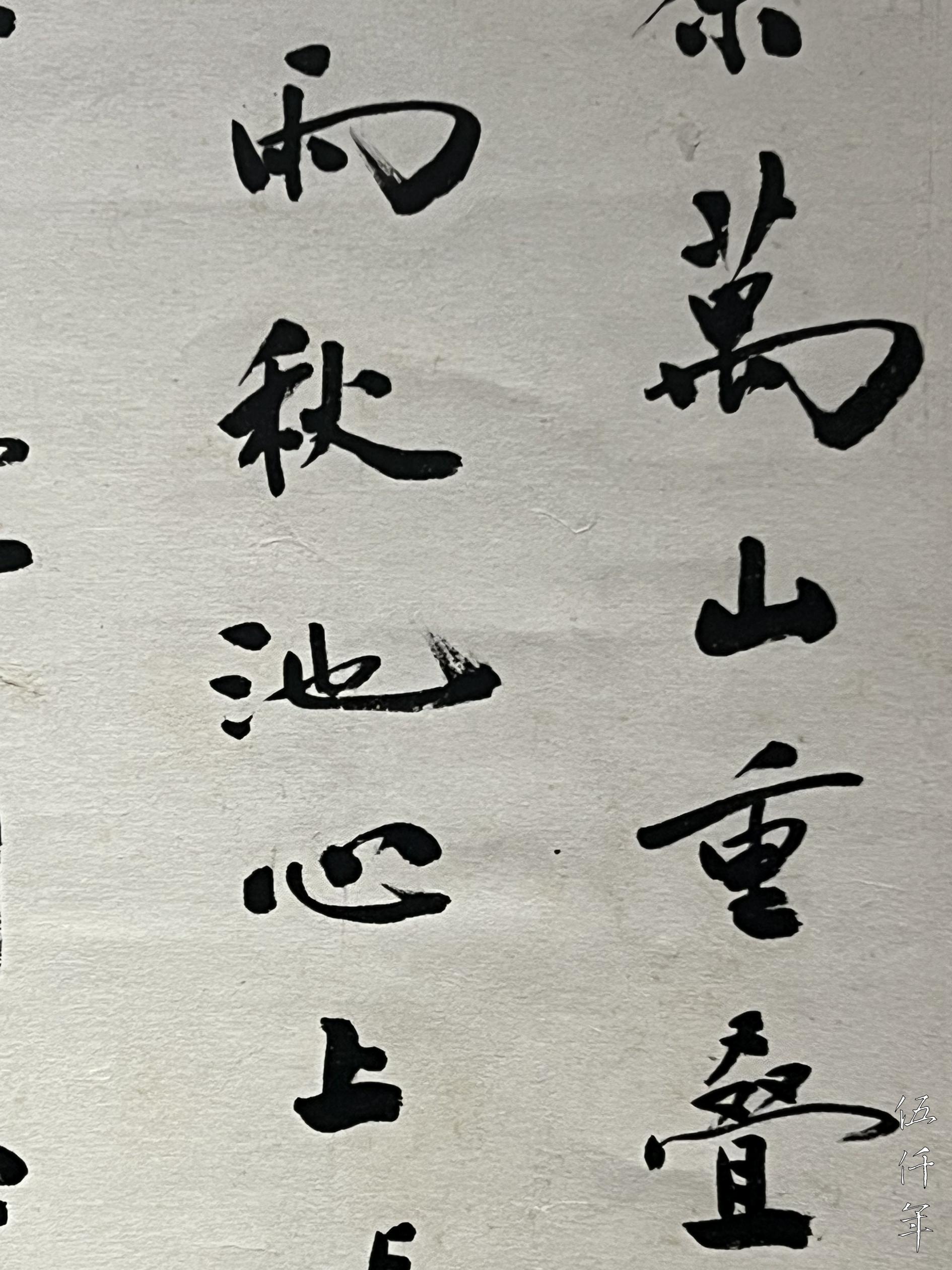
The first poetry scroll was inscribed with these words in running script:
“Parting dream heavy like bitter tea,
Untold mountains in cloud and dusk.
Rustic abode at end of world,
Kiangsi now Hong Kong dubbed homes.
Evening rain fills the Autumn heart,
Awaken to lonesome sunset city.
Wait in vain for battle cry of crossing.
Behead the snake even with broken wrist.
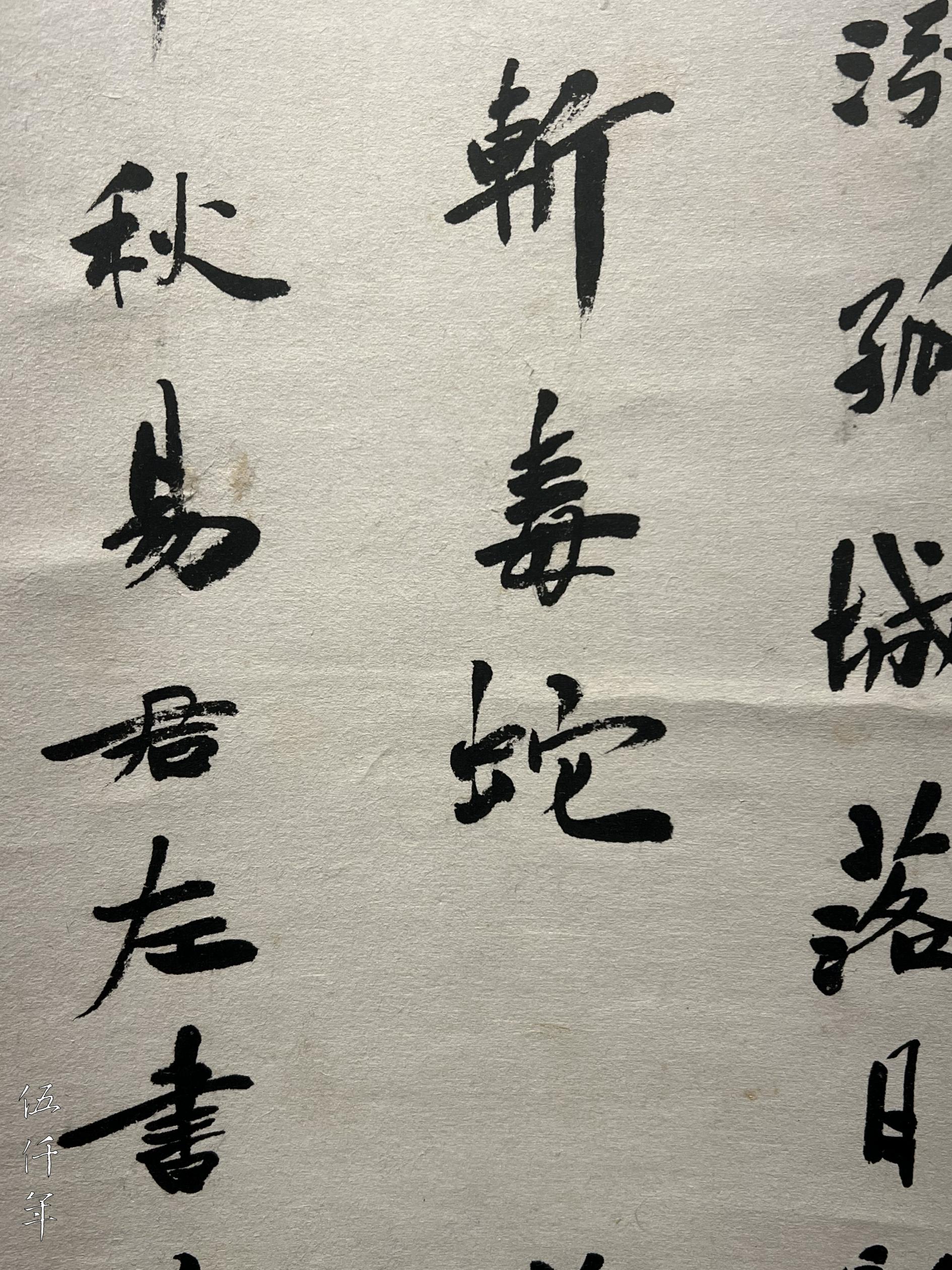
A poem of miscellaneous sentiments.
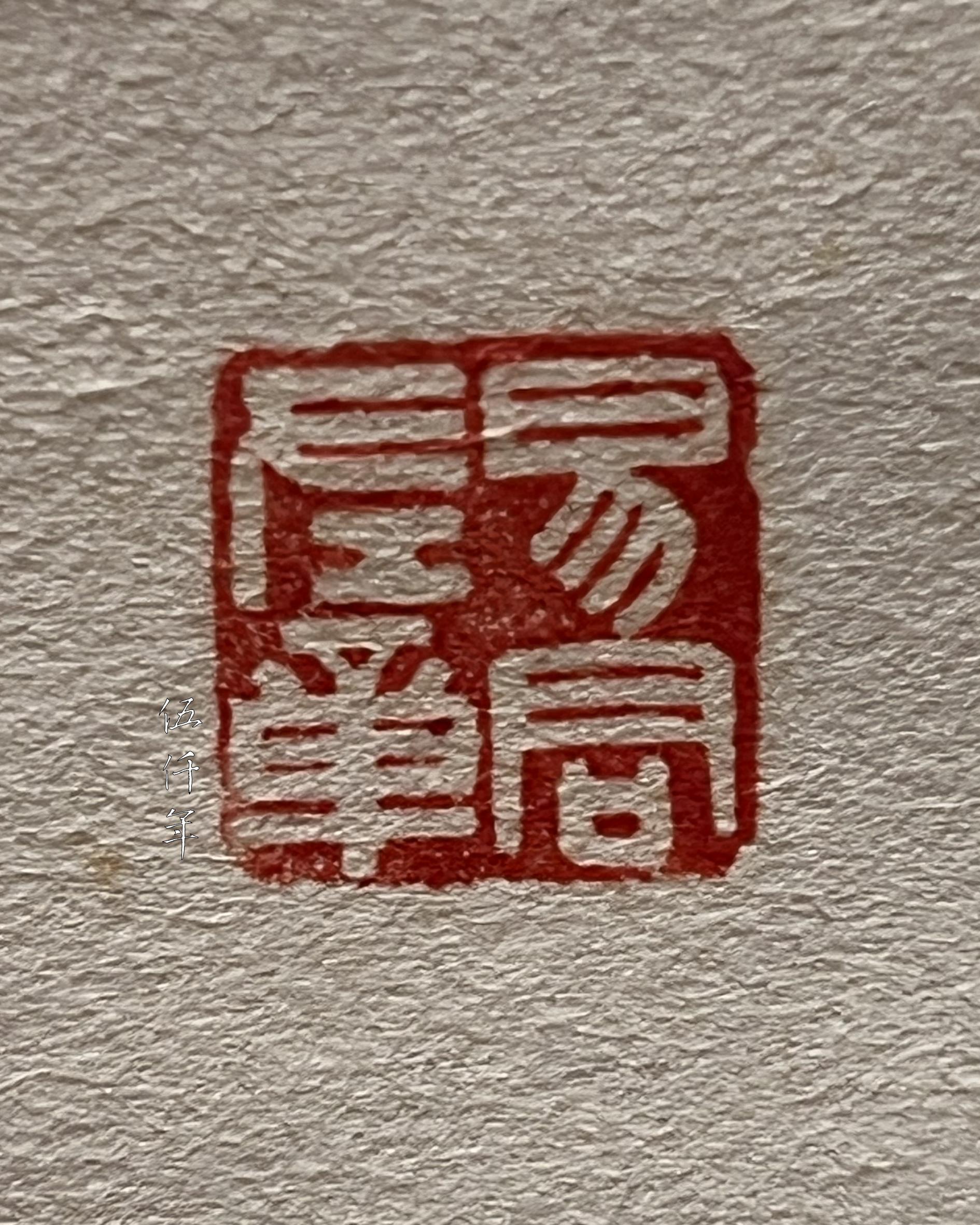
Autumn of ping-wu (丙午) year, I Chün-tso wrote this in Kowloon.”
Ping-wu year is the 55th year of the Republic of China, 1966, the 17th year after the fall of mainland China.
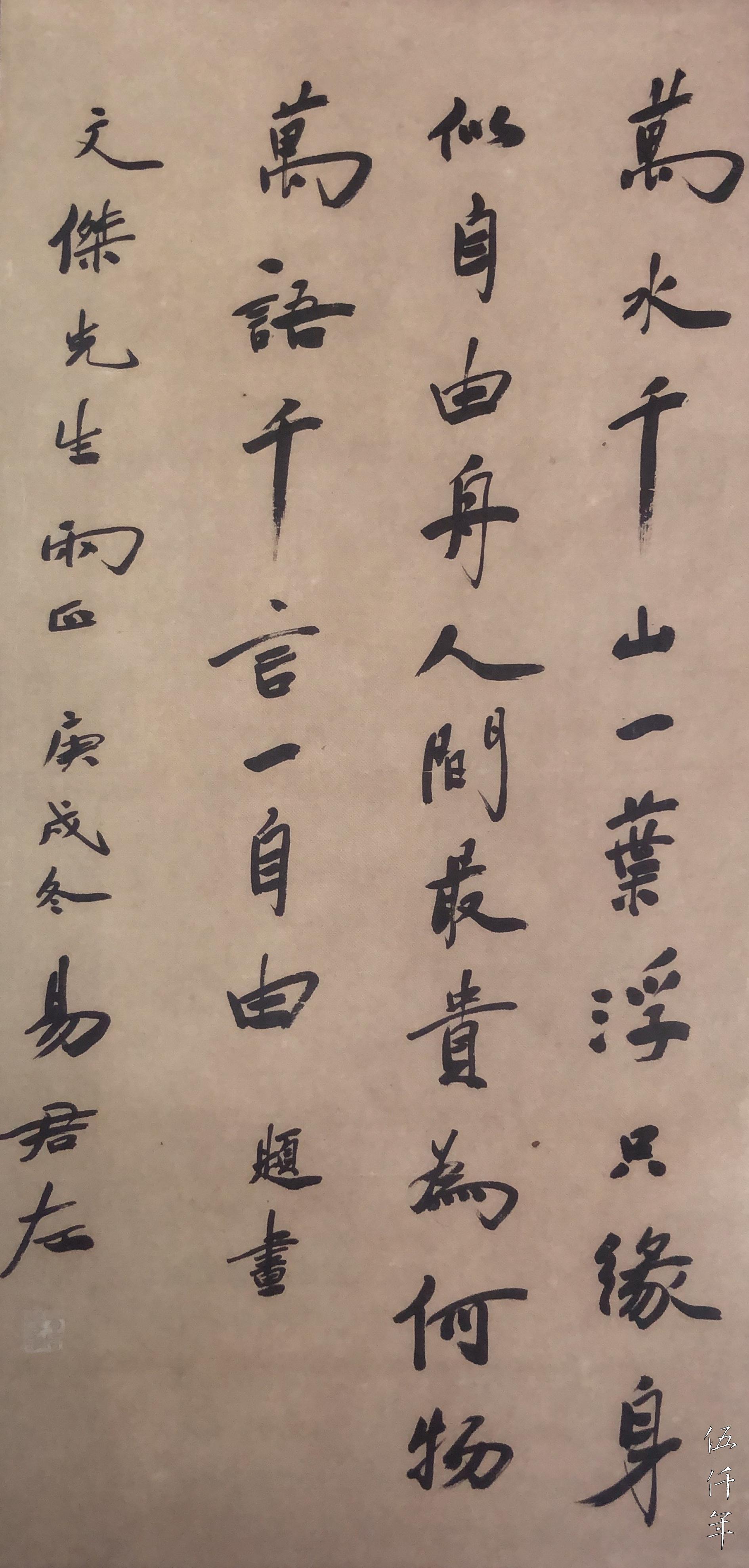
Second poetry scroll in running script by I Chün-tso
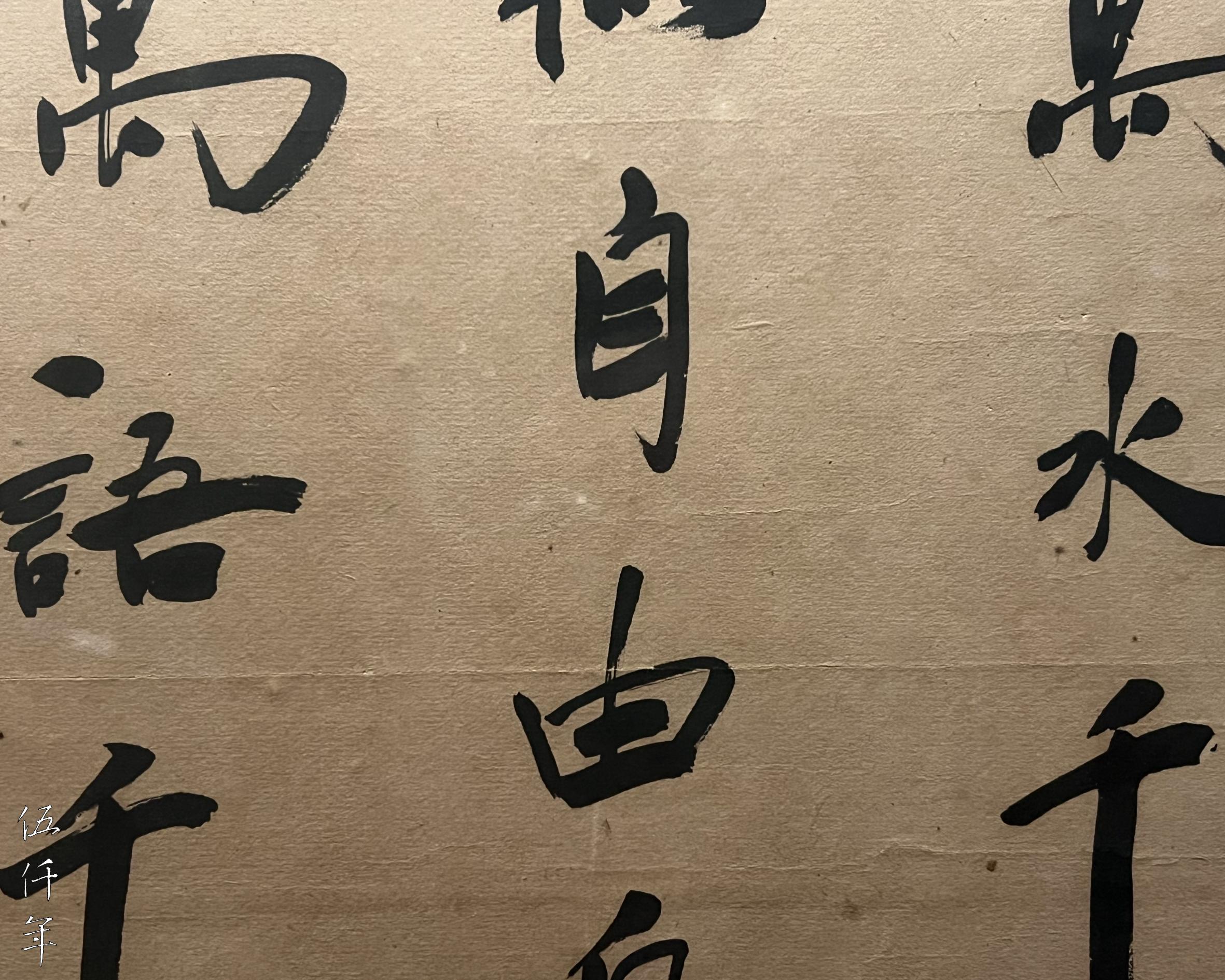
Detail of second poetry scroll by I Chün-tso
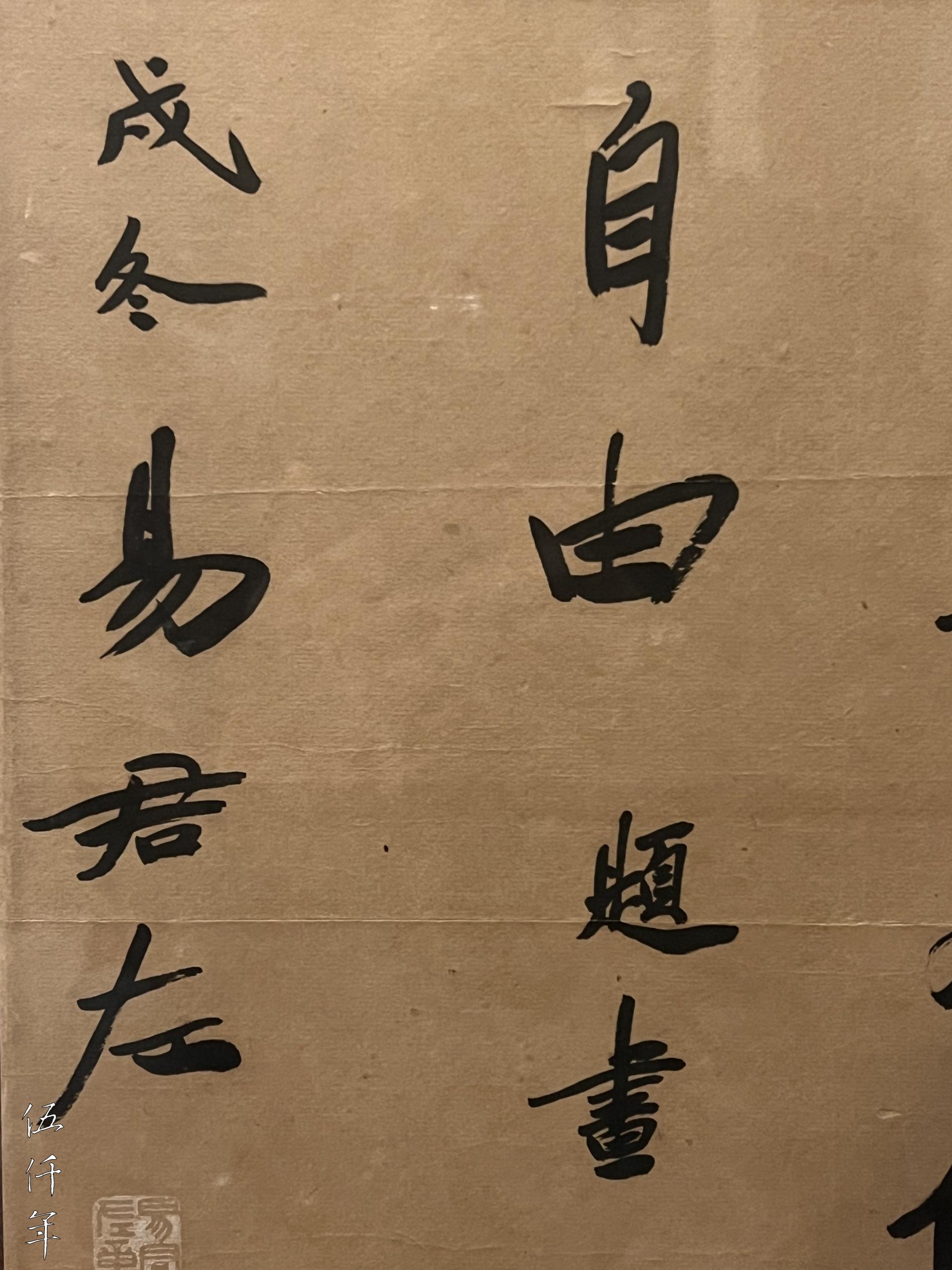
Artist's signature of second poetry scroll by I Chün-tso
The second poetry scroll was inscribed with these words in running script:
“A leaf adrift in infinity,
I am this freedom boat.
What is most precious?
Just this word freedom.
These words were inscribed for a painting.
For the rectifications of Wen-chieh (文?), in the winter of keng-shu (庚戍) year, I Chün-tso.”
Keng-shu is the 59th year of the Republic of China, 1970, the 21st year after the fall of mainland China. I Chün-tso relocated to Taiwan in the 58th year of the Republic of China, this calligraphy would have been written in Taipei.
To be in the middle of a national catastrophe, how can one respond? To be loyal to country and pious to parents, how many can attain both? I Shun-ting and I Chün-tso both invigorated the concept of filial piety, perpetuated the practice of loyalty, wielded their mighty brushes, and impacted their worlds with impassioned writings. To fortify moral bearing in turbulent times, to unite knowledge with action, to write literary works relevant to the times, the father and son duo had set tall benchmarks.
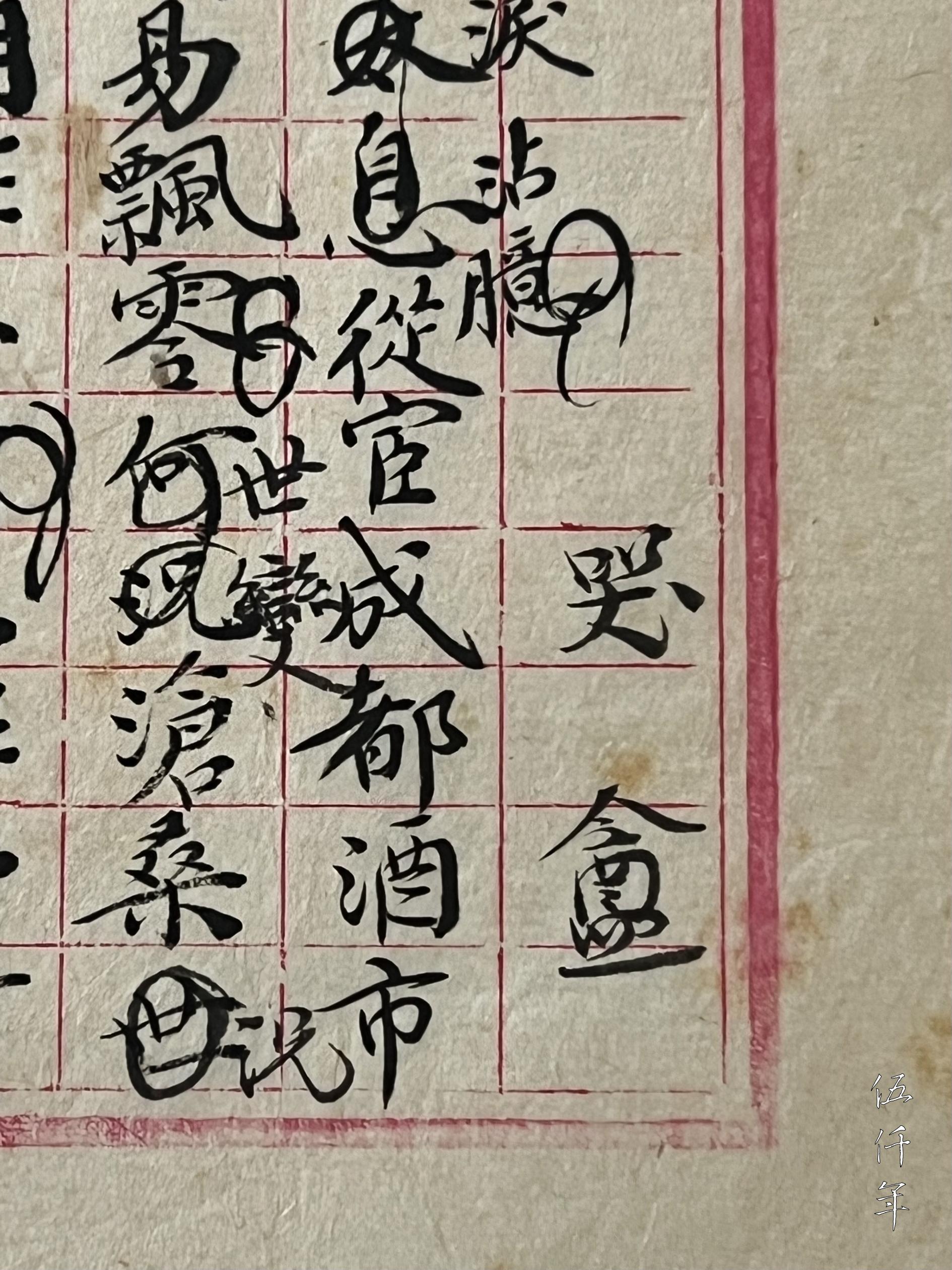
Manuscript of The Lyric of Cuckoo Soul-Written After Listening to Lady Cuckoo Soul Playing the Zither, the two- word signature ‘Ku An’ is inscribed by I Shun-ting